

By Nick Lennon, Center for Leadership and Intercultural Engagement. Edited by Chelsea Xu, UL Marketing and Communications.
George Mason University’s Center for Leadership and Intercultural Engagement (CLIE) welcomed a wide-ranging group of students into its Active Leaders program this fall, marking the program’s highest level of participation to date.
Facilitated by CLIE Co-Director Nick Lennon and graduate assistant Abhigya Pandey, the 10-session leadership development series brought together undergraduate and graduate students for a semester-long exploration of leadership in practice. Enrollment is open on a first-come, first-served basis, with cohort size intentionally limited to support discussion and participation. In recent years, graduate students have made up between 27 and 46 percent of those who complete the program.
A Sustained Commitment to Leadership
The program requires a significant commitment: students were expected to attend at least eight of 10 two-hour sessions over the semester. This fall, Active Leaders generated approximately 900 student contact hours. Reflecting the program’s reach, 56 students completed the program, up from 35 the previous year.
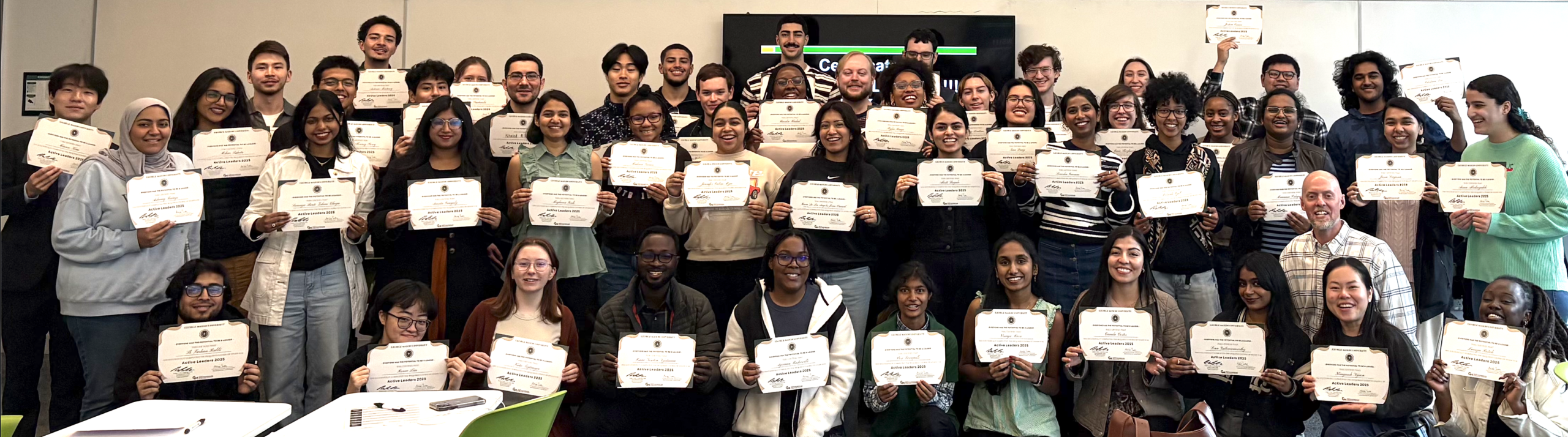
Post-program assessments show that students emerged with stronger relationships and greater confidence in their leadership skills. Nearly all participants said they felt more connected to others, and every student who responded said they would recommend the program to a peer.
Students reported the greatest growth in understanding their own strengths, developing emotional intelligence, and learning how to work with people across differences. In most of the areas measured, more than 90 percent of participants said they experienced meaningful growth.
Breaking the Myth of Born Leaders
One of the program’s most intentional goals is to challenge the myth that “leaders are born, not made.” By the end of the semester, agreement with that statement fell from 28 percent to just 7 percent, indicating a shift in how students understood their own potential as leaders.
Active Leaders is designed for students with and without formal leadership titles. Rather than focusing on lectures, the program emphasizes conversation, reflection, and hands-on activities. Sessions introduce students to leadership theory while encouraging them to apply those ideas to real situations, from navigating group dynamics to engaging in difficult conversations.
“Active Leaders has been intentionally designed as a space where every participant can feel seen, heard, and valued,” said Lennon. “Participants consistently tell us they feel welcomed and empowered, and that sense of belonging allows real learning to happen. The program centers students’ voices and creates the trust needed for honest, open, and meaningful conversations.”
Student reflections echoed that experience. Participants described using program strategies to resolve conflicts, better understand different perspectives, and collaborate more effectively. “Everyone was heard and respected,” one student wrote. Another shared, “I felt welcomed, and that’s why I made it to the end.”
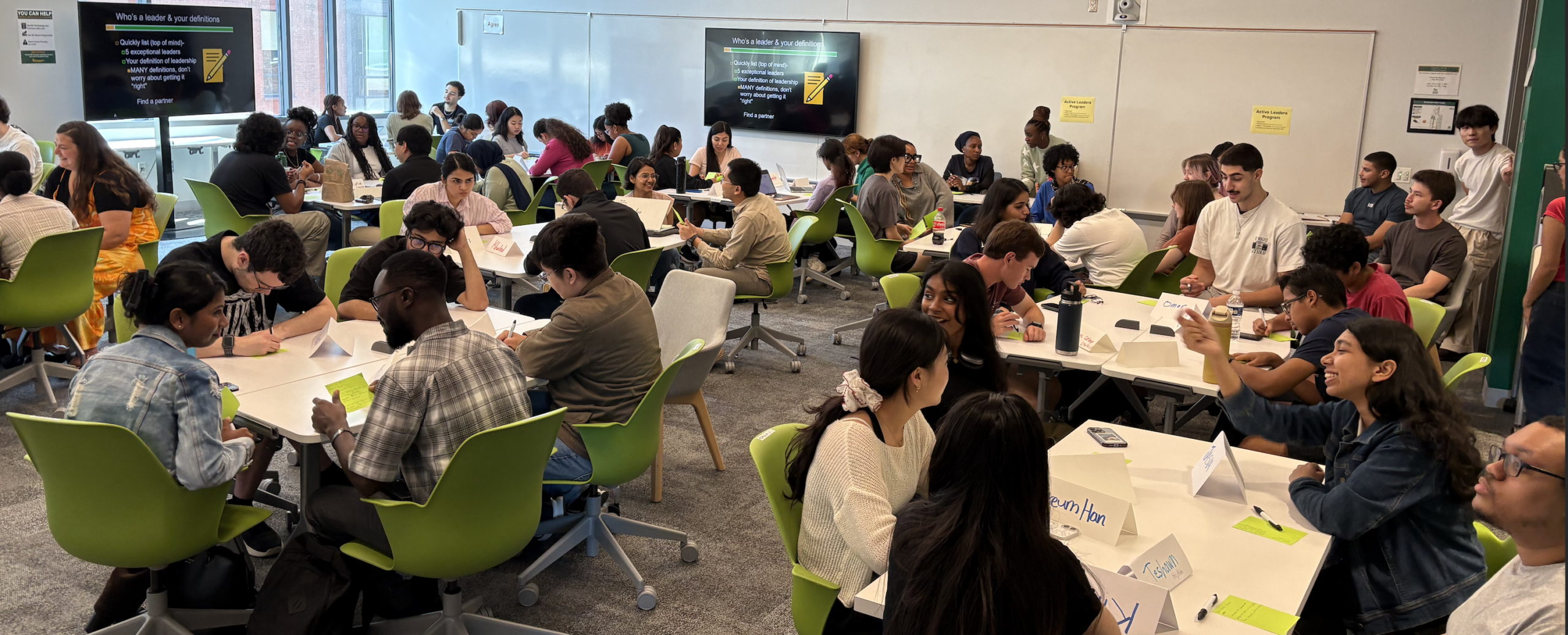
As part of CLIE and University Life, Active Leaders reflects George Mason’s broader commitment to leadership development rooted in inclusion, ethics, and civic engagement. “I loved this program,” one participant wrote, noting its impact beyond the classroom. “I wish there were more programs like this one.”
The program is offered each fall semester. For more information about Active Leaders and other CLIE programs, visit the Center for Leadership and Intercultural Engagement’s website.