
By Sofya Vetrova, Mason Dining. Edited by Chelsea Xu, UL Marketing and Communications.
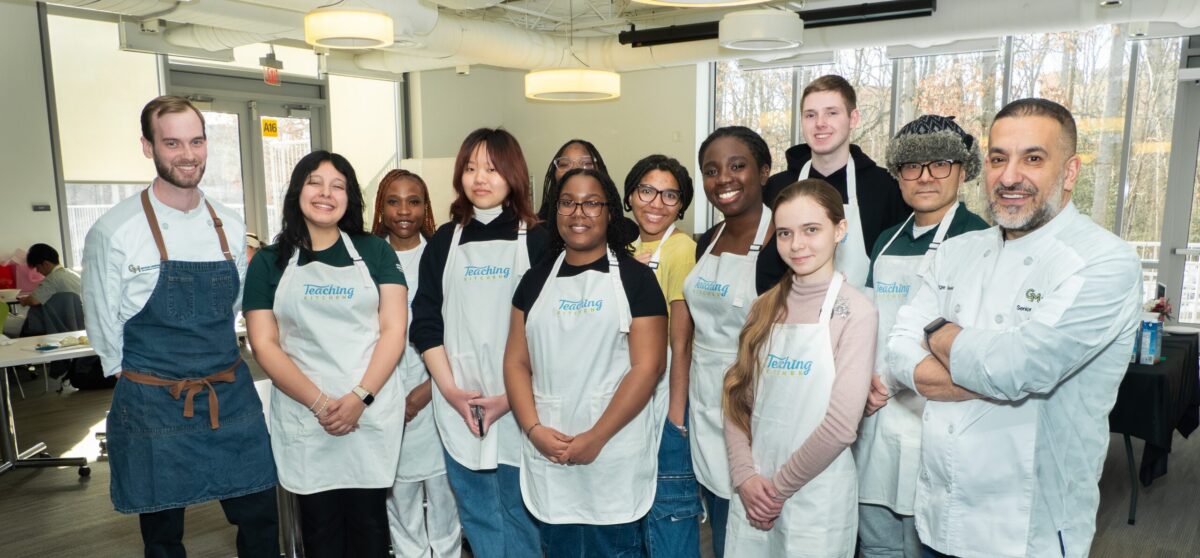
This Valentine’s Day, in partnership with the Office of New Student and Family Programs, Mason Dining hosted a Teaching Kitchen designed specifically for first-year and transfer students. The 50 available spots filled immediately, a clear signal that today’s students are looking for connection, not just consumption.
The session was led by Chef William Weaver , Director of Student Engagement, and Chef George Charbel, Campus Executive Chef. Together, they guided students through three hands-on stations focused on practical, confidence-building skills:
- Chocolate Mug Cake – introducing foundational baking techniques
- Overnight Oats – reinforcing wellness and smart meal planning
- Elevated Ramen – teaching students how to transform a staple into a balanced, intentional meal
But the real outcome wasn’t the recipes. It was community.

Mason Dining Voice and Vision survey (Chartwells Higher Education Dining Services) have made it clear that dining is one of the most powerful touchpoints for belonging:
- 60.6% of first-year students say dining helps them adjust to college life.
- 53.1% say dining helps them feel welcome on campus.
For first-year and transfer students especially, the transition to campus can feel isolating. A teaching kitchen changes that dynamic. It creates a shared experience. It lowers barriers. It sparks conversation. It builds confidence. It turns strangers into peers. Events like this don’t just teach students how to cook. They create connection at a moment when connection matters most.

Teaching Kitchen is part of Mason Dining’s ongoing engagement-based programming. The team hosts monthly activations centered on different themes, with this Valentine’s Day event developed in collaboration with New Student Programs. Throughout the year, Mason Dining also offers a variety of experiential events, including its Supper Club series – a fine-dining-style experience hosted in the dining halls.
At George Mason, dining is more than a service. It is a strategy for belonging – one intentionally designed to support student transition, build confidence, and reinforce the university’s commitment to helping every student succeed.