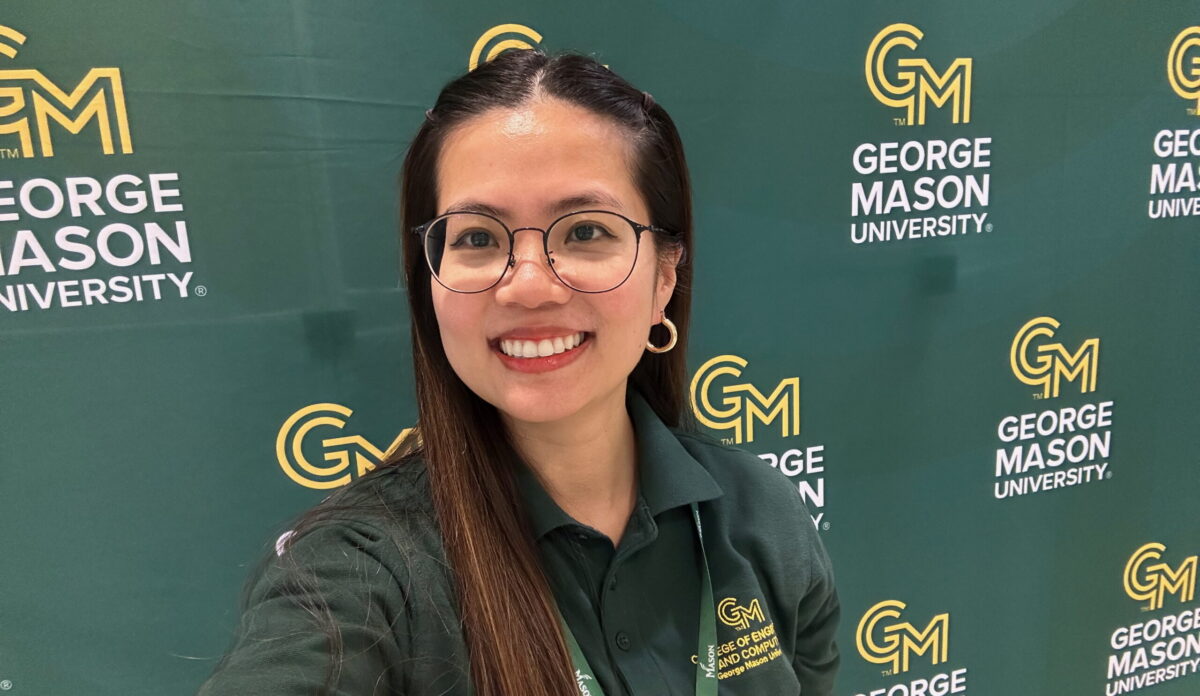
By Tiffany Boggs, Student Media. Edited by Chelsea Xu, UL Marketing and Communications.
When Duong Thuy Nguyen first emailed her GTA for IT104: Introduction to Computing, she wasn’t sure what to call him — GTA Reddy or Professor Reddy? She was, as she puts it, “that naive.” She had just returned to college after years away, caring for her family, working full time, while carrying the weight of a culture that had pointed her toward a different life entirely. She wasn’t sure she could do any of it.
This May, she’s graduating with a 4.0 GPA, an Academic Excellence Award from her department, a Capstone team leadership under her belt, and two published feature articles about her work — and in the fall, she’ll be back as a graduate student in George Mason’s accelerated bachelor’s-to-master’s program.
Nguyen immigrated to the United States from Vietnam in 2015. College, especially after a long pause, wasn’t the expected path for her. But her family pushed her toward it. “You have so much potential… just try,” she recalled being told.
Nguyen came to George Mason as a contemporary student. An immigrant adult learner who also works, she navigates the tension between family responsibilities and schoolwork in every classroom, every late night studying after work, and she often wondered whether someone like her belonged in a place like this. “I can feel both the excitement of going back to college and the worry of what if I couldn’t do this,” she said.
The People Who Showed Up
She took an academic leave in the spring of 2023 after family duties became too overwhelming. When she returned, she felt the distance from her peers acutely — older, quieter, uncertain of her place. What pulled her forward was a support system at George Mason that refused to let her disappear.
Professor Irina Hashmi gave her credit for quiz answers lost to a frozen screen, taking her word for it when she didn’t have to. Professor Scott Lewis listened to her story in his office hours when exhaustion broke through, and gave her career advice instead of sending her away. Professor Gene Shuman stayed after every class to work through concepts she was still wrestling with. Professor Massimiliano Albanese chose her for a cybersecurity internship that eventually opened the door to her current position at the Fairfax County Office of Elections.
“The whole Mason Nation, like every single one that I work with or study with…they are so supportive,” said Nguyen.
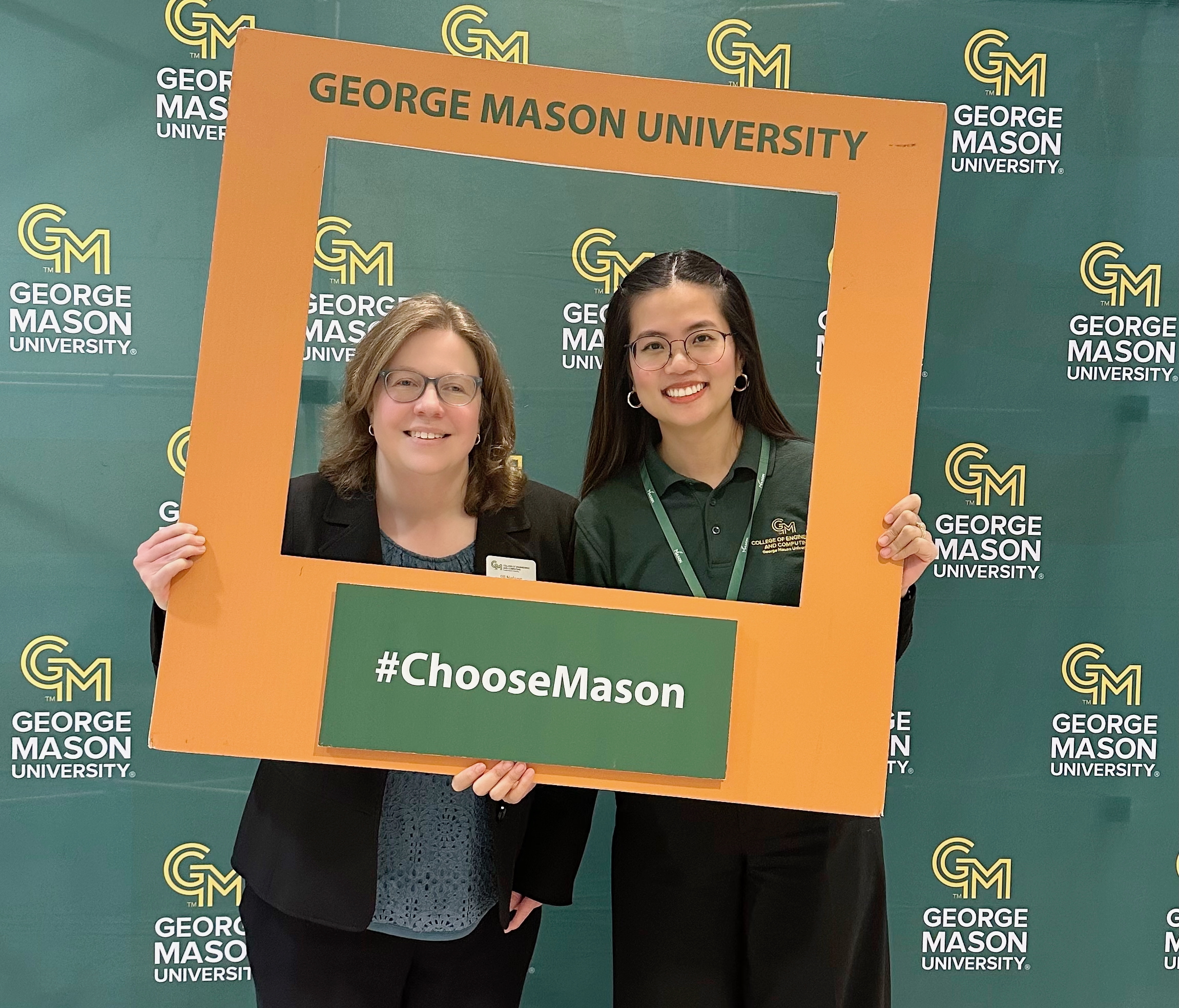
Photo provided.
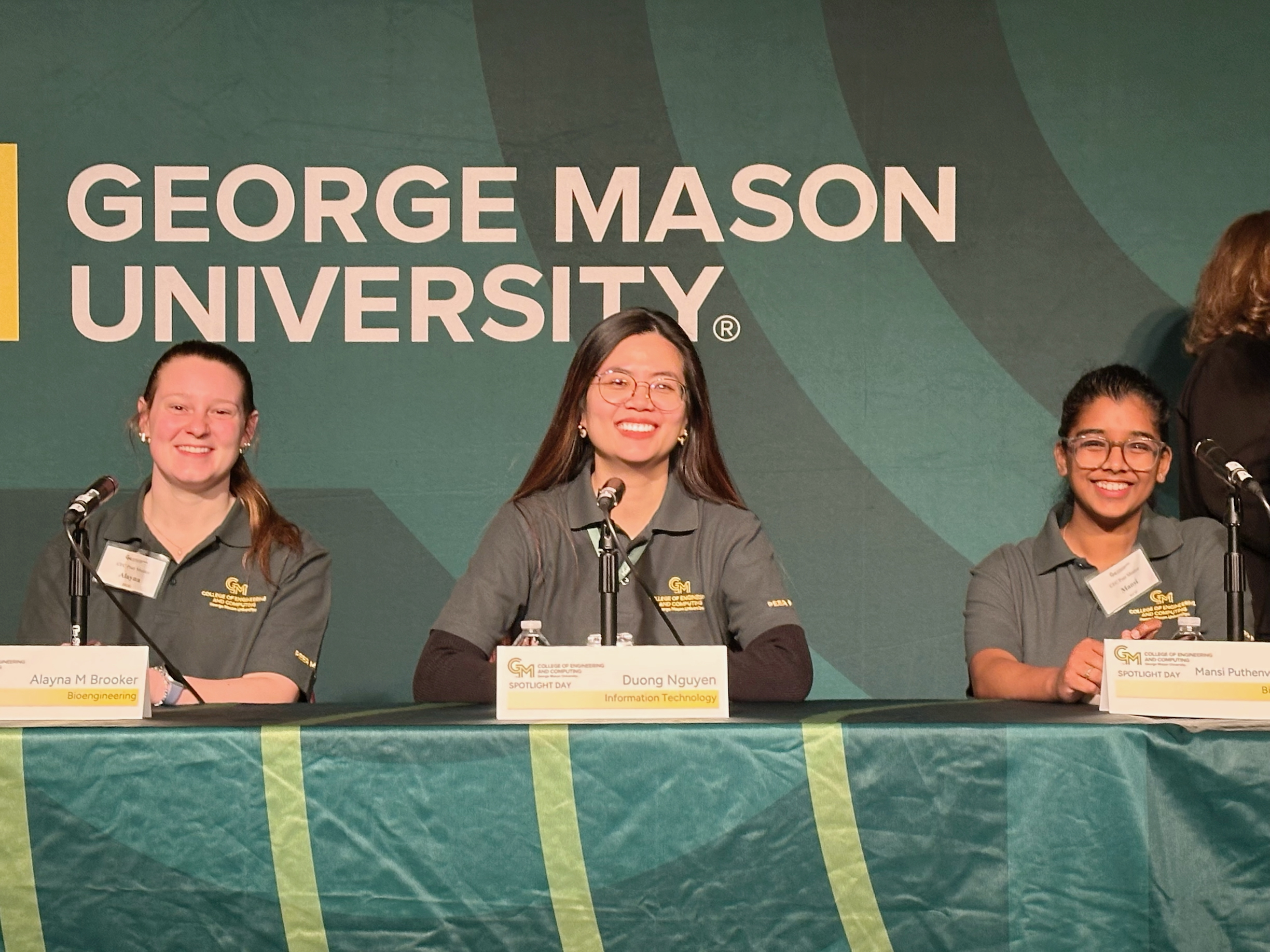
That support gave her enough ground to start taking risks. As a Peer Mentor for the Office of Undergraduate Studies at the College of Engineering and Computing, she showed up to her first event expecting to greet prospective students at a table. Instead, she found herself on stage as a panelist, fielding interview questions alongside an associate dean, sweating through her nerves in front of a room full of people. She made it through. After that, she became one of the program’s recurring panelists — the woman who’d been too shy to speak up in class, now telling prospective students to join organizations early and reach out before they think they need to.
From the Audience to the Stage
The biggest test came in her Capstone Project, a two-semester sequence she entered convinced she wasn’t cut out to lead. Her accent, she assumed, meant people wouldn’t listen. It was easier, she had always believed, to do everything herself than to ask for help and risk depending on someone. Capstone — and Professor Gail Therrien, who designed the program — changed that by making her team lead. She learned to divide responsibilities, to speak up, to give her teammates room to show their own strengths. When her team’s work began to accumulate across two semesters, she arrived at something she hadn’t expected: that she is, indeed, “good enough.”
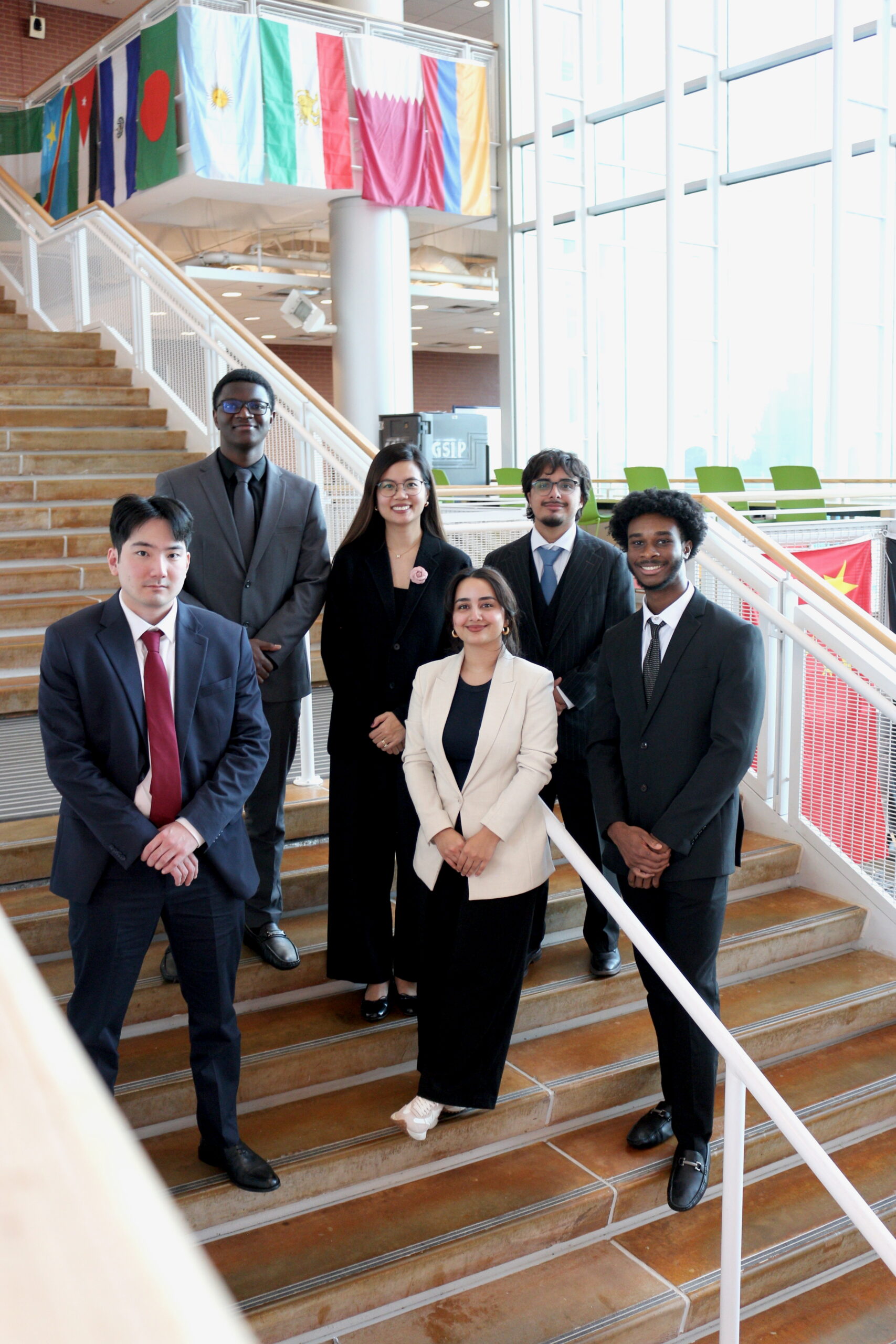
Photo provided.
Beyond the classroom, she built a life on campus — joining Contemporary Student Services, Women in Cybersecurity, the Society of Asian Scientists and Engineers, and Girls Who Code, an international nonprofit working to close the gender gap in tech.
“I realized that the first person who needs to believe in me is me,” she said. “If I don’t trust myself, I can’t earn the trust of others, and I certainly can’t lead a team to success.”
Today, she works full-time and cares for her family. She still sleeps two or three hours during the hard weeks. Somewhere in between, she is running on coffee and the same determination that got her here in the first place. She is still, in many ways, doing everything at once.
“I never in a million years thought that I could get this far,” she said.