University Life

Paul Bazzano is March Employee of the Month


This article originally appeared on The George.

Paul Bazzano has worked for Mason Recreation for more than 30 years. He started as a student worker while pursuing his bachelor’s degree in communication at George Mason University and is now assistant director of competitive sports and athletic training.  

Colleagues have applauded Bazzano for his outstanding leadership, innovation, and dedication to advancing Mason Recreation’s mission. He has made numerous contributions that have strengthened Mason Recreation’s programs, elevated its visibility across campus and beyond, and deepened the university’s commitment to inclusive and adaptive recreation. For these reasons, Bazzano was selected as the March Employee of the Month.  

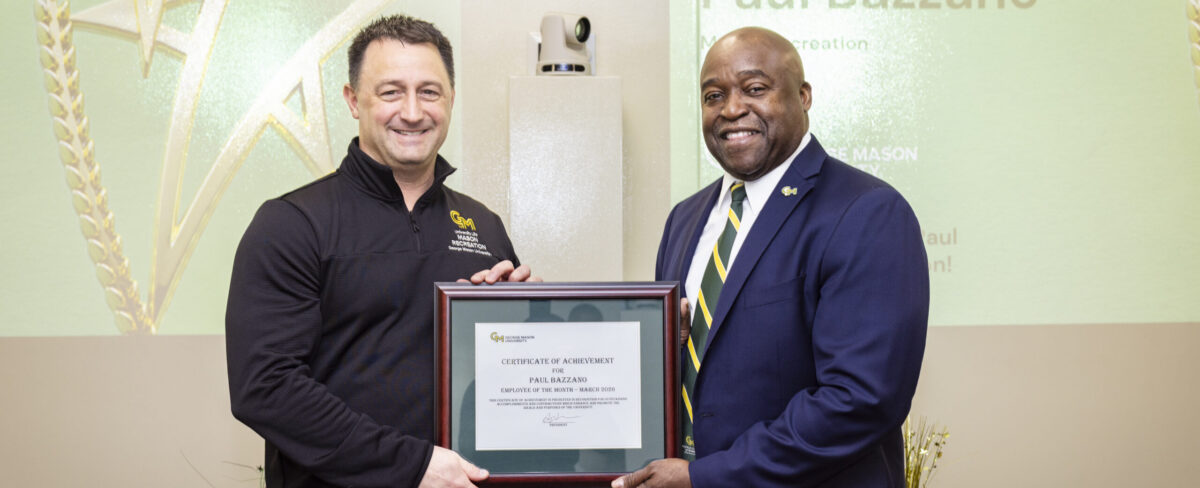
Paul Bazzano, Assistant Director of Competitive Sports and Athletic Training is Employee of the Month for March 2026. Photo by: Ron Aira/Creative Services/George Mason University

In their nominations, many of Bazzano’s colleagues talked about how he went above and beyond in coordinating two major university events that brought together campus and community partners in meaningful ways. 

The first event was the National Beep Baseball All-Star Tournament, which brought more than 70 blind and visually impaired athletes, coaches, and volunteers from across the country to George Mason. In addition to the tournament, Bazzano organized a Learn-to-Play Clinic, giving about 25 visually impaired students and community members the opportunity to experience Beep Baseball for the first time. 

“Paul has continued to elevate the profile of our department and the awareness of a wonderful adaptive sport,” said Sheldon Tate, executive director of Mason Recreation. “He has poured himself fully into the Beep Baseball movement and is quickly becoming the quintessential ally for individuals with disabilities. We are proud to follow his lead, and there are dozens of colleagues across campus who would absolutely agree that Paul is raising the bar.” 

“Through his leadership, Paul has strengthened partnerships with organizations such as Game One, MindsEye, Lighthouse for the Blind, and the Metro Washington Association of Blind Athletes,” said Ethan Carter, associate director of programs, well-being, and assessment. “He also began discussions with the Junior Tennis Champions Center to host a wheelchair tennis event in Spring 2026, expanding George Mason’s reach and reputation in adaptive sports.” 

In addition to forging new opportunities for differently abled athletes, Bazzano supports all the students who participate in Mason Recreation’s programs, said Jennifer Tolson, head athletic trainer at Mason Recreation 

“Paul works day and night to help our club teams and intramurals succeed both on and off the field,” said Tolson. “He’s always finding ways to make things happen—even when it seems impossible. A great example of this is when our football team had an opponent forfeit. Paul immediately searched for another team to play, ensuring our athletes still got the experience they deserved. That’s who Paul is—he never gives up on our teams and always fights to give them the best opportunities possible.” 

How did you come to Mason: 

I started at George Mason in 1995 as an undergraduate student and never really left. I worked in athletics and recreation as a student, and after graduation I was offered the chance to continue doing work I loved. Mason has been home ever since. 

Best day on the job: 

It is hard to narrow it down to one day. March 2006 during the Final Four run stands out. I was responsible for supervising the student bus to Dayton, Ohio, for the first round, and what was supposed to be a quick trip turned into something much bigger. The pride on campus during that stretch is something I have never seen before and have not seen since. 

What do you like best about working at Mason: 

Watching students grow and move on to do great things. What means the most is when they come back and reconnect. Knowing you played even a small role in their experience stays with you.  

What do you like to do when you’re not working: 

I enjoy staying active. Whether it is playing a sport or just finding ways to stay healthy, that has always been an important part of my life. I have also taken up sports photography, which has been a fun creative outlet and another way to give back to our students. 
George Mason recognized 74 Provost Scholar-Athletes this year


This article originally appeared on The George.

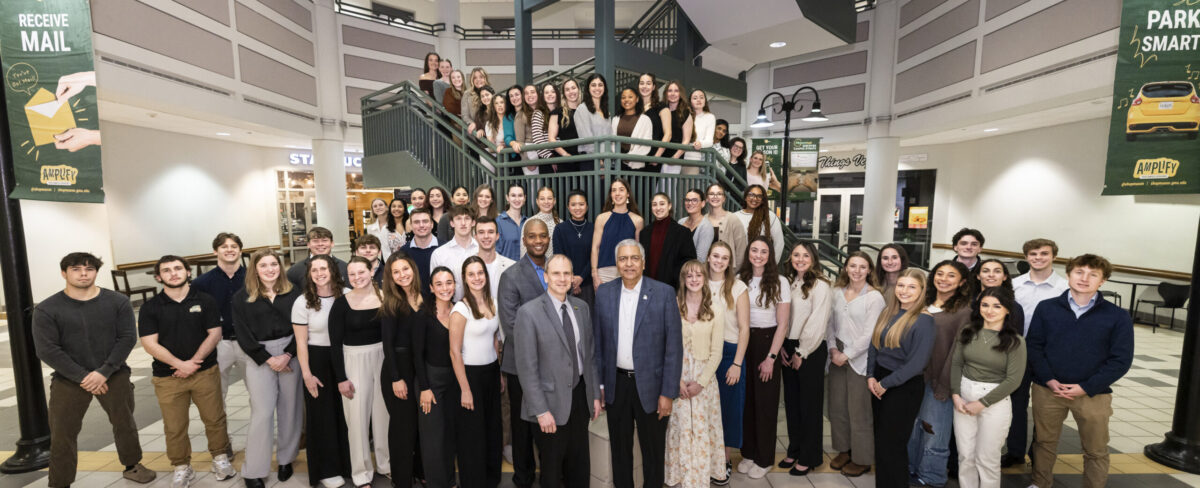
For just the second time, more than 70 George Mason University student-athletes have earned the Peter N. Stearns Provost Scholar-Athlete Award for their outstanding academic achievements. Following a record-breaking 78 honorees last year, 74 student-athletes were recognized during a ceremony held in February. 

Peter N. Stearns Provost Scholar Athlete Award Ceremony 2026. Photo by: Ron Aira/Creative Services/George Mason University

The Provost Scholar-Athlete Award was established in 2009 by then-Provost Peter N. Stearns to recognize student athletes who have achieved a cumulative grade point average of 3.75 or higher with at least 38 credit hours. 

The reception, hosted by Keith Renshaw, senior associate provost for undergraduate education, celebrated this year’s Provost Scholar-Athletes and was attended by parents, deans and professors, and senior athletics administrators. 

Interim provost and executive vice president Ajay Vinzé congratulated the group. Jack Chapman, a senior member of the swimming and diving team and a three-time recipient of the award, spoke on behalf of his fellow student athletes.  

Marvin Lewis, George Mason assistant vice president and director of athletics, also congratulated the honorees during the ceremony. “This award represents the very best of what it means to be a George Mason student-athlete,” he said. “Tonight is not just about athletic talent— it’s about discipline, curiosity, leadership, and the mindset required to bring your best in every arena. Keep working hard. Keep pushing forward. And keep inspiring the people around you—because you are the standard.” 

Among this year’s honorees, 31 are first-time recipients, 29 have earned the award twice, and 14 have been named Provost Scholar-Athletes three or more times. 

Peter N. Stearns Provost Scholar Athlete Award Ceremony 2026. Photo by: Ron Aira/Creative Services/George Mason University

First-Time Recipients 

Lucas Alberti, Baseball, Business 

Bryson Barnett, Cross Country & Track, Kinesiology 

Regan Bestick, Lacrosse, Biology 

Kaitlyn Bronowicz, Softball, Community Health 

Charles Bunting, Wrestling, Business 

Davian Burke, Indoor/Outdoor Track, Mechanical Engineering 

Owen Clyne, Baseball, Integrated Studies 

Riley Ellis, Lacrosse, Neuroscience 

Shivaani Ganesh, Women’s Tennis, Cyber Security Engineering 

Jack Graham, Women’s Swimming & Diving, Business 

Tess Altevers Harris, Softball, Economics 

David Hill, Men’s Volleyball, Business 

Pierce Hokenson, Golf, Business 

Julia Howe, Rowing, Criminal Justice 

Kaitlyn Kutz, Rowing, Chemistry 

Marta Kux, Rowing, Business 

Alexander Lillie, Men’s Volleyball, Criminology, Law and Society 

Sabrina Liu, Rowing, Nursing 

Jordan Lucas, Women’s Volleyball, Neuroscience 

Michael Madigan, Baseball, Business 

Adelline Oliveira, Women’s Swimming & Diving, Physics 

Helena Santacana, Indoor/Outdoor Track, Mechanical Engineering 

Aleigha Scherber, Women’s Swimming & Diving, Biology 

Ryan Serbia, Women’s Swimming & Diving, Cyber Security Engineering 

Madison Sobota, Softball, English 

Thomas Stofka, Wrestling, Kinesiology 

Noelle Talarek, Women’s Tennis, Integrated Studies 

Giselle Torain, Lacrosse, Psychology 

Kailynn Tyson, Indoor/Outdoor Track, Elementary Education 

Maxwell Vom Saal, Cross Country & Track, Kinesiology 

Camryn Weldon, Women’s Volleyball, Business 

Aidan Weltin, Men’s Volleyball, Business 

Angelina Zeidan, Women’s Swimming & Diving, Kinesiology 

Two-Time Recipients 

Lauren Bailey, Co-ed Cheerleading, Sport and Recreation Studies 

Victoria Bates, Women’s Lacrosse, Special Education 

Kara Becker, Women’s Rowing, Anthropology 

Julia Bike, Women’s Soccer, Business 

Alayna Brooker, Women’s Swimming & Diving, Bioengineering 

Luke Brown, Cross Country/Indoor Track, Economics 

Caitlin Cardin, Co-ed Cheerleading, Government and International Politics 

Mia Casciani, Women’s Soccer, Sports Management 

Haleigh Dellow, Softball, Psychology 

Makenna Diaz, Co-ed Cheerleading, Education 

Brant Ertel, Baseball, Business 

Robert Evangelista, Men’s Volleyball, Business 

Amalia Florou Dimitriadou, Women’s Indoor Track, Psychology 

Marie Franjicic, Women’s Soccer, Kinesiology 

Kaleigh Friend, Softball, Special Education 

Sarah “Midori” Galligan, Women’s Rowing, Kinesiology 

Page Greenburg, Women’s Basketball, Psychology 

Kristen Ivey, Women’s Swimming & Diving, Criminology, Law and Society 

June Johnson, Women’s Rowing, International Security and Law 

Elene Meurmishvili, Women’s Rowing, Economics 

Harlowe Nigh, Softball, Psychology 

Carly Passaro, Women’s Soccer, Government and International Politics 

Isabella Puentes, Women’s Rowing, Electrical Engineering 

Clare Smith, Women’s Swimming & Diving, Psychology 

Casey Tingen, Women’s Swimming & Diving, Business 

Madyson Taylor, Women’s Soccer, Community Health 

Jazmine Vasquez, Women’s Rowing, Business 

Three-Year Recipients 

Megan Baird, Women’s Indoor Track, Computer Engineering 

Kaitlyn Bestick, Women’s Lacrosse, Political Science 

Evan Blanchard, Baseball, Sports Management  

Selamawit Caldart, Women’s Soccer, Integrated Studies 

Pilar Cerritos Gatto, Women’s Rowing, Psychology 

Jack Chapman, Men’s Swimming & Diving, Criminology, Law and Society 

Rachel Eberly, Women’s Soccer, Sports Management 

Peyton Farley, Women’s Lacrosse, Psychology 

Alexandra Hooks, Women’s Soccer, Biology 

Kamryn Inman, Softball, Community Health 

Sierra Matheson, Women’s Indoor Track, English 

Ella (“Marley”) Oare, Women’s Indoor Track, Global Affairs 

Allyson Yeary, Women’s Swimming & Diving, Business 

Georgi Zahariev, Men’s Volleyball, Cyber Security 

Community Was on the Menu at George Mason’s Teaching Kitchen


By Sofya Vetrova, Mason Dining. Edited by Chelsea Xu, UL Marketing and Communications.

This Valentine’s Day, in partnership with the Office of New Student and Family Programs, Mason Dining hosted a Teaching Kitchen designed specifically for first-year and transfer students. The 50 available spots filled immediately, a clear signal that today’s students are looking for connection, not just consumption.

The session was led by Chef William Weaver , Director of Student Engagement, and Chef George Charbel, Campus Executive Chef. Together, they guided students through three hands-on stations focused on practical, confidence-building skills:

  • Chocolate Mug Cake – introducing foundational baking techniques
  • Overnight Oats – reinforcing wellness and smart meal planning
  • Elevated Ramen – teaching students how to transform a staple into a balanced, intentional meal

But the real outcome wasn’t the recipes. It was community.

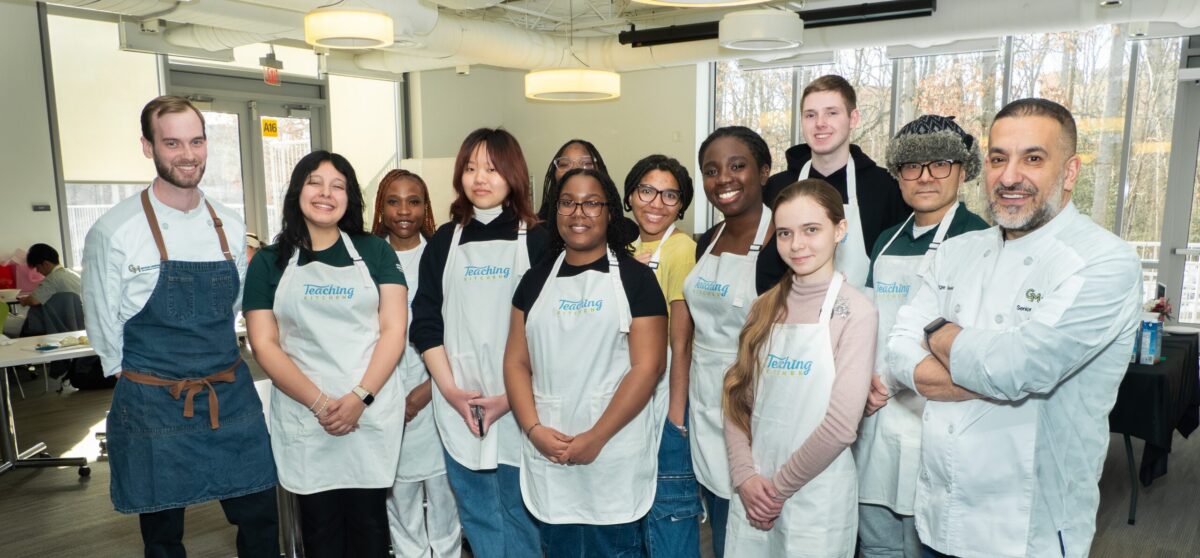
Campus Executive Chef George Charbel demonstrates a cooking technique for students during a Teaching Kitchen session, as participants measure ingredients at a hands-on station.
Campus Executive Chef George Charbel guides students through a hands-on lesson during Mason Dining’s Teaching Kitchen event in partnership with the Office of New Student and Family Programs. Photo by Mason Dining.

Mason Dining Voice and Vision survey (Chartwells Higher Education Dining Services) have made it clear that dining is one of the most powerful touchpoints for belonging:

  • 60.6% of first-year students say dining helps them adjust to college life.
  • 53.1% say dining helps them feel welcome on campus.

For first-year and transfer students especially, the transition to campus can feel isolating. A teaching kitchen changes that dynamic. It creates a shared experience. It lowers barriers. It sparks conversation. It builds confidence. It turns strangers into peers. Events like this don’t just teach students how to cook. They create connection at a moment when connection matters most.

Three students wearing Teaching Kitchen aprons smiles while holding the food they prepared during a Mason Dining Teaching Kitchen session.
Students build practical cooking skills and community through hands-on instruction during Mason Dining’s Teaching Kitchen. Photo by Mason Dining.

Teaching Kitchen is part of Mason Dining’s ongoing engagement-based programming. The team hosts monthly activations centered on different themes, with this Valentine’s Day event developed in collaboration with New Student Programs. Throughout the year, Mason Dining also offers a variety of experiential events, including its Supper Club series – a fine-dining-style experience hosted in the dining halls.

At George Mason, dining is more than a service. It is a strategy for belonging – one intentionally designed to support student transition, build confidence, and reinforce the university’s commitment to helping every student succeed.

Transfer Nation 2026 Builds Community for Transfer and Contemporary Students


By Tiffany Boggs, Student Media. Edited by Chelsea Xu, UL Marketing and Communications. 

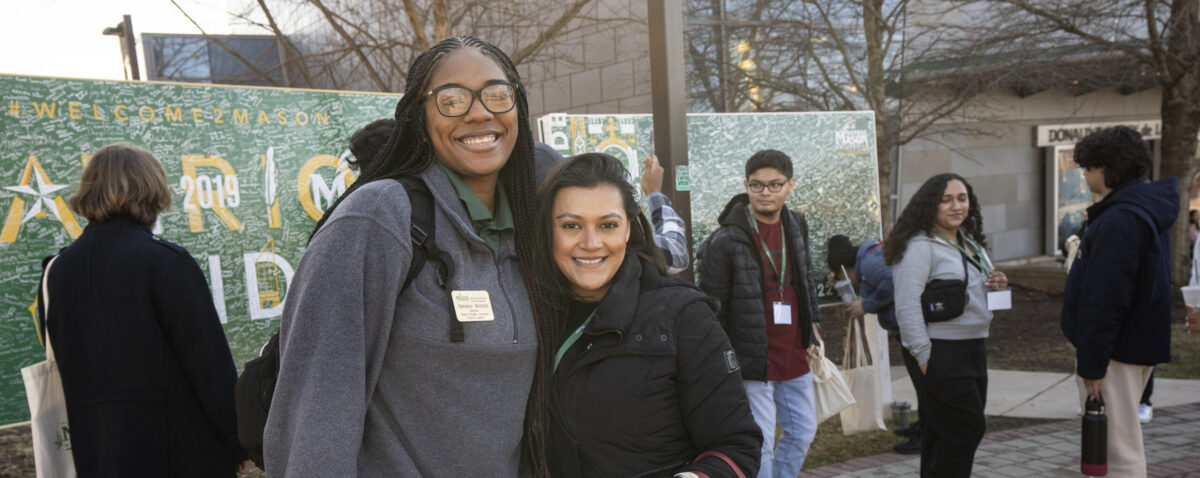
On February 4, Transfer Nation 2026 welcomed transfer and contemporarystudents for an afternoon focused on connection and reflection. As part of George Mason University’s First-Year Connection programming, the event emphasized community-building and highlighted the academic and personal support systems available across campus. 

First-Year Connection initiatives are designed to enhance engagement, strengthen academic success, and support personal growth for students new to George Mason. For transfer students who often have less time to acclimate than first-year students, the need for early connection is especially critical. 

“This particular event is really a chance for transfer students to meet each other and share that they are not alone in their experience here,” said Caroline Simpson, assistant director of New Student and Family Programs (NSFP). “They’re not the only ones going through different challenges or struggles. They have community.” 

Simpson noted that the gathering also encouraged students to set early goals for the semester – an important step for transfers navigating a new academic environment on a compressed timeline. 

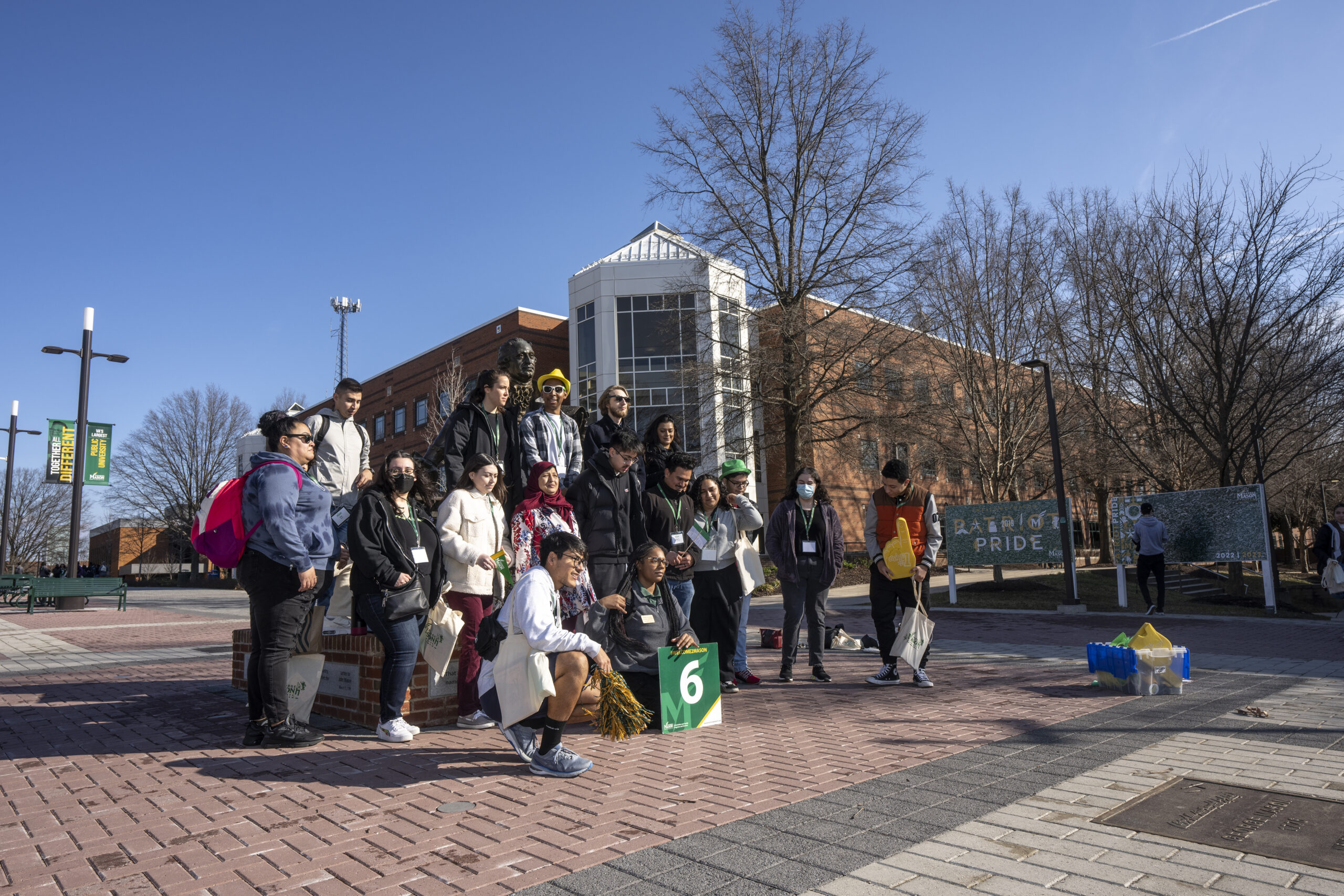
Students gather in front of Johnson Center. Holding a sign that says "6"
Students pose at the George Mason statue during orientation on the Fairfax Campus. Photo by Evan Cantwell/Creative Services

Getting connected 

Richard Tenia, who transferred from Northern Virginia Community College in Sterling, Virginia, entered George Mason in fall 2025 with plans to refine his academic focus in Arts and Visual Technology and push beyond his comfort zone. Adjusting to a larger campus proved challenging at first, he said, but support from resident advisors (RAs) and engagement through Mason360helped him build connections more quickly than he had anticipated. 

Zell Preston, a transfer student from Laurel Ridge Community College in Middletown, Virginia, highlighted the university’s diversity and campus involvement as central to her experience. She credited her success coach with helping her transition from forensic science to criminology and connect with Counseling and Psychological Services (CAPS). The breadth of support at George Mason, she said, made a significant difference in her transition. 

Transfer Nation also highlighted support for working adults balancing professional and family responsibilities. Jennifer Rogel, who manages two full-time jobs while enrolled as a full-time student, said transfer-focused programming eased her transition. After attending two transfer events in November, she gained clarity on course registration and access to follow-up resources. Receiving a free laptop through the Student Support and Advocacy Center proved especially instrumental. 

For Rogel, the experience underscored an important point: resources only matter if students know how to access them. “I believe there are resources for everybody,” she said. “The thing is, are we taking advantage of them? Do we know those resources exist?” 

Transfer Nation addressed that gap directly. By making support visible – and personal – the event helped ensure that services did not remain abstract listings on a website, but tools students felt confident using. For students who arrive at George Mason mid-journey, connection is not incidental. It is structured, supported, and made visible. Transfer Nation reflects a broader institutional commitment: that at George Mason, every student succeeds – including those who began somewhere else. 


Conversations Across Difference Fosters Dialogue about AI


By Minsoo Kim, student leadership consultant, Center for Leadership and Intercultural Engagement.

Conversations Across Difference” is a new initiative from the Center for Leadership and Intercultural Engagement, led by student leadership consultants. Students, faculty, and staff are invited to join small-group discussions on timely and sometimes challenging topics in a respectful setting. These conversations are designed to be welcoming, allowing people to share different viewpoints, challenge ideas, and build understanding. Rather than debating to “win,” the focus is on listening, asking thoughtful questions, and understanding others’ perspectives.  

The first Conversations Across Difference event on February 10, “Artificial Intelligence: Friend or Foe?” explored how AI tools might help close learning gaps or widen them. Studentfacilitators reported that participants gained an appreciation for new perspectives and a more balanced view of AI. “During the conversation, I realized that perspectives on AI vary depending on the field of work a person plans to pursue,” said Madison Joung, a senior studying computer game design. “I feel that this discussion also showed how we want to approach AI in our lives, which is keeping the human aspects of our lives while using AI as a tool rather than a replacement.”    

The program helps students build empathy, communication skills, and confidence to discuss complex issues. It also supports a stronger sense of belonging and connection. The structure gives participants a safe space to share and connects them with people across diverse experiences and backgrounds. To learn about upcoming topics and to register, visit https://clie.gmu.edu/convoacrossdifference/.  


Josh Johnson Headlines Homecoming Week with Precision and Wit


By Tiffany Boggs, Student Media. Edited by Chelsea Xu, UL Marketing and Communications.

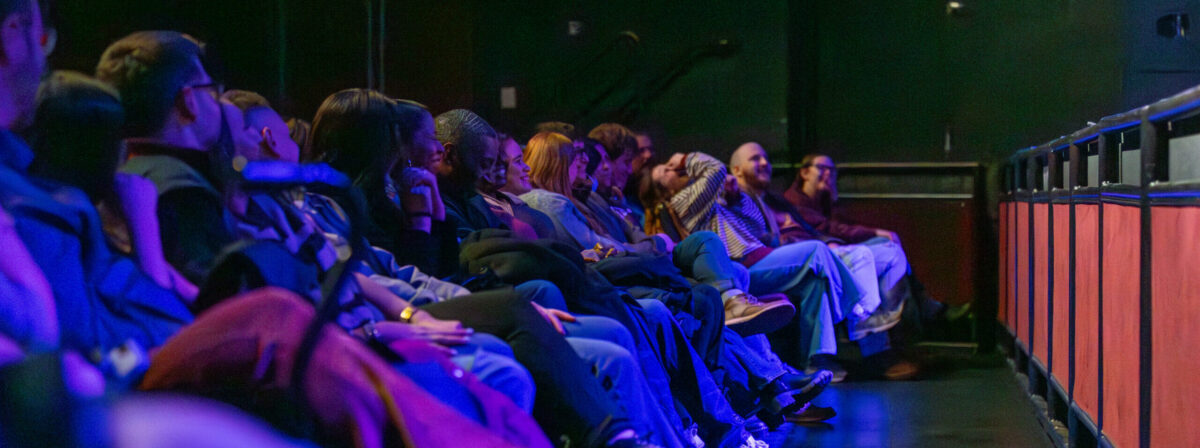
Homecoming 2026 at George Mason University unfolded as a weeklong celebration. Events included trivia nights, pep rallies, a lip-sync battle, a day of service, a city crawl in downtown Fairfax, and a weekend festival culminating in basketball at EagleBank Arena.

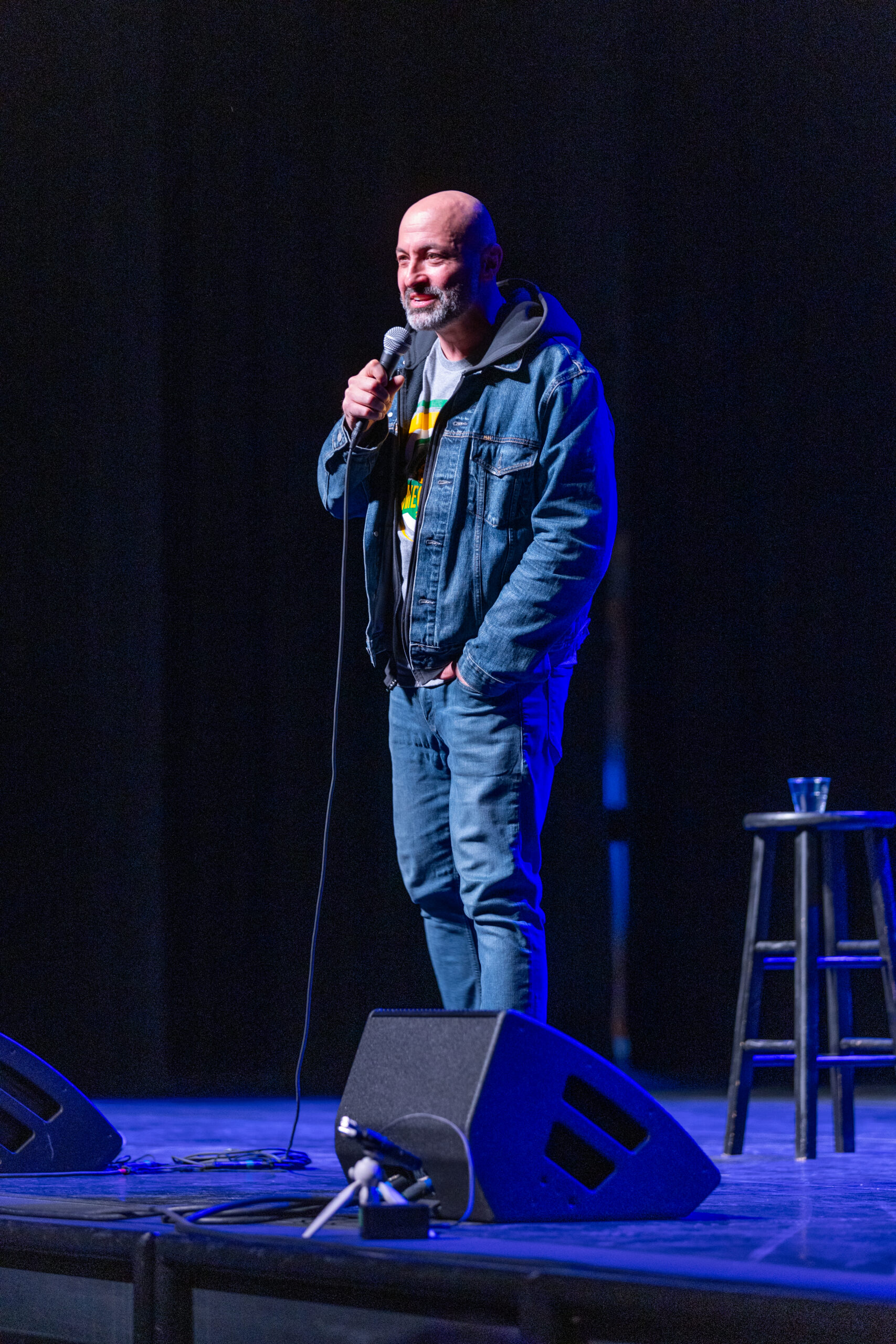
On February 5, laughter filled the campus. As this year’s Homecoming Headliner, The Daily Show correspondent Josh Johnson performed to a packed Center for the Arts, delivering a set defined by control, clarity, and deliberate timing.

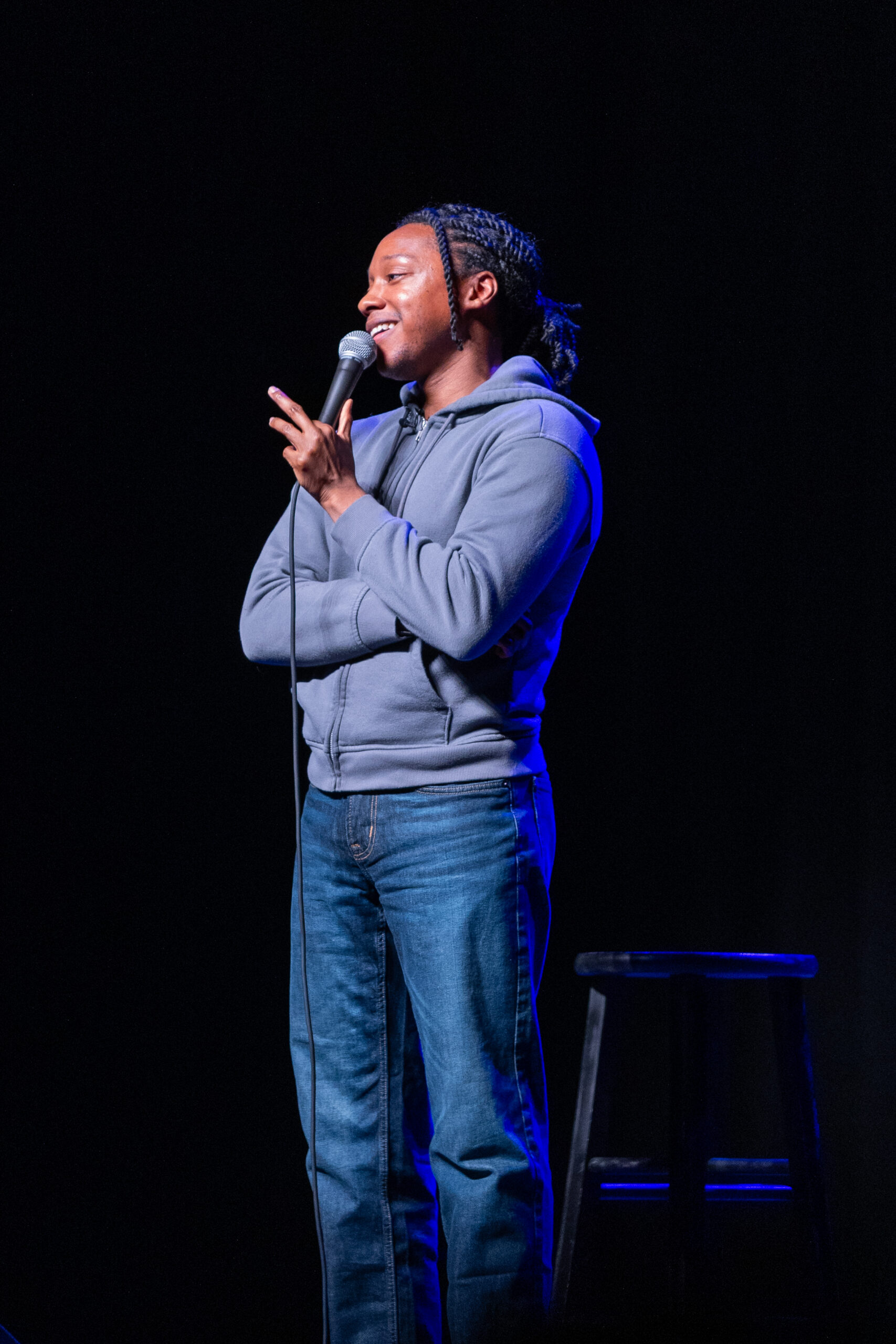
The evening opened with one of George Mason’s own, Rahmein Mostafavi, BA Theater ’99, returning as the opener, bridging past and present before Johnson took the stage. The pairing felt deliberate: an alumnus shaped here, followed by a nationally recognized voice.

Rahmein Mostafavi, BA Theater ’99 opens for Josh Johnson

Johnson’s style resists spectacle. Seated on a stool, leaning slightly forward, he builds long-form narratives rather than chasing quick punchlines. Stories stretch, pivot, and land cleanly. He threaded humor through commentary on national headlines without overplaying the moment. When he shifted toward civic engagement, applause cut through the laughter. The transition felt measured, not theatrical. Johnson trusted the room to follow along.

That balance resonated across generations. Junior Heather Schneider described the impact succinctly: “I was laughing so hard I gave myself a headache. My face hurts.”

Josh Johnson performs as George Mason’s 2026 Homecoming comedy headliner

Bridget Rose, 65, called Johnson “sharp” and well-informed. When she called out “vote,” Johnson responded with a story about casting a ballot in a local Brooklyn election, the only voter present. The absurdity landed immediately. The implication lingered.

As Johnson closed his set, the audience rose in a standing ovation.

Homecoming brought the George Mason community together across formats: competition, service, celebration, and conversation. Throughout the week, student organizations hosted events, alumni returned to campus, and crowds filled athletic venues and festival spaces. Johnson’s performance added another dimension to that momentum. Bringing a nationally recognized voice like Johnson to campus – alongside alumni talent like Mostafavi – reflects the university’s willingness to connect past and present while highlighting cultural relevance alongside academic and athletic achievement.

Student Consulting Group Brings Expertise to Business Development in Fairfax City


Sarah Holland, Office of University Branding.

Experiential learning is one of the ways George Mason prepares its students for life beyond the classroom. It’s a core part of our mission. For Costello College of Business sophomore Iman Chaudhry, it’s also an inspiration that helped shape Mason Consulting Group’s (MCG) new venture: pro bono consulting support for local small businesses in Fairfax City.

MCG began as a means to educate the George Mason community about consulting as a career path. When Chaudhry, the current president of MCG, began an internship with Fairfax City Economic Development (FCED), she came with a vision for the group to expand their impact and reach through free consulting services for local businesses in Fairfax City.

“It was mutually beneficial: we help strengthen our local community and support small businesses, as well as providing experiential learning opportunities aligned with Costello’s strategic priorities,” she said. “We still want to educate the community about business consulting, while providing real, tangible, experiential learning opportunities to students where they’re working with a real-life client.”

As an intern, Chaudhry served as a bridge between FCED and Costello: “A person on the inside,” she said, who helped make the initiative successful.

With support and guidance from FCED, Chaudhry and the group developed the program structure, reviewed applications, selected the inaugural clients, and negotiated a contract deal with FCED to provide funding to support implementation of their recommendations.

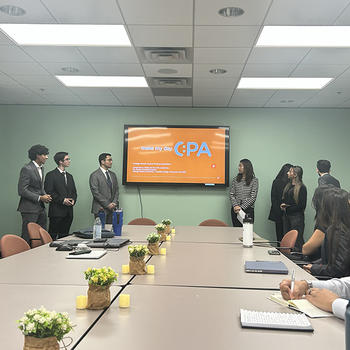
MCG completed their first round of consulting in Fall 2025, serving two Fairfax City clients: BE2 Pilates and Make My Day CPA. Throughout the semester, the team held regular meetings with clients to provide updates and pitch ideas; at the end, they presented their final recommendations and deliverables to both businesses and FCED.

“Knowing how to market my business has been my Achilles’ heel,” said Julia Hughes, founder and owner of BE2 Pilates. “I thought I’d toss my hat into the ring when I saw the call for applications for the program.”

The team provided Hughes with a comprehensive social media marketing plan and a range of business development recommendations, such as adding QR codes to business cards and developing a pricing structure for students.

Mason Consulting Group presents their recommendations to Make My Day CPA. Photo provided.

“Everything they gave me in terms of deliverables are things that could be started on the small scale and grown over time,” Hughes said. “And their recommendations helped me think outside of the box for business development, thinking more broadly about with whom I can partner, with whom I can connect.”

MCG’s services are free to those businesses that are accepted through the FCED program. Hughes noted that the quality of the business consulting provided was above and beyond her expectations.

“The level of professionalism, the product presented, and the deliverables MCG provided were all of a caliber that far surpassed their years of experience,” said Hughes. “I was quite  impressed by them at every step of the way.”

“The Mason Consulting Group has done an outstanding job diving deep into the consulting world. The students are getting hands-on experience with real clients to understand the dynamics of consulting and the complexities of the business world,” said MCG’s faculty advisor Katherine Rosenbusch, associate professor of management in Costello.

After the success of this first cohort, FCED has agreed to extend funding for another semester. MCG is selecting their next round of clients for the Spring 2026 semester.

“We’re a young club, but I think Costello and George Mason’s vision of high access and high outcomes makes us stand out,” Chaudhry said. “I want to help put George Mason on the map as a hub for high-caliber student talent delivering real-world impact.”

Patriot Pantry Brings Food Security Support to Mason Square


By Chelsea Xu, UL Marketing and Communications.

On January 20, George Mason University expanded one of its most essential student support services. The Patriot Pantry officially opened a new location at Mason Square, extending food security resources to a campus that primarily serves graduate and professional students.

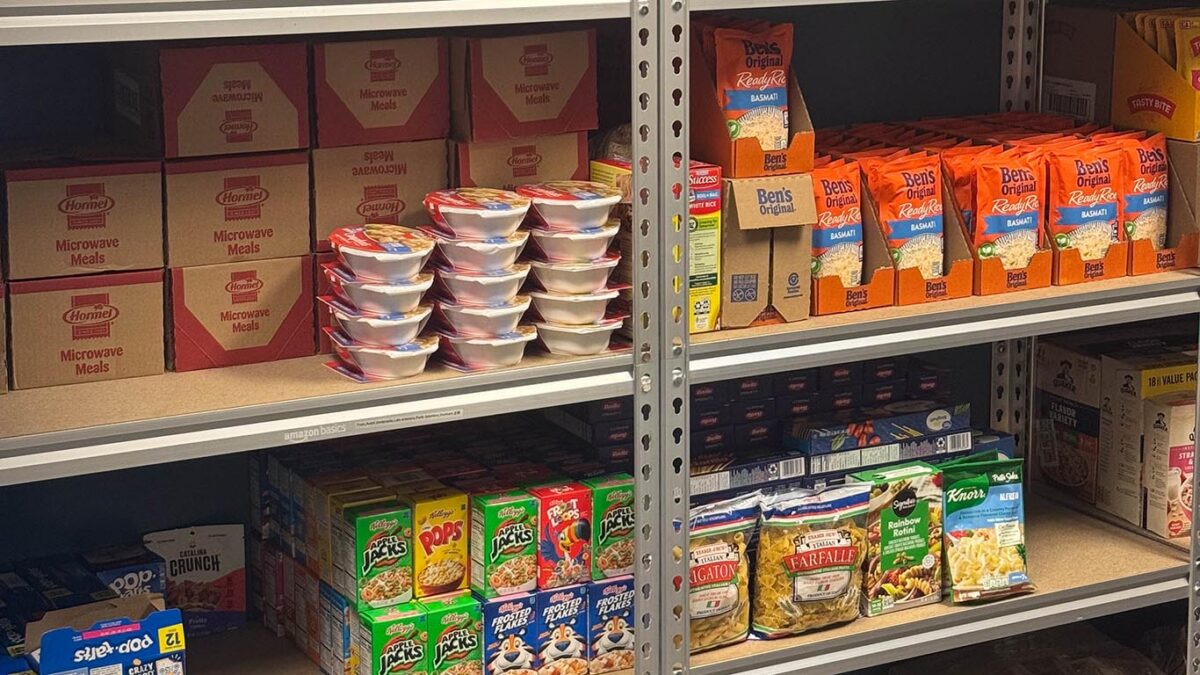
Operated by the Basic Needs Services team at the Student Support and Advocacy Center (SSAC), the Pantry provides nonperishable food and hygiene products to students experiencing food insecurity. The service is designed to reduce stigma and remove barriers that can interfere with academic success.

From classroom project to campus resource

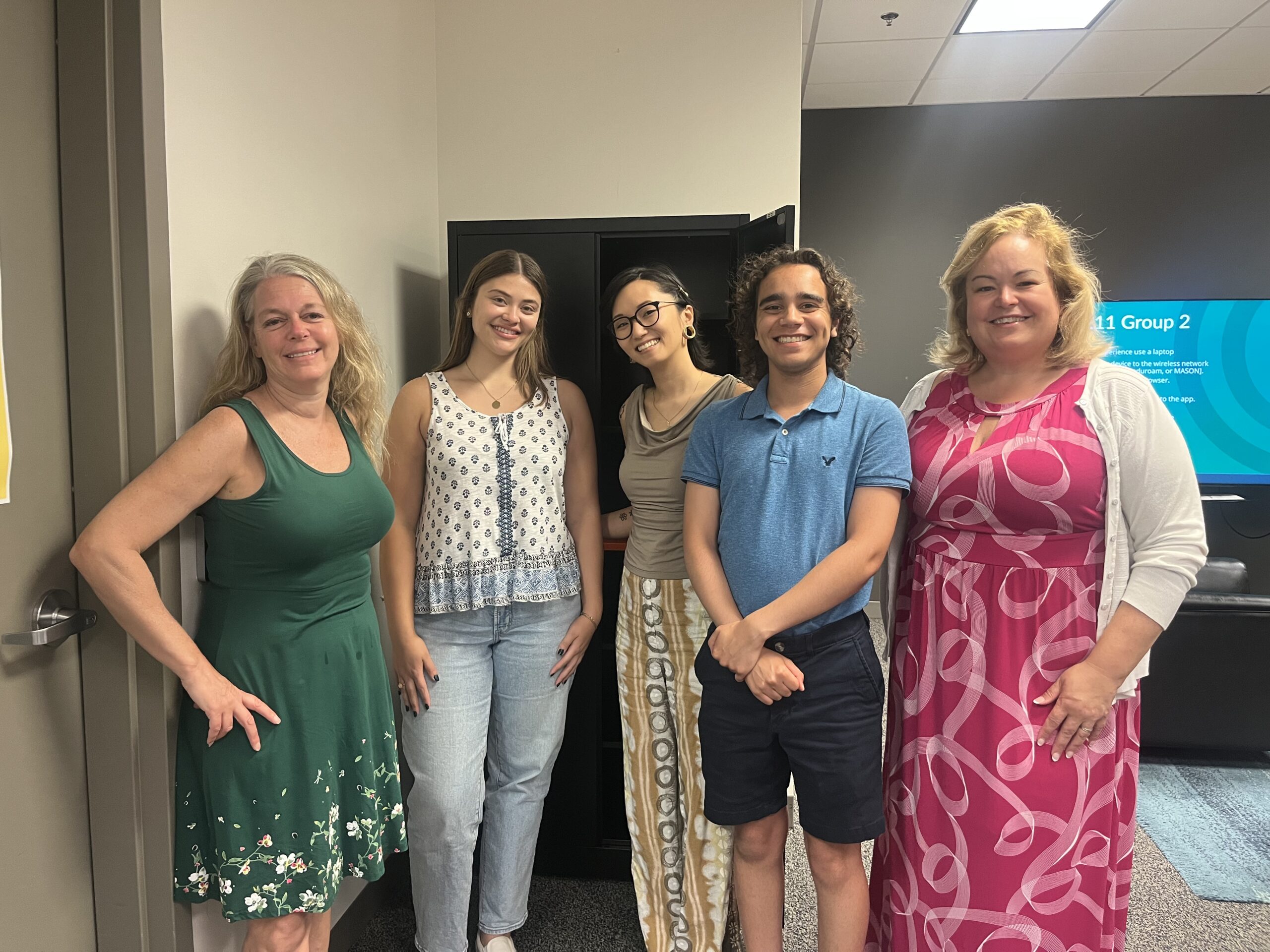
The idea to expand the Patriot Pantry to Mason Square began with students who noticed a gap. Julia Frost (Environmental Science’25), Crystal Park (Environment and Sustainability Studies’25), Isabella Barrera (Environment and Sustainability Studies’25), and Noah Brown (Business’25) met in EVPP 480: Sustainability in Action. Through their research project mentored by Jennifer Sklarew, assistant professor in the Department of Environmental Science and Policy, they identified food access as a particular challenge for Mason Square’s predominantly graduate and professional student population.

Jennifer Sklarew, assistant professor in the Department of Environmental Science and Policy, Isabella Barrera, Crystal Park, Noah Brown, and Melissa Thierry, director, University Life Regional Campuses, standing behind the pick-up cabinet for the Patriot Pantry at Mason Square. Photo by Jasmine Sklarew.

“Food insecurity is a challenge no one should have to face, yet many do,” Barrera said. “Our goal is to help ensure that all students have access to a basic human right: food.”

Through partnership with SSAC, the students’ observations became part of an existing network of basic needs support. With funding from a Mason Impact Mini Grant awarded by the Office of Undergraduate Education, the students funded the storage cabinet now used for Pantry order pickup. SSAC assumed responsibility for operations, integrating the Mason Square location into its broader Basic Needs Services model and ensuring the Pantry would function as a permanent, low-barrier resource.

Addressing basic needs as a foundation for success

The Patriot Pantry at Mason Square builds on a service with a long history at George Mason. What began nearly 12 years ago on the Fairfax Campus as a volunteer-led effort became a permanent student service in 2016, housed within SSAC. Since then, Pantry usage has increased by 990 percent.

The expansion was also supported by funds from the State Council of Higher Education for Virginia (SCHEV) through the Hunger-Free Campus Food Pantry Grant Program. These funds will be used to stock the Patriot Pantry at Mason Square with nonperishable food items and essential hygiene product, with additional support provided by a $10,000 College Pantry Grant from the Capital Area Food Bank, awarded to SSAC at a time when demand for basic needs support continues to grow.

Dwayne Hamilton Jr., assistant director for basic needs services, emphasized the Pantry’s role in supporting students from diverse economic backgrounds, particularly graduate students who are often overlooked in higher education support services.

“Addressing basic needs concerns through the Patriot Pantry at Mason Square moves students toward the ideal experience at George Mason: freedom and learning,” he said.


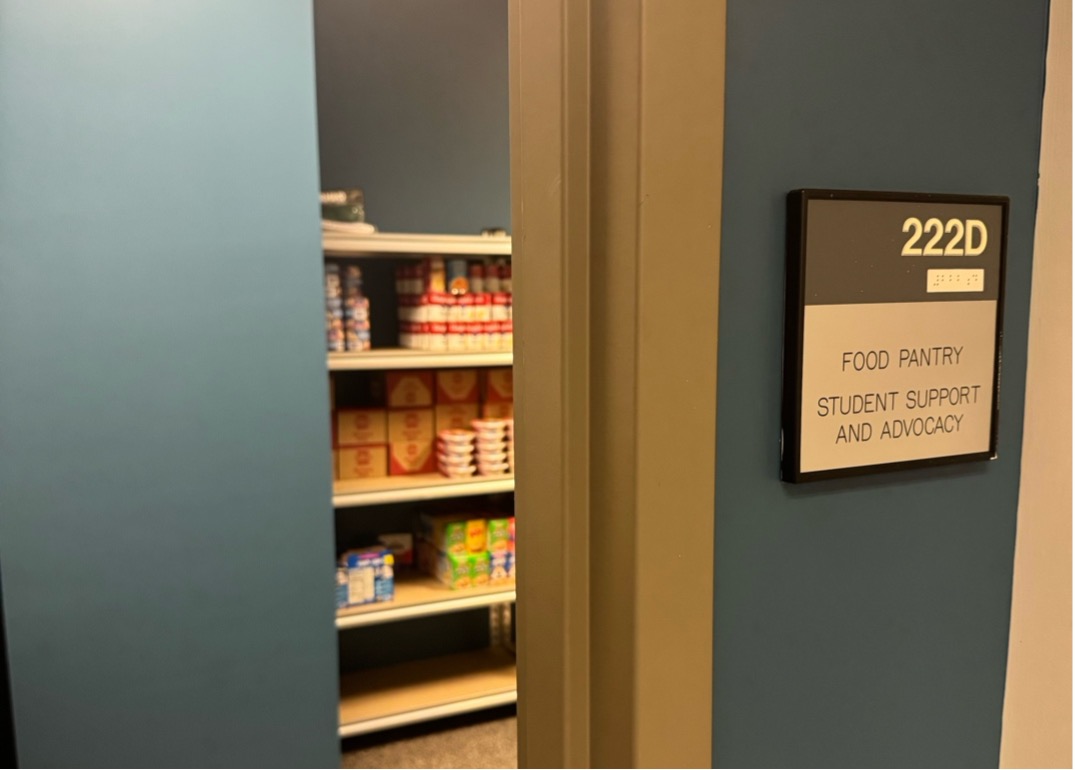
Patriot Pantry at Mason Square in Room 222D in
Van Metre Hall. Photo by Dwayne Hamilton Jr.

Students can now place orders through the Patriot Pantry at Mason Square order page and pick up items in the cabinet in the Student Lounge in Van Metre Hall, Room 211—a discreet, accessible location designed to prioritize privacy and dignity.

Community members may also support the Pantry by donating nonperishable food and hygiene products through the Amazon Wishlist, contributing to the Student Food and Housing Insecurity Fund, or dropping off donations in the Student Lounge in Van Metre Hall, Room 211. A full list of accepted items is available on the Patriot Pantry homepage.

Active Leaders Program Draws Record Participation

By Nick Lennon, Center for Leadership and Intercultural Engagement. Edited by Chelsea Xu, UL Marketing and Communications. 

George Mason University’s Center for Leadership and Intercultural Engagement (CLIE) welcomed a wide-ranging group of students into its Active Leaders program this fall, marking the program’s highest level of participation to date. 

Facilitated by CLIE Co-Director Nick Lennon and graduate assistant Abhigya Pandey, the 10-session leadership development series brought together undergraduate and graduate students for a semester-long exploration of leadership in practice. Enrollment is open on a first-come, first-served basis, with cohort size intentionally limited to support discussion and participation. In recent years, graduate students have made up between 27 and 46 percent of those who complete the program. 

A Sustained Commitment to Leadership 

The program requires a significant commitment: students were expected to attend at least eight of 10 two-hour sessions over the semester. This fall, Active Leaders generated approximately 900 student contact hours. Reflecting the program’s reach, 56 students completed the program, up from 35 the previous year.  

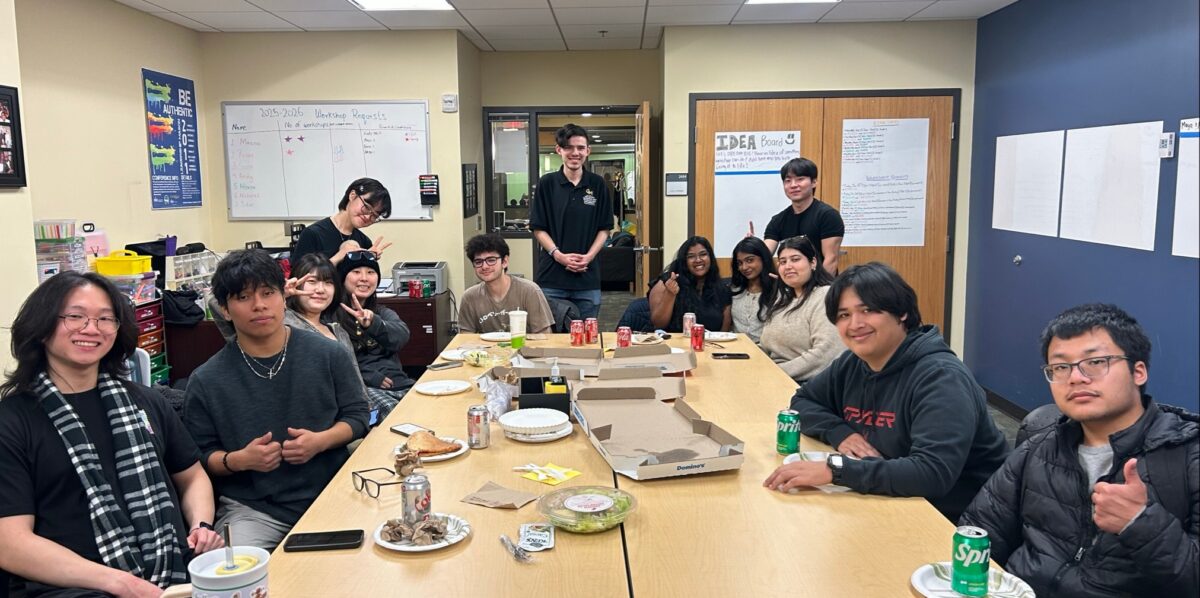
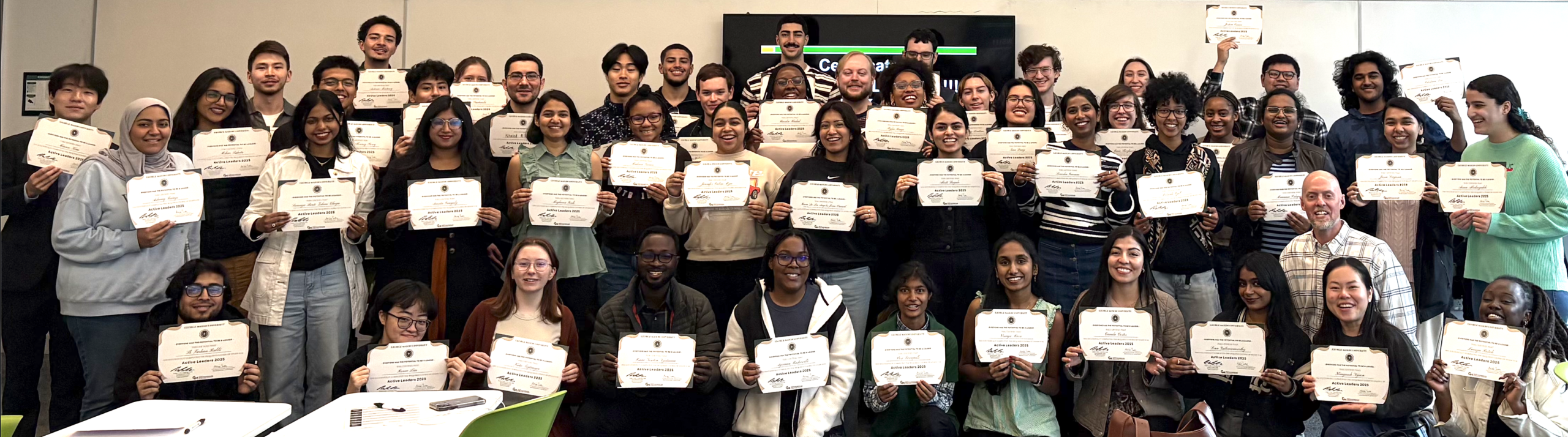
Students celebrate the completion of the program. Photo provided.

Post-program assessments show that students emerged with stronger relationships and greater confidence in their leadership skills. Nearly all participants said they felt more connected to others, and every student who responded said they would recommend the program to a peer. 

Students reported the greatest growth in understanding their own strengths, developing emotional intelligence, and learning how to work with people across differences. In most of the areas measured, more than 90 percent of participants said they experienced meaningful growth. 

Breaking the Myth of Born Leaders 

One of the program’s most intentional goals is to challenge the myth that “leaders are born, not made.” By the end of the semester, agreement with that statement fell from 28 percent to just 7 percent, indicating a shift in how students understood their own potential as leaders.  

Active Leaders is designed for students with and without formal leadership titles. Rather than focusing on lectures, the program emphasizes conversation, reflection, and hands-on activities. Sessions introduce students to leadership theory while encouraging them to apply those ideas to real situations, from navigating group dynamics to engaging in difficult conversations. 

“Active Leaders has been intentionally designed as a space where every participant can feel seen, heard, and valued,” said Lennon. “Participants consistently tell us they feel welcomed and empowered, and that sense of belonging allows real learning to happen. The program centers students’ voices and creates the trust needed for honest, open, and meaningful conversations.” 

Student reflections echoed that experience. Participants described using program strategies to resolve conflicts, better understand different perspectives, and collaborate more effectively. “Everyone was heard and respected,” one student wrote. Another shared, “I felt welcomed, and that’s why I made it to the end.” 

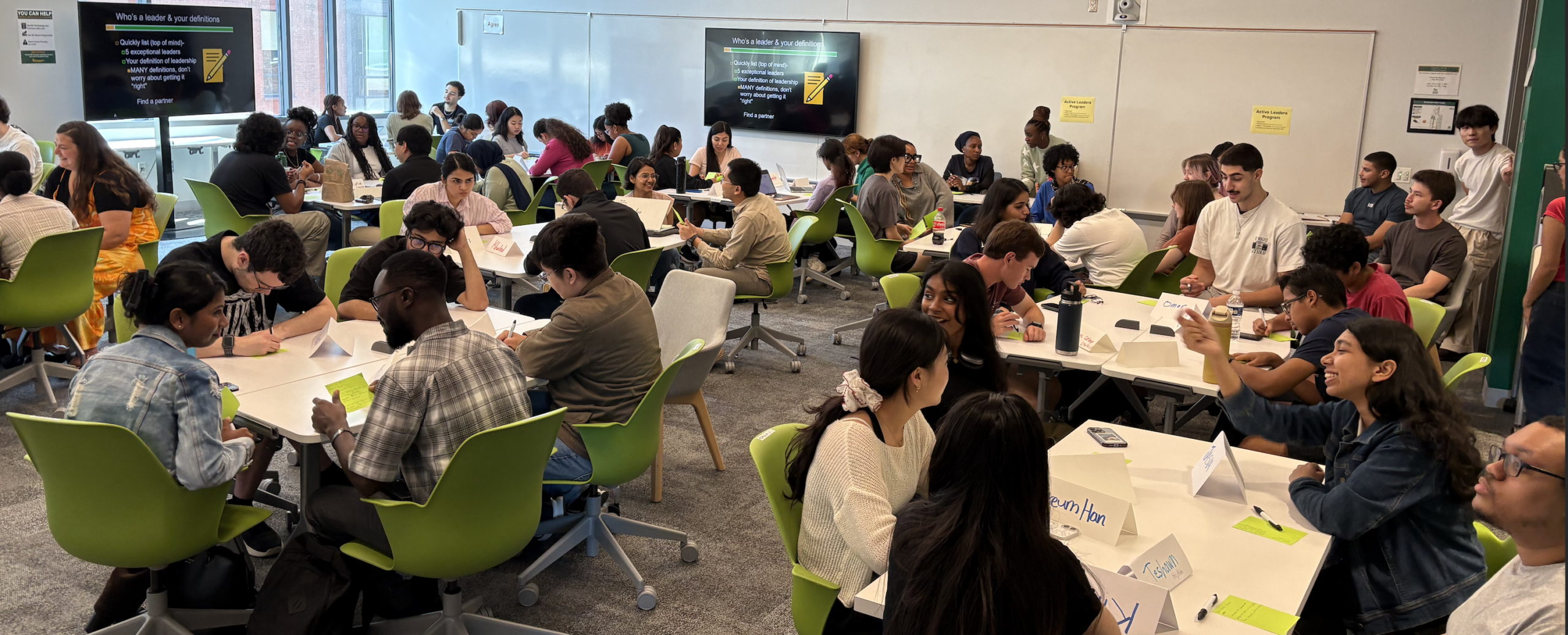
Photo provided.

As part of CLIE and University Life, Active Leaders reflects George Mason’s broader commitment to leadership development rooted in inclusion, ethics, and civic engagement. “I loved this program,” one participant wrote, noting its impact beyond the classroom. “I wish there were more programs like this one.” 

The program is offered each fall semester. For more information about Active Leaders and other CLIE programs, visit the Center for Leadership and Intercultural Engagement’s website.  

Graduation Spotlight Series: Pursuing a Passion and Finding Her Wings


By Mathilda Tataw, Student Media. Edited by Jane Rooney, UL Marketing and Communications. 

College of Humanities and Social Sciences student Allyson Bautista spent her undergraduate years at George Mason breaking barriers by becoming the first pilot in her family and finding her voice through self-discovery and mentorship. Through resilience, support networks, passion, and self-advocacy, the winter 2025 graduate found success blending two different fields: public relations and aviation.  

Before she ever sat in the cockpit of a plane, Bautista had to learn the courage to speak up. That small shift—from staying silent to starting conversations—became the foundation of both her public relations journey and her dream of becoming a pilot. 

Dreaming at 30,000 feet  

Before considering college and public relations, Bautista’s mind was on being a pilot. “I was thinking of flying long before anything else,” she said. “I went to Japan for my first solo trip seated in the back of a Boeing 777. And I told myself, I don’t want to be sitting in the back of the plane. I want to be in the front of the plane.”  

That moment led to Bautista joining the College of Engineering for a minor in aviation management in 2024. “Now I have the first license, and it still feels unreal. I know that this is aprivilege, given that there aren’t many women in aviation in the United States.” 

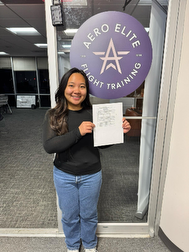
Bautista earning her pilot license in 2025. Photo provided.

The milestone carried deeper meaning. “I’m Filipino, and Filipino females tend to be nurses,” she said. “But I broke the culture in my family.  I wanted to be a role model for people who are coming from a place where college is a privilege rather than a choice.” 

Bautista recalled the first moment when she knew she was exactly where she was meant to be: practicing flight patterns with her coach, feeling a bit nervous and tense during the practice when her coach and co-pilot provided guidance, and listening to music. 

“It was a miracle. I landed a plane and realized I could do it and I could continue this entire journey with my instructor supporting me.”  

 Finding lift in community   

As a first-generation student, Bautista struggled to find her footing. “My younger self would never have imagined being where I am. I thought that I’d never attend college because of how much it costs,” she said. “What led me here was persistence. I kept telling myself to be persistent in the things that I really want to do.  You have to keep pushing yourself into making a better world for yourself because nobody else can do it for you.”  

Through a partnership between George Mason University and the DC College Access Program, Bautista was able to attend college and pursue myriad opportunities, includingconferences, internships, and mentorships. These experiences gave her the chance to explore different majors and passions before choosing her path. 

She credits her academic advisor, Megan Tucker, with sharing valuable guidance and suggesting that public relations was a good match for her strengths. “She and some of my professors helped me improve and gave me the encouragement I needed to flourish in all of my courses at George Mason. Dr. Tucker’s recommendation to try public relations allowed me to use my creativity and discover what I wanted to do,” she said.  

Support from her professors helped her build her interpersonal and networking skills. “I knew I was on the right path when I worked with my first client in a PR class, someone who genuinely needed strategic communication support and trusted me with their project.”  


A push to take flight 

With guidance from her mentors, as well as the university’s Success Coaching team, Bautista developed confidence in her degree and her work. “I struggled for a long time to believe in myself, but George Mason helped me see my strengths and reminded me of the potential I often overlooked. What once felt impossible slowly became real because I had the space to grow and the platform to celebrate everything I have worked for.” 

To fellow George Mason students who struggle with determining their path, she recommends stepping outside their comfort zone. “Take things one step at a time and make sure that you’re looking after yourself and leaning on friends and family for support.  Success comes from being encouraged in the right direction, believing in yourself, and finding the courage to pursue a path that brings you joy and purpose.”