University Life

Graduation Spotlight Series: Building Community Worldwide Through Humanitarianism and Leadership


By Mathilda Tataw, Student Media. Edited by Chelsea Xu, UL Marketing and Communications. 

College of Engineering and Computing student Ayham Elayan, a fall 2025 graduate in bioengineering, spent his undergraduate years doing what many students hope to achieve but few manage at his scale: building community on campus, across the region, and around the world.  

When Elayan first came to George Mason University, he felt an ache familiar to many students: the quiet question of belonging. As an Arab American engineering student, he searched George Mason’s landscape of student organizations for a place where he felt seen.  

One afternoon, sitting in a professional development class, he and a friend listened as their instructor listed clubs and affinity groups such as the Society ofHispanic Professional Engineers and the National Society of Black Engineers. That’s when a spark caught. 

“ We kind of looked at each other—we’re both Middle Eastern and Arab,” he said, “And we were wondering, why don’t we make an organization for students withour background?”   

Engineering a community of his own 

That conversation became the blueprint for the Arab American Association of Engineers and Architects (AAAEA) at George Mason. Elayan and his friend connected with Arab American students and faculty, pitched the idea to the national organization, and received immediate enthusiasm. 

By the next semester, AAAEA became an officially registered student organization. What began as Elayan’s search for belonging quickly turned into a home for others—a professional, cultural, and academic community. The impact spread almost instantly. Within months, Virginia Tech, the University of Maryland, and George Washington University launched their own chapters.   

Today, AAAEA operates as a regional network across the Washington, D.C., area. Its growth echoes Elayan’s belief that community often flourishes beyond the borders of a single campus. “ I think everything that exists that is successful has to start with someone taking a leap,” he said. “I was grateful to have branched out.”  

Engineering for humanity 

Elayan’s impact didn’t end with regional community-building. As he was helping create spaces for Arab American engineers in the U.S., he was also lookingoutward to global humanitarian work. 

Through George Mason’s Study Abroad program, guided by bioengineering faculty, Elayan traveled to Ecuador, where he helped build prosthetic legs for amputees in need.   

“ That was the first time we had taken students to Ecuador,” said Elayan. “It was a great experience and important to me. I come from an area where people are less fortunate. It’s a big humanitarian crisis. So, when I worked with prosthetics, I just kept tying it back to my country and how I hope to be able to bring it back to them.”  

One patient he worked with—a man who lost a leg due to diabetes—told him the prosthetic “re-enabled” him. Others shared similar experiences. The team watched, over only a week, as several patients took independent steps for the first time in years. 

Elayan working with prosthetics in Ecuador. Photo provided.

The experience reframed his understanding of engineering. “I always knew that engineering could make a difference for people’s lives, but it was nice to see it in action and firsthand, especially in bioengineering. It can be challenging, but it’s very rewarding.”  

Elayan hadn’t always planned to study abroad. The idea felt distant until George Mason’s short-term, faculty-led programs reframed what global learning could look like. 

“I wasn’t sure if I was going to study abroad during my time at Mason,” said Elayan, recalling his hesitation. “To others who are hesitant, I suggest taking advantage of the short-term opportunities. I was grateful for those because I didn’t have to spend an entire semester abroad, which can be daunting or scary for people.”  

As graduation approaches, Elayan encourages students to explore the opportunities that feel personally meaningful, “so they can be motivated to succeed and make animpact. We can tackle so much and make an impact across the world,” he said. His story shows that success at George Mason isn’t prescribed; it’s built, discovered, and redefined—one student at a time. 

Graduation Spotlight Series: A Journey Shaped by Perseverance, Faith, and Purpose


By Tiffany Boggs, Student Media. Edited by Jane Rooney, UL Marketing and Communications. 

Leaving Afghanistan for the United States in 2019, Sahar Qureshi embraced the challenge of earning an education while working full-time, supporting her family, and learning a new culture—a journey that embodies the American Dream. 

Qureshi’s path is grounded in her faith, perseverance, and gratitude. She came to George Mason University in 2023 seeking flexibility and understanding. As a student, she found academic success and a community that helped her grow into the person she has always wanted to become.  

This month, Qureshi will walk across the stage to receive her bachelor’s in operations and supply chain management from the Donald G. Costello College of Business. She will be the first in her family to graduate from college.  Her story reflects how success can be rooted in determination, resilience, and a passion for helping others. 

Born and raised in Afghanistan, she learned from her parents the importance of maintaining strength regardless of the pressure you face. She recalled seeing her father come home every night with a big smile, making everything feel lighter for his children after long hours at work. Her mother would come home after a full day at work,prepare food, and tend to the family’s needs without complaining.    

As an adult starting to handle her own responsibilities, Qureshi recognized the burden her parents carried throughout her childhood. But what stays with her are the sacrifices her parents made when they left everything behind to give their children a better future education.  

“As a child, I never saw the pressure behind their strength. As an adult, I finally understand how much they were balancing and how strong they truly had to be,” she said.  

Open to opportunities 

Qureshi emulated her parents’ perseverance by balancing being a full-time undergraduate student and working full-time. A typical day for Qureshi began with getting ready for work while mentally planning her assignments. During breakfast, she reviewed class notes, responded to group emails, and noted upcoming deadlines. After work, she drove to campus for her evening classes. Those drives became the time she shifted her mindset from “professional responsibilities to academic expectations.” 

She found time to join the business honor society, attend career services events, and excel in her internships. Along the way, she faced challenges like learning English and opening up in the academic environment. Qureshi developed as a leader through her business courses, group projects, and assignments. Besides drawing strength from her parents’ experience, she also relied on her deep faith, supportive professors, and a strong sense of responsibility to seize opportunities on campus.   

The university’s mission to prepare students for the realities of adulthood drew Qureshi to George Mason. “Mason didn’t just give me an education—it gave me the structure, resources, and encouragement I needed to keep moving toward my goals,” she said.  

After graduation, she plans to continue building her career in business and hopes to earn a master’s degree in diplomacy. Her long-term goal is to create global connections and advocate for girls’ education internationally. Qureshi explained that this passion comes from meeting young girls who are “talented, driven, and full of ambition” but don’t have access to the opportunities they deserve. She wants to work in spaces to contribute to policy, international partnerships, and organizational efforts that prioritize educational rights through leadership, advocacy, or community involvement.  

Qureshi defines success as becoming the person her younger self had always imagined. “I am proud that I never gave up. My journey shows other young women that with faith, hard work, and determination, you can rise above any challenge.”  

Family of the Year Award winner: Eun Kyung Choi


This article was written by Anna Ondieki. Originally appeared on the Student Success Blog by College of Education and Human Development.

Eun Kyung (EK) Choi is a full-time graduate student in the Inclusive Early Childhood Education Program at George Mason University, and a student parent. EK is also the winner of the Dr. Alan and Sally Merten Family of the Year Award! Keep reading to learn more about EK’s family, and their experience at George Mason.

When asked why she nominated her family for this award, EK shares, “I’m very thankful to my husband.”

Moving from South Korea, EK’s husband worked for the Ministry of Foreign Affairs of the Republic of Korea with a posting to the Embassy in Washington, DC. After getting married and making this big move, EK chose to pursue a teaching license with the goal of working at international schools around the world.

However, EK’s pursuit of a new degree became uncertain after she gave birth; “I wasn’t sure how I could finish my master’s degree.” That’s when her husband stepped in, deciding to “take a year of parental leave to care for our baby. And it allowed me to focus on my studies. Without his support, it would not have been easy to take my current classes or prepare for my internship next semester.” Thanks to this support, EK has successfully completed her Praxis tests for her internships!

EK lives with her husband and baby in Masonvale, and enjoys walking around Fairfax campus with her baby in a stroller.

Her family also enjoys exploring Virginia’s many beautiful parks, noting, “We often walk to Old Town, especially the Fairfax Regional Library, and stop by De Clieu Coffee & Sandwiches for a treat… when we don’t feel like cooking, we eat at Southside or Ike’s.” EK also peruses Mason360 for fun events to attend as a family.

Being part of the George Mason community as both a student and a mom has been a meaningful journey. I hope my story encourages other students who are balancing school and family life.

Eun Kyung Choi

EK’s advice to fellow students balancing family and school:

  • Take Care of Your Health: Parenting is a whole new world. No matter how much support you have, it takes energy. I used to stay up finishing work all night and start work early in the morning, and that was my joy. But I can’t do that anymore, haha. I’ve learned to take care of my body and rest when I can. This season of life is different, but it’s precious and full of gratitude.
  • Share the Responsibilities: Parenting is not a solo journey. My husband and family’s support has made it possible for me to continue my studies. I also try to respect my husband’s personal time, like going to the gym or seeing friends. It helps us both.
  • Use the System: In my case, my husband was able to take one year of paid parental leave, which made this balance possible. In Korea, parents can usually take one year of paid leave plus up to two additional years of unpaid leave. Because this system was so familiar to me, I didn’t fully realize how meaningful it was. However, after talking with Colleen Vesely, my Engaging Families of Diverse Learners professor, I truly came to appreciate not only the existence of this system but also the supportive environment that allows us to use it.
  • Find a Supportive Community: I truly appreciate the welcoming community at George Mason. My professors and classmates have supported me during pregnancy, childbirth, and this parenting season. Special thanks to professor Bweikia Steen for creating a warm and inclusive class, to professor Carly Fisher-Maltese for her kindness during my delivery time, and to my friend Jialin for her care before and after birth. Last but not least, to my academic advisor, Kayla Turner, and internship coordinator, Amanda Davis, for constantly checking on me and handling my situations. Families of the Korean Embassy and friends from the diplomatic community have also been so kind. They brought food, took me on little trips to Baltimore, and even bought my favorite bingsoo from Soricha Tea & Theater. I’ve truly felt cared for.

Love Life x Mason Minds Matter Brings Campus Together for Suicide Prevention and Community Care


Written by Chelsea Xu, University Life Marketing and Communications. Photos by Patriots Thriving Together.

On September 23, more than 300 students, faculty, and staff gathered at Wilkins Plaza on the George Mason University’s Fairfax Campus for the Love Life x Mason Minds Matter Suicide Awareness and Prevention Event. The event was a collaborative effort led by Counseling and Psychological  Services (CAPS), Patriots Thriving Together (PTT), Housing and Residence Life (HRL), and the George Mason Police Department (Mason PD). It also featured partners from Student Health Services (SHS), the Student Support and Advocacy Center (SSAC), TimelyCare, and the Center for the Advancement of Well-Being (CWB).

According to the National Institutes of Health, suicide is the second leading cause of death among college aged individuals worldwide and in the United States. The event aimed to promote mental health and well-being resources while raising awareness of suicide prevention support available to the George Mason community. It continued the momentum of the first Love Life event in September 2024, when CAPS partnered with campus organizations to celebrate life and connect students with care.

Assistant Director of Counseling and Psychological Services Calena Creft noted that this year’s collaboration between Mason Minds Matter and Love Life broadened the event’s reach and deepened its impact.

At this year’s event, Wilkins Plaza came alive with music, conversation, and creative activities. Attendees painted pumpkins at the Mason PD table, wrote and exchanged encouraging notes through the “Leave a Message, Take a Message” wall, and picked up free Insomnia Cookies and CAPS T-shirts after completing a resource “Bingo” card by visiting three participating tables.

For Demarcus Merritt, assistant director of Residence Life, the day carried both professional and personal meaning.

“It really felt like Mason came together for something bigger than ourselves – raising awareness, naming resources, and holding space for suicide prevention and community care,” Merritt said. “Every table created opportunities for people to pause, connect, and feel seen. It wasn’t just an event; it was an experience of what it means to take care of each other.”

Merritt shared that just before the event began, he learned that a former colleague had died by suicide. “Walking back into that event was hard,” he said. “Yet it also reminded me that being in community matters, especially when life hits you the hardest. I was reminded to check in on myself, to let others support me in my grief, and to lean into the same resources we were encouraging students to use.”

As the afternoon concluded, the message was clear: well-being is a collective effort. Love Life x Mason Minds Matter showcased how George Mason’s commitment to community care continues to grow – one conversation, connection, and act of compassion at a time. Building on that success, organizers plan to continue the partnership on a biannual basis, ensuring these conversations remain central to the George Mason experience.

Confidence Meets Opportunity at Fall 2025 Career Fair


By Tiffany Boggs and Mathilda Tataw, Student Media. Edited by Chelsea Xu, UL Marketing and Communications. 

From September 29 – October 1, more than 5,000 George Mason University students filled Dewberry Hall in sharp professional attire and with polished résumés in hand—ready to take the next step toward their careers. 

George Mason’s Career Fair, held each fall and spring semester, is the university’s largest on-campus recruiting event, connecting students with representatives from more than 100 companies and organizations. The event offers opportunities to explore internships, part-time roles, and full-time positions across a range of industries. 

“These are opportunities to get right in front of the employers,” said Philip Wilkerson, employer engagement consultant at University Career Services (UCS). “I like to tell students this is not a place where you can automatically get a job or a magic ticket. It’s a great way to build relationships, get business cards, and stay in touch.”  

Photo by Emily Campos for University Life.

Wilkerson added that while the fair is about connections, success begins long before students step into Dewberry Hall. UCS offers one-on-one advising to help students refine résumés, craft cover letters, and practice introductions—transforming nerves into confidence. “Confidence comes with preparation,” he said. “The more prepared you are, the more confident you are.”

Mary Claire Kraft, employer outreach manager for UCS, expanded on that idea by highlighting the value of research and intentionality. “Number one, check Handshake, so that when students meet an employer they’re interested in, they can share one thing they know about them,” she said. “All of these employers are here to meet you—the student. There is no better expert on you than yourself.”

Iman Chaudhry, a sophomore Honors College student majoring in management information systems, approached the fair with an open mindset. “I think it’s important not to limit yourself, even if you have a specific major,” she said. “There are still benefits to attending all days of the Career Fair.”

Lilliana Russell, a freshman majoring in civil and infrastructure engineering, attended her first fair eager to learn. She arrived early with a list of employers to meet and a curiosity about what her field has to offer. “I’m really just trying to scope out what the different companies in my field are and maybe score an internship,” she said.

Photo by Emily Campos for University Life.

Russell added that her nerves faded once she began speaking with recruiters. “Once I got to know everyone and saw how excited they were to talk with students, I let go of the preconceived notions about the event,” she said.

Brook Haiamr, a junior, offered simple advice for future fair attendees. “Go in with confidence, get your name out there, and show genuine enthusiasm,” she said.

Kraft closed with a final reminder: “Practice if it makes you feel comfortable,” she said. “But resist the urge to go robotic. Be authentic—they came to meet you.”

What’s next: Students can keep the momentum going at the Internship Fair on Thursday, October 23—another chance to research organizations, meet recruiters, and convert preparation into opportunity.

Meet the Mason Nation: TJ Pegg

This article originally appeared on The George on July 17, 2025 / By Lauren Reuscher. Edited by Chelsea Xu, UL Marketing and Communications.

TJ Pegg

Job: Associate Director for Student Success Coaching

TJ Pegg, Student Success Coaching. Photo by Evan Cantwell/Office of University Branding

Starting college can be an exciting and sometimes overwhelming experience. Life at a university presents new opportunities, challenges, and ways for students to find personal pathways to success. At George Mason University, the Student Success Coaching team helps students navigate the transition to college and make the most of their student experience.

TJ Pegg has been part of the Student Success Coaching team for five years. In May 2025, he became the associate director for the unit, working directly with the coaches who serve the general student population. In his prior role at George Mason, Pegg provided oversight for marketing, communications, and staff training for the department. 

Coaching the coaches: An interest in supporting the holistic student experience drew Pegg to student success coaching. Pegg leads and supports the group of success coaches who meet directly with students throughout their university experience. His responsibilities draw upon his previous work at other institutions, which focused on housing and residence life, as well as advising student organizations.

“The work of success coaching translated nicely for me,” said Pegg. “We help students create a sense of belonging and to see how various campus resources can support their success in navigating college and life.” 

Goal-oriented: All incoming freshmen and transfer students are assigned a success coach, and all students are eligible to make an appointment with a coach at any point in their academic journeys. Students often reach out for coaching appointments if they are struggling with time management or trying to foster their sense of belonging on campus, according to Pegg. 

Some students naturally seek out success coaching, while others are referred to the office by other campus resources. Since fall 2020, Student Success Coaching has hosted more than 20,000 appointments.

“Student Success Coaching is here to help students make the most of their George Mason experience inside and outside of the classroom,” said Pegg. “We actively work with students to understand their own definitions of success, create goals, implement action plans, and connect with university resources to best support them.”

Setting personal priorities: Appointments with success coaches can cover a range of discussion topics from academic to personal matters—anything a student brings forward that affects their needs and well-being as a student. 

“One student I coached for about a year was highly engaged on campus and worked on campus, but was struggling with time management and their own well-being,” Pegg said. After Pegg helped the student reflect on their goals, the student said that the coaching experience truly helped them navigate campus life. 

“This student shared that some of the questions I asked helped them evaluate how to prioritize which things they needed to continue, as well as activities or experiences that they have grown out of and are no longer serving the right purpose,” Pegg said.

Group effort: Students may meet with a Success Coach in addition to the academic advisor in their degree program. Student success depends on an entire network of faculty and staff across the university, and success coaches themselves can gain insights and skills by working with other specialists across campuses. 

First impressions: To connect with students and campus partners, Student Success Coaching hosts a “Kickoff to Success Resources Fair” during Welcome2Mason at the start of the fall semester. More than 20 university offices host tables during the event. Students can have an initial conversation with their coaches and speak with representatives from other units on campus. Campus partners can also take the opportunity to collaborate with success coaches on the best ways to support students.

“Students were energized and engaged with campus resources, and our team was activated and connecting with students,” said Pegg. “The event lets students know that they are not alone and have a lot of support behind them.”

Off the bench: Coaching is not just a resource when times are hard—but something Pegg encourages students to access throughout their academic journey. 

“One of the biggest challenges is finding the best ways to connect with all students to help them understand the benefits of success coaching,” said Pegg. “We want students and staff to know that we’re here even when things are going well—not just when students need help.”

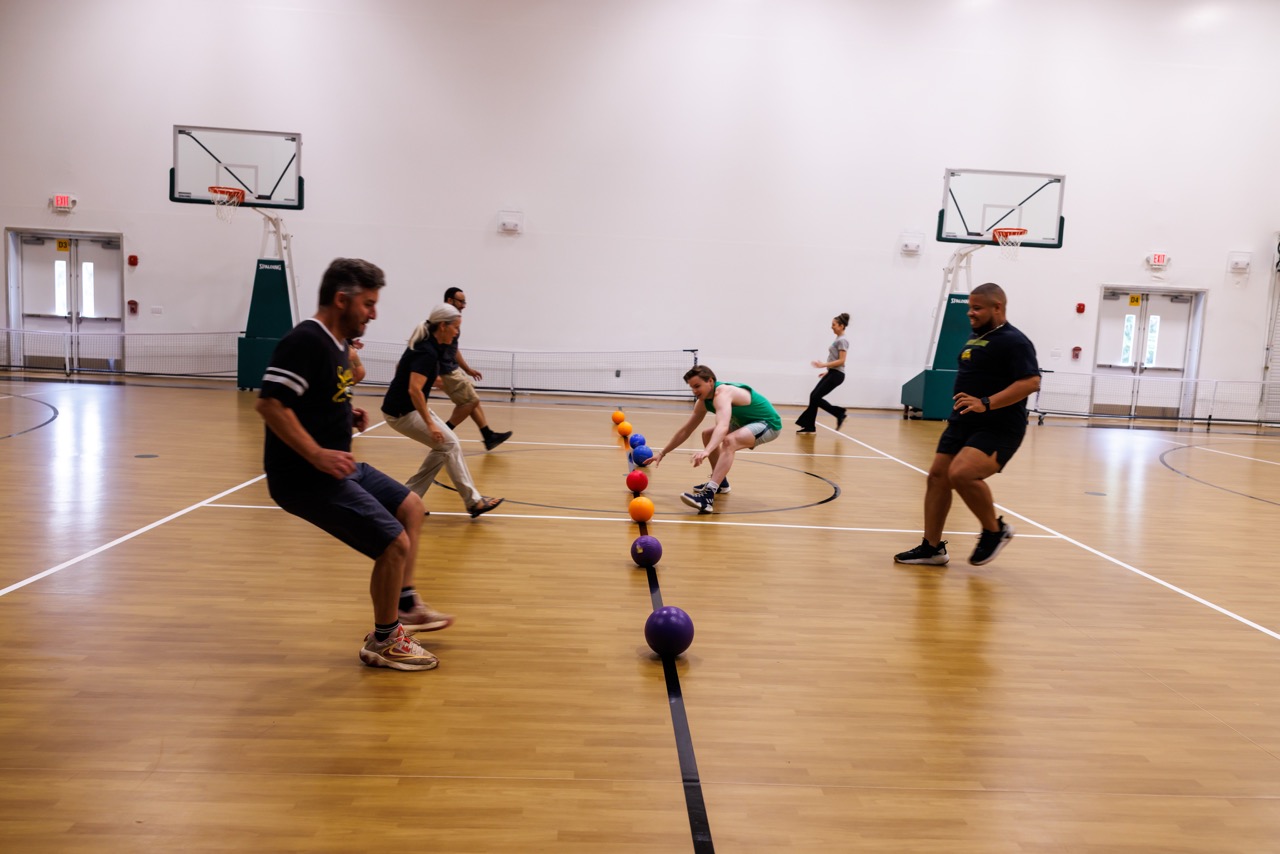
Can-do spirit: Outside work, Pegg enjoys spending time with his family and friends, traveling, and trying iced coffee at new coffee shops. A team player on and off campus, he also plays kickball and dodgeball in recreational sports leagues in Washington, D.C. 

“This summer, I am pushing myself outside my comfort zone and playing volleyball,” Pegg said. Great coaches know that trying something new can open up a whole new set of possibilities.

Student Media Publications Awarded Top Honors by Associated Collegiate Press

Original article written by Student Media, February 24th 2025

Student Media is proud to announce that Hispanic Culture Review (HCR) has been awarded a 2024 National Magazine Pacemaker Award by The Associated Collegiate Press (ACP), the preeminent award in student journalism!

Volition, Mason’s undergraduate literary and arts journal, was named a finalist in the same category!

Congratulations to both journals for earning this tremendous honor!

Click here to download the full press release >

Unofficially known as the “Student Pulitzer,” the Associated Collegiate Press has awarded the Pacemaker to spotlight excellence in college media since 1927. According to the ACP website, this “prestigious award recognizes overall excellence and distinguishes the top student media produced during a particular school year.”

First published in fall 1990, Hispanic Culture Review is a bilingual literary journal at George Mason University that features poetry, essays, narratives, photography, and visual art in both Spanish and English. Celebrating more than 30 years of excellence, HCR’s mission is to bridge communication gaps and strengthen cultural bonds between English- and Spanish-speaking peoples by publishing original works from diverse creators around the world.

Since the first issue of Volition in fall of 2006 (formerly known as Apathy), the publication’s mission has been to unite Mason’s artistic community and serve as a showcase for undergraduate creativity. Publishing original poetry, prose, and visual art, Volition seeks to elevate emerging artists and writers while fostering free expression
on campus.

“Well-deserved but not surprising; both editorial teams consistently create publications that are the best of the best in college media journals,” said Mason Student Media Director Kathryn Mangus.

“I am extremely proud of Mason’s student publications and thrilled to see these two journals recognized nationally by the Pacemaker committee,” said Volition and HCR faculty advisor Jason Hartsel. “Each individual issue is the culmination of many hours of hard work, creativity, and hands-on learning by our talented students, and this award will no doubt inspire future teams to leave behind their own legacy of distinction.”

“It is a profound honor to support this amazing group of students as they share narratives that celebrate Hispanic culture and foster cross-cultural understanding—especially through Mason’s only bilingual literary journal,” said HCR faculty advisor Carla Burns. “I’m continually impressed by their dedication and so proud of this important accomplishment.”

Gary Lundgren, ACP associate director and coordinator of the Pacemaker competition, noted the quality of the winning student magazines rivals those produced by professionals: “The verbal and visual storytelling in the winning magazines is incredible and robust long-form stories combined with shorter quick-reads to pace the reader through the pages of the feature magazines,” Lundgren said. “And the creativity displayed in the literary arts magazines is incredible — the unique formats and creative designs make the magazines themselves a work of art.”

Comprised of more than ten unique student-run media groups that publish original content online and in print, George Mason Student Media "empowers students to exercise their First Amendment rights and creativity through the creation of works that inform, enrich, and entertain the Mason Community." Those outlets include Mason's official student newspaper, radio station, and television network, as well as seven journals/magazines, a sports broadcasting team, and student chapter of the Society of Professional Journalists.

Learn more about Student Media by visiting studentmedia.gmu.edu or following @gmustudentmedia on X/Twitter, Instagram, and YouTube.

George Mason Homecoming 2025

Homecoming Highlights

Homecoming Tip-Off & Lip Sync Battle (Jan. 31)

The week kicked off with high energy as students competed in a Lip Sync Battle, showcasing their creativity and stage presence. This event set the tone for an exciting Homecoming week.

Taco Tuesday Trivia (Feb. 4)

Mason students gathered at Banditos for a special Homecoming edition of Taco Tuesday Trivia. Great food, challenging questions, and friendly competition made for a fun night.

The Patriot Activities Council hosts Taco Tuesday Trivia night at Bandito's. Photo by: Ayman Rashid/Creative Services/George Mason University
Fraternity-Sorority combos compete in the Homecoming 2025 Tipoff Party dance competition. Photo by: Ayman Rashid/Creative Services/George Mason University

Day of Service (Feb. 5)

Giving back to the community was a key part of Homecoming. Students participated in various service projects, including

INOVA Blood Drive – Students donated blood to help local hospitals and those in need.

Pack the Truck – A food drive collected nonperishable donations for the Patriot Pantry and Food for Others.

Campus Gardens Harvesting – Volunteers worked at the Presidents Park Greenhouse, supporting sustainability efforts.

Additional Service Projects – Activities like plant pot decorating, snack bag packing, and cardboard composting provided more ways to make an impact.

Homecoming Comedy Headliner: Sarah Sherman (Feb. 6)

Saturday Night Live’s Sarah Sherman took the stage at the Center for the Arts, delivering a night of laughs. Students packed the venue for this exciting Homecoming tradition.

Men's basketball vs. Rhode Island University in EagleBank arena. Photo by Evan Cantwell/Office of University Branding
Sarah Sherman performs in the Center for the Arts, Fairfax Campus as the homcoming headliner. Photo by Evan Cantwell/Office of University Branding

Homecoming Festival & Tailgate (Feb. 8)

Before the big game, Mason Nation gathered in Lot L outside EagleBank Arena for the Homecoming Festival. Students enjoyed food trucks, games, giveaways, and music, making it the perfect lead-up to game day.

Homecoming 2025 was a week to remember, bringing together students, alumni, and the Mason community to celebrate school spirit and service. Thank you to everyone who participated and made this year’s Homecoming a success. See you next year!

George Mason Competitive Cybersecurity

Original Story by Shayla Brown, Jan 27, 2025

Students from George Mason University’s Competitive Cybersecurity (MCC) club have dominated in multiple national competitions. The team got 1st place in the 2024 VMI CyberFusion and 2nd place in the 2024 Spring National Cyber League. 

Next, the students will be competing in the inaugural DistrictCon Hacker Conference on February 21-22. 

Club president Dylan Knoff working on routers. Photo provided.


“We'll be presenting live demos with our exploits in front of a judge and audience. So, we'll basically go from not having access to a certain device to showing that we can get access in the eight different attack vectors that we discovered,” said club president Dylan Knoff, a junior computer science major.

This demonstration is known as the junkyard competition, and the device they’re hacking is a router. In preparation for the demo, the team is conducting multiple analyses and rehearsing talking points for verification of their research.

“We basically ripped the firmware off of it, which is the code that runs on embedded devices like this one,” said Knoff, who participated in the International Cybersecurity Championship in Chile with the U.S. Cyber Team.

“We utilized hardware debugging interfaces on the device to both find potential bugs by analyzing our own local copy of the firmware and confirm their existence and exploitability by trying to trigger them on the live device and utilizing the debug interface exposed,” he said.

In addition to Knoff, his teammates Danyaal Shaozab and Ryan Murphy will also participate in the junkyard competition and other cybersecurity challenges including “capture the flag,” also called CTF, where the teams receive challenges, such as web app exploitation, binary exploitation, cryptography, reverse engineering, forensics, and a description that they must solve and then get a flag that is redeemed for points.

In September 2023, MCC hosted its own international CTF event, attracting more than 3,000 participants and 1,600 teams as well as hosted PatriotCTF 2024 attracting over 5400 participants and 2200 teams. The club practices are offensive cybersecurity, which is a type of ethical hacking used to evaluate and determine a system’s security, Murphy explained.

Club member Ryan Murphy working on routers. Photo provided.


Murphy, who transferred to George Mason from Virginia Peninsula Community College as a part of the Mason Virginia Promise, has been passionate about cybersecurity since middle school and participated in CyberPatriot, a national youth cyber education program.

“I'm still pretty new at George Mason, but it's been a really good experience so far,” said Murphy, a junior cyber security engineering major. “I got involved with the club from the get- go because they're a bunch of like-minded people and I’m really grateful for the opportunities the club and the university have offered me.”

The team will have two time slots and two presentations. They plan to do a dry run the day before the conference, as well as more analysis to solidify the information, said Murphy.

Shaozab is currently working as an associate vulnerability researcher at TFP0 Labs, a Reston-based security research firm. Shaozab’s role entails finding and exploiting vulnerabilities of various security systems and he compares his professional responsibilities to that of his club and school assignments.

“Working with Dylan and Ryan is great. We all have similar career goals, and it makes projects and assignments a lot easier,” said Shaozab, who is a senior cyber security engineering major.

Shaozab credits his courses, including CYSE 465 Transportation Systems Design, for helping him prepare for the upcoming competition.

Dr. [Tanvir] Arafi is a very smart professor and a very talented individual in this field. His course really helped me hone my cyber techniques,” he said.

Shaozab explained that the team is focused on exploiting the [Control Area Network] bus, which is like the nervous system of a vehicle, allowing different components like the engine, brakes, and doors to communicate with each other. “Exploiting it involves sending malicious messages in the CAN bus to manipulate the car's function, such as unlocking doors or starting the engine,” he said.

“What made this particularly interesting to me is that I'm a huge car enthusiast, so being able to merge my passion for cars and cybersecurity was a unique experience. Getting hands-on with that in a classroom setting made it even more engaging. It’s rare to get that kind of knowledge taught in schools,” he said.

Meet the Mason Nation: Nandini Koka

Dr. Nandini Koka, executive director of Student Health Services at
George Mason University. Photo by Evan Cantwell/Office of
University Branding

November 22, 2024 / By Lauren Reuscher
Nandini Koka, MD
Job: Executive Director, Student Health Services


Nandini Koka joined George Mason University in April 2023 as executive director of Student Health Services, where she leads a staff of nearly 50, that includes doctors, nurse practitioners, counselors, and nurses. As a medical doctor with training in family medicine and urgent care, she is passionate about helping patients get better quickly and enhancing access to care. At the largest and fastest-growing public research university in Virginia, Koka has found a place where the need for that care continues to grow.


The doctor is in: In her role, Koka provides direction and leadership for Student Health Services to ensure students receive quality clinical care. She also serves as a medical advisor and resource to campus leaders on health-related matters. In a post-pandemic world, where many aspects of health care remain an urgent community need, her input is essential across George Mason's Campuses.

Helping the student body: Koka knows that learning is not confined to the classroom, and some of the biggest lessons can address a fundamental part of students’ lives: their health.

“I am excited to work at George Mason because of the opportunity to care for a diverse student population,” said Koka. “I want to help guide students as they become advocates for their own health and create goals to maintain a healthy lifestyle.”

Appointments on the books: Last year, Student Health Services had 16,500 student interactions—this includes in-person and telehealth visits, lab work, and nurse triage interactions across the Fairfax, Mason Square, and Science and Technology campuses.

Koka knows this number could go even higher. One of her primary goals is to increase awareness of the health services available to students.

“One of the biggest challenges we face is creating awareness around Student Health Services and the fact that we are a full-service medical clinic,” said Koka.

Addressing the body and mind: “We continue to see the need for mental health care as a challenge in the community,” said Koka. “Student Health Services has a unique approach to behavioral health, as we utilize a collaborative care model.”

In this model, medical providers partner with behavioral health counselors to co-manage the care of students. Koka says that this team approach has given students more touchpoints with clinicians and provides a more holistic care model.

Additionally, all patients who visit Student Health Services are given a mental health screening at their first visit, and once a year thereafter. Primary care providers are a key point to identify concerns related to mental health.

Finding ways to make it cost-free: Sexual and reproductive care is another critical area of need at Student Health Services. “We have partnered with a community organization to provide free sexually transmitted infection (STI) services to students throughout the semester,” said Koka. “We continue to look for ways to expand access to services for our students.”

Fostering a supportive community: A dynamic campus community is what brought Koka to higher education. “I have been able to interact with our students and see their excitement about being here at George Mason and wanting to be a part of this community,” said Koka.

Rest as part of health: Outside of work, Koka enjoys spending time with her family. “Our two daughters keep us busy with soccer and dance, and we have fun going to the games and watching the performances,” said Koka. To relax, she might go for a run, play with her dog, or try out new recipes.