University Life

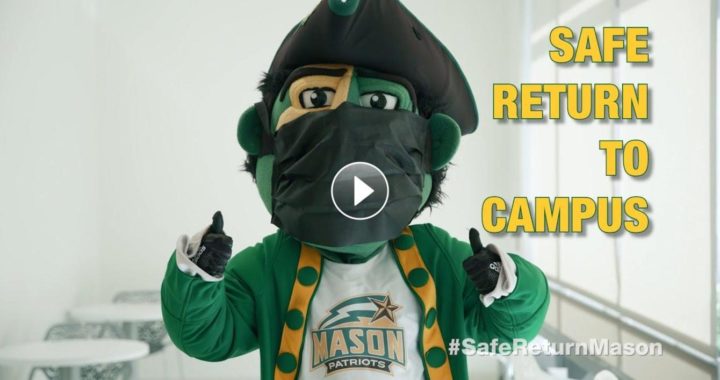
President Washington gives updates on COVID testing

Dear Patriot Nation:

Over the last week, some of our newest Patriots have been moving into their residence halls in preparation for Monday’s start of classes. Safety is on everyone’s mind especially with discouraging news coverage of the troubles some universities are having with their openings.

I am writing to give an overview of the steps we are taking to operate the university safely, and to address concerns we have heard about one step we have taken to safely welcome students back.

George Mason University’s Safe Return to Campus plan is comprehensive and flexible, with multiple layers of precautionary protocols built in. We meet the standards recommended by federal and state public health officials, and in some instances go beyond their recommendations.

Concerns about the home testing kits

Some students and faculty have questioned the validity and reliability of the initial at-home tests that we mailed to students prior to their arrival in residence halls. To those who have expressed their concerns I say that we hear you. I recognize that your concerns come from a genuine place of care for everyone’s wellbeing.

Unfortunately, inaccurate and incomplete information has begun to circulate about these tests. Specifically, objections have been voiced about the method of collecting specimens, the accuracy of the testing, and the legitimacy of the company we have used.

Specimen collection – Faculty have questioned the validity of home-collection kits, citing that these tests are not FDA-approved for “home use.” Correctly, they are not – but that is not what we are using them for. These kits do not contain the capacity to produce results, only to allow for specimen collection. And while a number of the collection tubes contained labels that said, “for research purposes only,” those are simply common labels that would have been a waste of time and materials to replace. Opteo Laboratory validates that these kits are approved for home specimen collection.

Accuracy of results – The test methodology employed is a polymerase chain reaction, aka PCR test, which is the most accurate test available. The US Centers for Disease Control describes PCR tests as having “high sensitivity and high specificity.” Specimens collected at home are shipped to a well-established, CLIA-certified laboratory for analysis, Opteo Laboratory. “CLIA” is a federal quality certification called for by the FDA that simply stands for “Clinical Laboratory Improvement Amendments.”

Validity of Kallaco – Many concerns have been raised about Kallaco, the go-between company we contracted with to quickly distribute home-collection kits to 3,000 students and assure specimens get to Opteo Laboratory for rapid analysis. Kallaco is indeed a new company, formed just earlier this year. They are NOT doing the test analysis – only the logistics work to move home collection kits and specimens from students to Opteo Laboratory as efficiently as possible – something that more established businesses said they could not do on the scale we needed.

Yes, Kallaco is new and untested. Many steps we are forced to take in the fight against COVID-19 are also new and untested, because the solutions we need simply did not exist when the pandemic hit. And the more established organizations simply could not pivot rapidly enough to meet our emerging needs on the timeline and scale we require.

Why even conduct the home-collection tests?

We chose to use this test method as an additional means of screening of students moving into our university’s residence halls, as the first of several steps we are taking to identify anyone who might unknowingly bring COVID-19 to campus.

Some other universities also have taken this supplemental step. On the other hand, many universities, even some in Virginia, are not requiring any pretesting for students to move into residence halls, and Mason is not required to do so. We wanted that extra measure in place as an added safeguard.

With thousands of students taking the test, this initial screen found a handful who tested positive, subsequently quarantined, and as a result they did not show up on campus to unknowingly spread the virus.

No perfect solution

Clearly, this is not a perfect solution. Perfection simply does not exist. We have no relevant precedent, and we are doing everything we can to safely operate this university while delivering the best educational experience possible. Faced with the choice of an imperfect solution that could give us an additional means of detecting the virus – or choosing not to even try pre-screening – we chose to act. And we chose the best solution available to us at the time.

Enhanced measures taking effect starting Monday

If you are familiar with our Safe Return to Campus plan, you know that the beginning of school year means shifting gears from minimizing risk of the virus entering campus to also maximizing efforts to detect its presence and stop its spread.

Out of an abundance of caution, and out of respect for the very real concerns we share about reentering campus in this moment of uncertainty, we are preparing to accelerate certain testing regimens starting this week. Specifically:

  • More testing of residential students, sooner
  • Accelerated testing of faculty, staff, and off-campus students
  • Enhanced reporting of pandemic conditions

Watch for a more detailed letter from me in the coming days in which we offer more details about each of these accelerated testing processes, after we have been able to verify the specifics.

Finally, I offer a reminder: Today’s conditions may not be the same tomorrow, requiring us to respond quickly to volatile conditions. We are ready, and we are listening to you. I want to express my profound gratitude for the hard work that thousands of students, faculty, and staff have put into preparing for Fall 2020, a semester like no other.

Sincerely,

Gregory Washington
President
 

Staying Safe – and OPEN – New Protocols

Dear Patriots,

This is (still) my favorite time of year. Our campus is reinvigorated with the return of students who are excited to begin the Fall 2020 semester. I am happy you joined our wonderful community of fellow students, faculty, staff, and alumni, and we welcome you to the residence halls, campus walks, and classrooms. Amid the excitement of a new start, we face the reality that COVID-19 is challenging us all in many ways. For that reason, words like safety and campus experience have new meaning.

So as President Washington stated, let’s all do our part. It begins with these five steps, which by now I’m sure you are all familiar with.

  1. Wear your face covering properly.
  2. Stay six feet apart.
  3. Complete the Safe Return to Campus Training and daily Mason COVID-19 Health Check.
  4. Wash your hands often, or use hand sanitizer when you can’t.
  5. Stay put and don’t expose others if you are not feeling well.

While these protocols will shape your campus experience, Mason is working hard to ensure they don’t define it. By adhering to these protocols, you will still be able to engage with your peers, connect with campus activities, and be part of all that Mason has to offer.

OFF-CAMPUS GATHERINGS – NEW PROTOCOL 
We will do everything we can to continue to offer you an in-person campus experience, but we all need to do our part. For the health and safety of our community, we are requiring the following:

  1. All student events and/or gatherings hosted by an organization, team, and/or individual, both planned and spontaneous, that exceed ten people must occur either virtually or on campus, following approved university guidelines (https://www2.gmu.edu/Safe-Return-Campus).
  2. Organizations and individuals that disregard these health and safety protocols will be referred to the Office of Student Conduct. In addition to other sanctions, students that put both themselves and members of the community at risk will be required to quarantine for 14 days.

Our actions and behaviors have the potential to keep the Mason Nation as safe as possible and our campuses open. If you become aware of events or gatherings that violate this policy, please email [email protected] so we can respond appropriately. Intervening to tell a Mason Patriot to wear a face covering or making us aware of a planned gathering is one of many ways to do your part in keeping our community safe.

RANDOM COVID TESTING OF OUR COMMUNITY 
Finally, to better understand trends and track potential cases of COVID-19 in our community, we will randomly select samples of our community to test. This kind of testing, known as surveillance testing, is very important to reducing the spread on our campus. It focuses on testing individuals who may not be aware they are infected with the virus (often because they are asymptomatic) and thus have the potential to infect others. While this is voluntary, we strongly encourage everyone to participate as it will help protect our community.

Our experts in the College of Health and Human Services and Volgenau School of Engineering are collaborating with Student Health and University Life in this effort. If you are selected for this random test, you will receive a communication with detailed instructions on how to participate. If your result is positive, Student Health Services will call you to recommend appropriate precautions you must take.

I am hopeful that each of you will take this opportunity to show what Patriots are made of, both in what we are willing to do, and equally importantly, not do. Let’s have a healthy, successful Fall semester!

Rose Pascarell
Vice President, University Life

Mason Patriots can help limit the spread of coronavirus by participating in daily health checks

All George Mason University students, faculty, staff and visitors are required to help ensure a safe return to campus by participating daily in the university’s Mason COVID Health Check™. Beginning Aug. 17, all visitors to campus, including students, faculty, staff, parents and friends, are required to show proof that they have received clearance through the Mason COVID Health Check™  to be on campus.

The Mason COVID Health Check™  is a screening tool in which participants answer a short series of simple questions relating to their health and any exposure they may have had to coronavirus. The tool is key to helping Mason avoid coronavirus outbreaks by allowing for early identification of individuals who may have been exposed to coronavirus or are beginning to exhibit symptoms. These individuals can then be quarantined to avoid exposing others on campus to the virus.

Read More about Mason COVID Health Checks

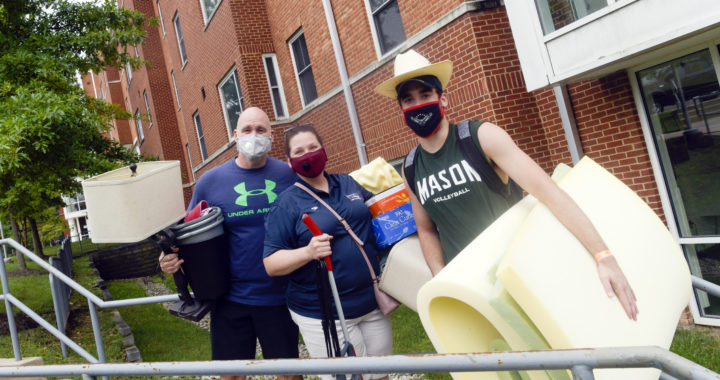
Mason students begin returning to campus with Move-In Weekend

The start of the Fall 2020 semester is just around the corner. Students began returning to the George Mason University campus on Saturday and moving into their residence halls.

Safety protocols to protect against COVID 19 global pandemic meant that things looked somewhat different from previous years, but there was the usual palpable excitement that comes with the start of a new year.

See photo gallery of Move-In Weekend

Disability Services ensures equal access for students

The COVID-19 pandemic has brought a variety of changes to the Mason student experience. This “new normal” can be especially challenging for students with varying abilities.

Disability Services—an Office of University Life serving 2,000 students with a wide spectrum of disabilities and conditions—acted quickly to adapt its programs and services to ensure equitable academic access in this new environment. For example, students with autism or ADHD needed support to best adapt to new routines in quarantine. During finals, students who would have utilized the Disability Services Testing Center on campus for extra time or specific technologies needed to be accommodated in a different way.

Read more about Disability Services

Welcome2Mason Events Coming Soon

The fall semester can be a busy time for both new and returning students. To help in this transition, Mason offers a variety of programs and events throughout the first month of the fall semester to support the entire Mason community.

For new students, learning to navigate campus, making connections with peers, and understanding university resources can be overwhelming, but Mason strives to aid students during this pivotal time. The Preamble and Welcome2Mason are a few of the first experiences in the fall semester that will usher in the 2020-2021 year.

Read more about The Preamble and Welcome2Mason

Do Your Part for a successful campus reopening

George Mason University today is launching the “Do Your Part Campaign” to reinforce the message that safety is a shared responsibility and that our safe return to campus depends on everyone modifying their behavior in response to the COVID-19 pandemic.

“Our campus is open again and we’re excited to welcome our community back,” said Mark Ginsberg, Provost and Executive Vice President. “But the Fall semester will only succeed if we commit to protecting our own health and the health of each other. We are asking everyone to help by doing their part.”

Learn How to Do Your Part

Watch the Video

President Washington’s updates on Safe Return To Campus

Dear Fellow Patriots:

We are fewer than two weeks from the start of the Fall semester and soon will be welcoming many of our faculty, staff and students back to George Mason University’s campuses. We do so with a mix of excitement that accompanies every fall return to campus – and trepidation, because this is 2020 and the pandemic has changed just about everything.

My leadership team and I have been watching the ebb and flow of the COVID-19 virus in northern Virginia, and have determined that it is best to stay the course with our modified re-opening of campus, with continuing flexibility for faculty with respect to the format of their classes. Faculty members who will be delivering their curriculum in person or via hybrid experiences should continue to use the Safe Return to Campus Plan to guide their efforts.

Tracking pandemic conditions
While most public discussion centers on COVID-19 cases nationally and statewide, we are closely monitoring Northern Virginia pandemic conditions, because they give us a more accurate understanding of what is occurring in the communities in which we live and serve. Specifically, our decisions are driven by data from Fairfax, Arlington and Prince William counties.

One data point we track particularly closely is the Positivity Rate, the percentage of those receiving COVID-19 tests who test positive for the virus. Virginia’s seven-day rolling average as of Monday afternoon was 7.4 percent, while Fairfax County’s was 5.1 percent and dropping, and Arlington County’s was 4.2 percent.

Changing of conditions, change of plans
Unfortunately, Prince William County’s rates have headed in the other direction, and stood at 9.0 percent on Monday. And that trend has troubled us, particularly because we operate the Science and Technology Campus there, and many who work at Mason live in Prince William County. Therefore, we have made two decisions that affect classes this fall:

  1. We will continue to provide faculty at all Mason campuses flexibility to offer their classes through face-to face, hybrid or fully online formats. By applying the public health and safety best practices set forth in our Safe Return to Campus Plan, we have confidence to deliver our academic programs as had been planned and given evolving circumstances. However, if individual faculty member circumstances have changed, and individuals want to request a change in their course format, they should immediately be in contact with their academic program chair/director and dean.
  2. We will move to all-online instruction on November 30, following the Thanksgiving holiday. We have decided to do this upon recommendation of our Emergency Management Executive Committee and public health advisors, in order to minimize the risk of transmitting both COVID-19 and influenza, both of which are expected to begin seasonal surges around then.Why not just keep campuses closed and go all online?
    This is a very reasonable question, and one I am asked often, especially because many other universities have opted for online-only instruction, though no public university in Virginia is requiring all online instruction.

    The reality is, there are no good solutions to carrying out our academic mission in light of the pandemic. Every solution carries a host of negative side effects that threaten people’s ability to stay healthy and safe, and to remain affiliated with Mason.

    Quality of instruction For many classes, online instruction is just as effective as in-person teaching; in fact, we are seeing excellence in online instruction that we could not have predicted pre-pandemic. But that is not universally true, for environments like laboratory learning, or for disciplines like the performing arts. Of course, we will adapt as necessary, but driving all courses to online environments is an option we will avoid until it is necessary.

    Inclusion of international students – By going fully online, we could exclude international students from coming to our campus, because the federal government is refusing to process student visas for international students whose course content is all online.

    Human toll for university faculty and staff – Closing the campus to all instruction would come at a significant financial loss to the university – a devastating loss if we were to re-close residence halls. Such measures would cripple the university’s ability to deliver on its education and research mission, not just for this academic year, but for years to come. The numbers of furloughs and layoffs that would be necessary to balance our budget would be staggering, made all the more challenging in an economy of 10 percent unemployment. Those employees’ ability to keep health insurance, pay their rent or mortgage, and meet basic living needs would be imperiled. Furthermore, the impact would extend beyond our campuses to surrounding communities where the affected employees live.

    Should evolving public health conditions make it necessary to fully close our classrooms, or even our residence halls, of course we will do so. But each of us should be mindful of the devastating impact this will have, not just on the university, but on the people who rely on it for their education and their livelihoods.

    The academic calendar remains the same
    Classes will begin on August 24 and end on December 16 as scheduled, with all-online instruction starting on November 30, following the Thanksgiving holiday.  As part of our effort to minimize the risks that increase in the winter months, we plan to hold Winter Graduation online.

    Staff on campus
    As the campus reopens, staff should work with their unit leaders to determine the proper balance of their work to be performed on campus versus from home. With the goal being to de-densify the campus and observe all health and safety protocols, every department has been required to submit its own safe return plan. As a general guideline, employees should avoid spending more than 50 percent of their time on campus. Social distancing rules will be in effect for all offices, just as they are in classrooms.

Residence halls will stay open throughout the semester
Mason’s residence halls will remain open under all of our planning scenarios. We will reduce occupancy from 6,200 students to approximately 3,350 students to achieve appropriate physical distancing. In the event of another Governor’s stay-at-home order, we anticipate considering residence halls to be our students’ homes away from home. We will take appropriate measures to keep them as safe, hygienic, and comfortable as possible, as well as offer appropriate public health and safety measures to the university employees who staff residence halls and dining facilities. In addition, University Life has planned a robust line-up of programming to ensure residential students continue to experience a full and satisfying on-campus experience.

Pre-move in testing required for all residential students
All students planning to live on campus in Mason’s residence halls have been recommended to self-quarantine two weeks ahead of their arrival. In addition, Mason has contracted with a vendor to provide comprehensive at-home testing kits to all students who plan to live on campus. Residential students are in the process of receiving and returning their test kits. Starting August 15, at move-in, every student will be required to have both a health screener green light as well as proof that they have taken a COVID-19 test to be cleared to stay in a Mason residence hall.  We anticipate that residential students will be tested again periodically throughout the semester.

Daily health checks required for all who step onto campus
All students, faculty and staff who come to campus must complete an online health survey every day before arriving on campus. This tool – the Mason COVID Health Check™, an online health screening protocol developed by the College of Health and Human Services – will serve as a quick and effective way to track the health conditions of all students, faculty, staff and contractors who will work, study or live on campus.

Voluntary testing throughout the semester
Throughout the semester, students, faculty and staff working on campus will be asked to engage voluntarily in random COVID-19 tests. This protocol, recommended by Mason faculty experts and in collaboration with university leadership, will help to track the spread of the virus, should cases emerge. We encourage all members of the Mason community to agree to be tested if requested to do so.  Working in partnership with our local public health officials, case investigation and contact tracing protocols also will be in place.

Safety measures being taken in our classrooms
Our classroom spaces will look and feel different this fall. Classrooms and instructional spaces have been modified such that seating has been spaced out to allow for six feet of distance between students; faculty have been allocated more space, up to 100 square feet. Some classrooms will have seats noting they should be left empty to ensure physical distancing; others will simply have fewer seats. High-contact surfaces will be cleaned and disinfected with an EPA-approved disinfectant twice each day during normal operation hours, in addition to regular overnight cleaning. In addition, disinfectant wipes and hand sanitizer stations are available in or near classrooms.

Reminders to do our part
Signage will be posted throughout campus to illustrate required physical distancing and point to hygiene practices such as frequent hand washing. All students, faculty and staff will be required to wear face coverings. Everyone will be given two reusable face coverings to use. And a multimedia communications campaign is planned to encourage all Mason community members to do their part to stop the spread of COVID-19.

This will be a Fall semester unlike any other we have experienced. The unknowns far outnumber the certainties. But together, we will continue to deliver on our academic mission, and I deeply appreciate the dedication and innovation of each and every one of you at this historic moment for George Mason University, the nation and the world.

With gratitude,

Gregory N. Washington, PhD
President


Mason creates Virtual Learning Communities to safely foster community connections

Learning Communities provide Mason students opportunities to connect with peers who share common interests, majors, and identities; engage with faculty inside and outside the classroom; and participate in transformational experiences throughout their time at Mason.

The global pandemic means prioritizing student health and safety through social distancing, which in turn means reduced occupancy for residence halls. With a need to maximize resources to support both new and returning students, challenges were presented to Mason’s Learning Community program.

Read more about Virtual Learning Communities

Clarification Released on ICE Restrictions for International Students

After the recent confusion regarding U.S. Immigration and Customs Enforcement’s (ICE) restrictions on international student enrollment for fall, Judith vanBever-Green, Executive Director of the Office of International Programs and Services, has clarified the July 24 message from ICE. This information applies to students in the F-1 (student) and J-1 (exchange visitor/student) categories; it applies only to fall 2020. Mason expects further guidance toward the end of the year that will detail any regulatory changes or exceptions for the spring 2021 semester. Read her email.