University Life

Philip Wilkerson Advancement Award Spring 2025

Portions of this article originated  from The George, March 14, 2025, by Anne Reynolds, and further edited by Teron Buffington

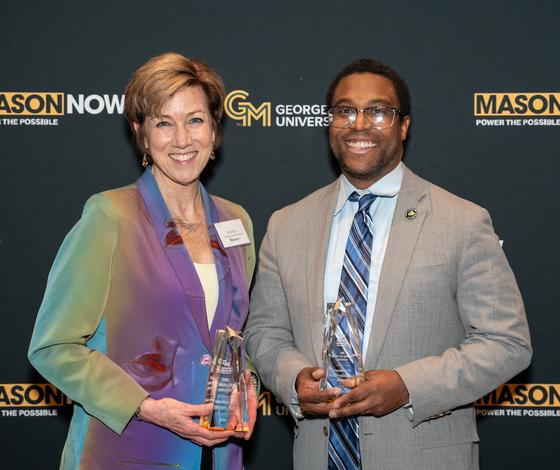
George Mason University’s staff and faculty bring their generosity to their work each day, and many go a step further by contributing to George Mason through financial giving. Each year, the Office of Advancement and Alumni Relations holds a celebration of faculty and staff generosity and commitment, and this year debuted two awards highlighting a faculty member and a staff member who embody the many ways in which the George Mason community gives to its students and programs. One of the recipients, Philip Wilkerson from University Life, received an award for his outstanding kindness and positive attitude, which inspires those around him. 

“George Mason’s success streams directly from the many ways that our faculty and staff give of themselves,” said Trishana E. Bowden, vice president of advancement and alumni relations and president of the George Mason University Foundation. “We are incredibly fortunate to benefit from this culture of philanthropy, and we created the Spirit of Giving Award to let us tell the stories of individuals whose giving serves as an inspiration to us all.”  

Bowden announced the Spirit of Giving Award to recognize staff members who embody the university’s philanthropic spirit and actively contribute to the university through charitable giving, service, and engagement. Their deep commitment to supporting George Mason’s mission, whether by donating, leading fundraising efforts, or encouraging a culture of giving within their departments, exemplifies selflessness and generosity, strengthening the George Mason community and inspiring others to give back. 

The first Spirit of Giving Award was given to Philip Wilkerson III, MEd ’23, an employer engagement consultant with the Office of Career Services, and was presented by Lewis Forrest II, associate dean of University Life. 

“Philip's charitable giving supports initiatives benefiting student success, including the College of Education and Human Development Dean’s Excellence Fund, University Life Student Emergency Assistance Fund, the Black Scholars Endowment, and the Career Readiness Fund,” said Forrest.  Moreover, he said, Wilkerson "literally knows everyone on campus. His light and energy make it easy for others to be inspired to give their time, talents, or gifts to George Mason.”  

Forrest described a particular effort of Wilkerson’s that has made a positive impact: “The Pats for Patriots initiative enables members of our community to send kind messages to colleagues. These are easy ways to show someone you see them, and it costs nothing,” said Forrest. “This is what Phil does, he gives of himself so that others can benefit. Because of his leadership, more than 2,000 George Mason Patriots have submitted recognition to colleagues and friends. This is what it means to give in a variety of ways.” 

Wilkerson said that George Mason was the place where he found his life’s work in helping others. "This award made me feel seen, heard, and valued as someone who contributes to George Mason University through my day-to-day efforts. That means the world to me because George Mason has given me so much—a community, a career, and a profound sense of purpose and belonging,” he said. “I’m honored to be recognized in this way, and I will continue to do the work that helps the next generation of students feel empowered, just as George Mason has empowered me. It’s about sustaining the thriving community that has given us so much.” 

That thriving community, said Bowden, is “a reflection of care, dedication, and belief in our students, our mission, and our future that makes an impact far beyond the classroom or office. Our faculty and staff offer an extraordinary commitment to the university, and it is an honor to highlight their service—and to thank them.” 
 

Mason Career Fair 2025 Recap

By Mary J. Demarco, Student Media

In 2005, Mason undergraduate student Hilton Pereira entered the Mason career fair with his eyes set on adding experiences to his resume through internships and volunteer opportunities. What he didn’t expect was to change both his major and career path after signing up to volunteer at a local fire department during that career fair.

“This job fair made a huge impact on my career choice. I was going one way and then found the fire department and fell in love with it,” Pereira said. 

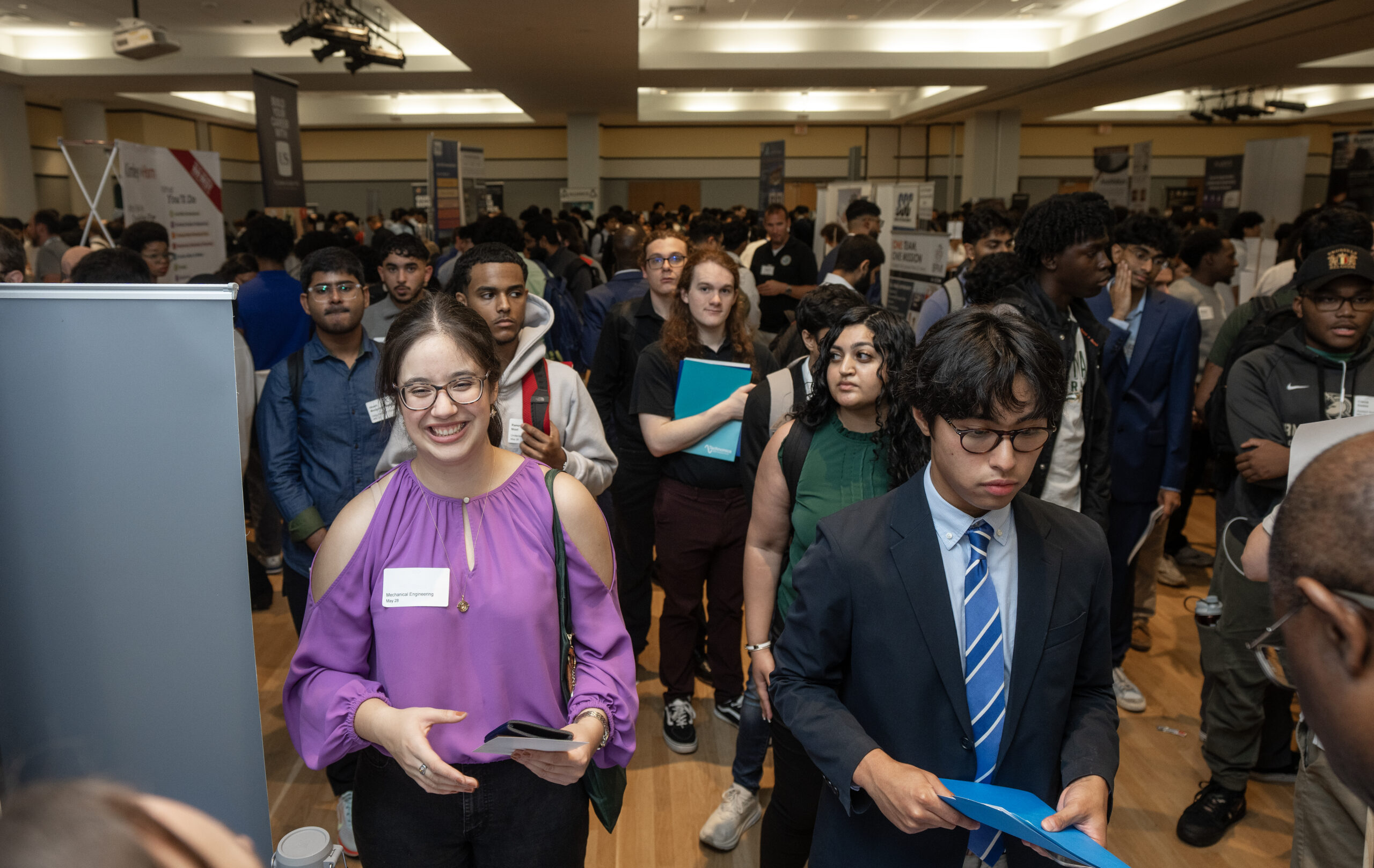
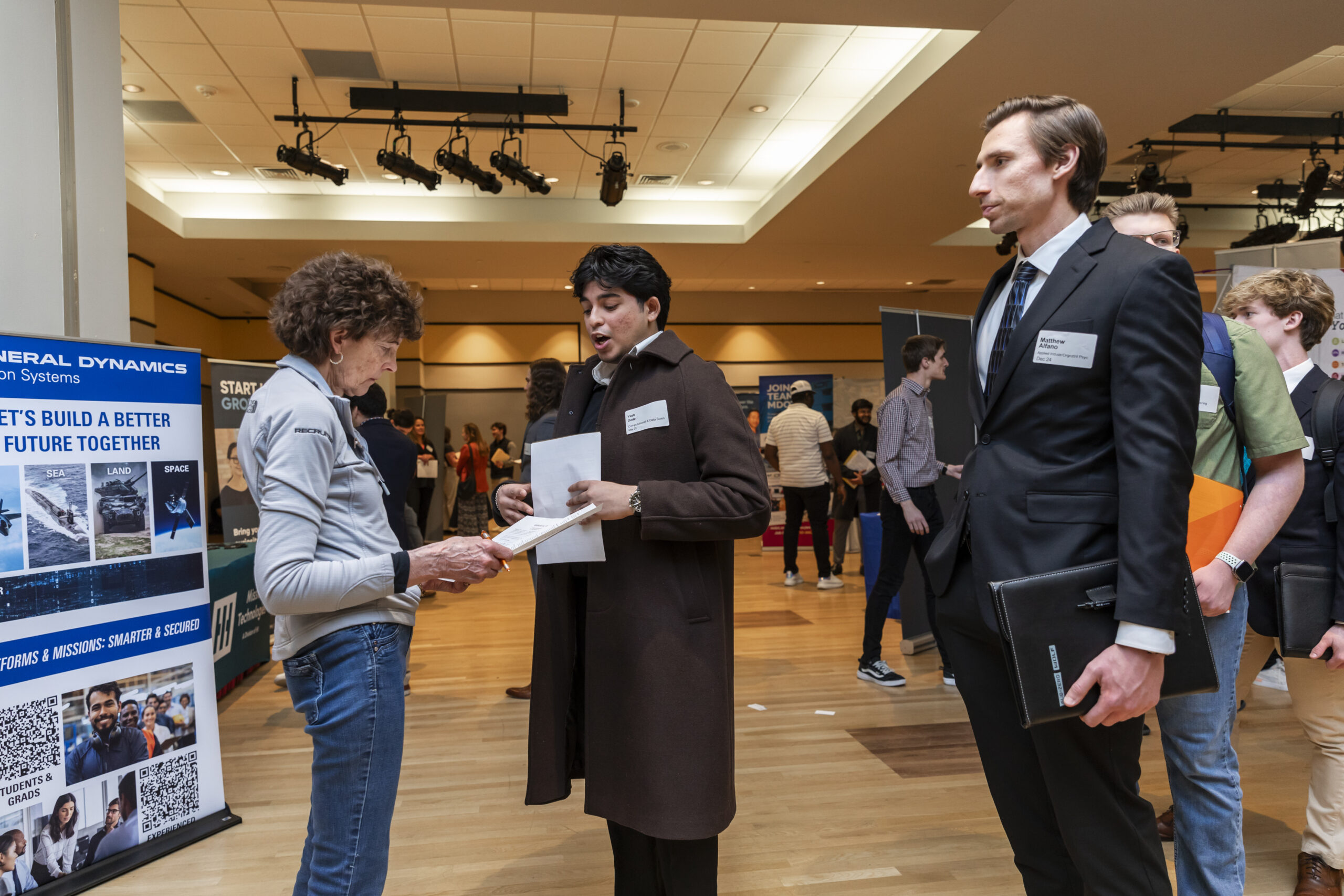
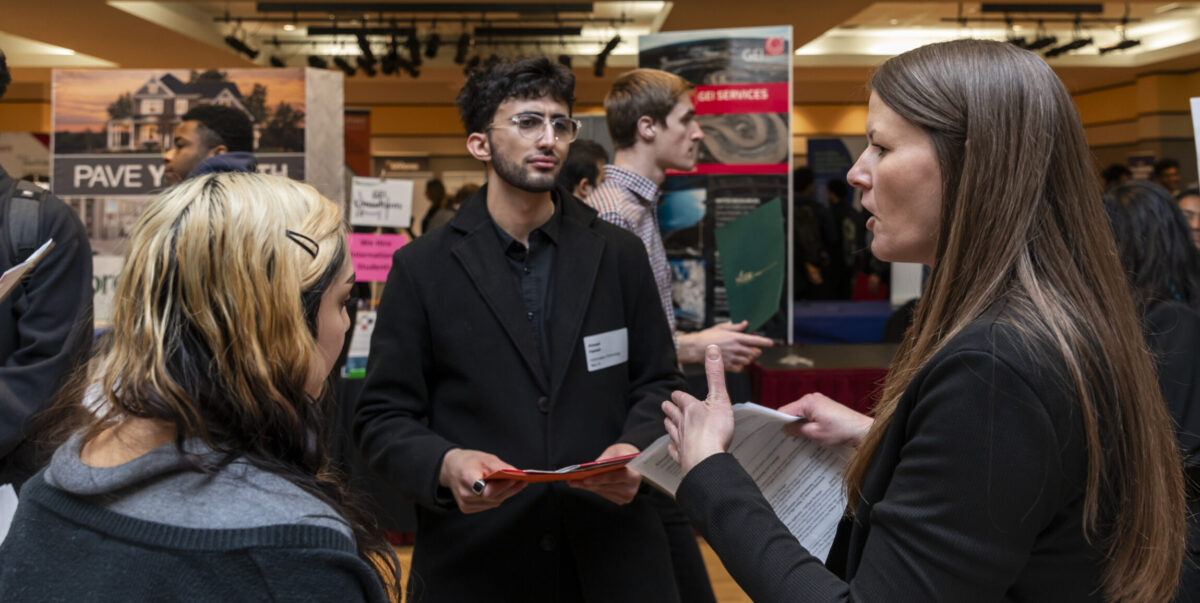
Twenty years later, Pereira now returns to the job fair not as a student but as a mentor along with his colleagues at the Prince William County Fire and Rescue. From February 18 to 20, 2025, he, along with 191 other companies, congregated in the lower level of the Johnson Center to meet with students in hopes of recruiting new interns and employees. 

This event didn’t happen overnight. It took three years of planning and coordination to make the three-day career fair work. 

Matt Myers, Associate Director for Employer and Alumni Engagement at Mason Career Services, explains that each day of the three-day event is designated towards a specific field. 

“I gathered some ideas from them [other universities] and that's how we came to STEM day, [a] business, government, and nonprofit day, and then our all majors day where it could… be a good fit for everybody involved,” Myers said. 

Along with a team of staff from Career Services, Mary Claire Kraft, Career Services Senior Manager in charge of employment and alumni engagement, has spent the past 3 years working on preparing the 2025 Mason Career Fair. Kraft emphasizes the influence student feedback has in planning future events. 

“This year, our switch to a three-day fair was in response to student feedback. We wanted to have a more spread out environment, a place that students could navigate with a little more comfort,” Kraft said. 

Current Mason sophomore Zachary Grim attended all three days with an open mindset to working for any company that offered a position. 

“My parents told me when searching for jobs and internships to cast a wide net,” Grim said. “I'm just looking at all sorts of stuff. Obviously stuff like writing and communications, internships because that's where I really want to focus on. But also stuff like Afax, Fairfax County Parks, maybe even the police department and global internships because I want to study [and] work abroad.”

In “casting a wide net,” Grim talked to just about every booth in the room. Most notably he found the Trader Joe's booth and Global Internship booth to be the most informative and helpful in his search for a job. During a conversation with an employee at Trader Joe's, Grim recalled that the employee went out of her way to provide information on the specific store location and contact information. 

Meanwhile, Freshmen Alison Crane and Rachel Lay navigated their first career fair, initially feeling overwhelmed. However, as they acclimated to the environment, they found the career fair to be very enriching. 

“Every single stand I've looked at, somebody's talked to me pretty soon. It was quite nice actually,” Crane said. 

Crane and Lay’s anxieties over the situation were quelled by the supportive job fair participants. It’s people like Pereira who made the difference. 

“I just like to have conversations with students from different majors, from different career paths, from different ideas of what they want to do, but really just give people the opportunity to open up their minds and look at different opportunities that they would not otherwise have thought about,” Pereira said.

George Mason has a “Knack” for Tutoring

Original post from The George February 26, 2025 by Sarah Holland

College courses are designed to challenge students and push them to new academic heights. And when dealing with difficult subjects and new materials, additional academic support can make all the difference.

Ads Spring 2022. Photo by: Ron Aira/Creative Services/ George Mason University

That’s where Knack comes in. Starting in fall 2024, George Mason University entered a three-year partnership with Knack, a peer-to-peer tutoring platform. Through Knack, students in any of the 28 participating courses can get up to three hours of free virtual or in-person tutoring from their peers every week during the semester. Participating courses span math, statistics, biology, chemistry, business, economics, and public health.

“We are transforming the support for student success at George Mason by fostering a collaborative learning environment that empowers students to excel academically,” said Vicki Dominick, associate director of George Mason’s Learning Services office, which offers a variety of academic success supports for students, including academic success workshops, online resources and coaching.

Knack does not replace other tutoring services offered by George Mason, Dominick noted. It is an additional resource, allowing more options for meeting times and places. Currently, close to 3,000 students are registered with Knack tutoring, and almost 1,500 tutoring sessions were completed in fall semester.

“This free support is directly in line with George Mason’s mission of access to education,” said Keith Renshaw, senior associate provost for undergraduate education and professor of psychology.

“For my chemistry class, there’s always many students attending office hours, so I don’t get the one-on-one help I need,” said sophomore biology major Khushneet Kaur Kainth. “I’ve been able to get personalized support through Knack.”

There are benefits for the tutors as well. Tutoring through Knack is a paid position, and tutors are required to have passed the class for which they are a tutor with an A- or higher.

“It gives the tutors ‘high impact practice,’ as they gain hands-on experience teaching complex concepts and problem-solving strategies,” explained Renshaw.

Senior biology major Anahita Salehkhou is a tutor for BIOL 213 - Cell Structure and Function, and said of her tutoring experience, “it has given me the perfect opportunity to share my passion for teaching while strengthening my resume as I prepare to apply for dental school. It’s also helping me prepare for the dental admissions test as I get a good refresher on content I’ve already learned and studied.”

Click here to learn more about Knack tutoring.


Learning Spotlight: Aixa Alemán-Díaz

Maximizing Productivity During Graduate School


By Aixa Alemán-Díaz, PhD

Learning Services Partner: Graduate Student Life

As a graduate student, I did not know that I needed specialized learning support to “get through” my Master's and PhD degrees. For example, my graduate courses required lots of reading and writing. Not only was it important that I learn to review my course syllabus before each class in detail and attend classes regularly but also take additional steps to meet my academic needs and goals.

I took initial steps in meeting with a consultant at the writing center, and I also needed to develop my own combined approach to productivity in grad school. To do so, I went to office hours with different professors to review progress on my essays or projects, prepare for comprehensive exams, and look for more specific learning strategies as required by course subject matters. Although English is my second language (Spanish native speaker, intermediate Portuguese) being born and raised in Puerto Rico, by the time I attended my master’s after taking gap years, I had already completed my double major in English in the United States. Ultimately, as a graduate student, I learned that I needed much more time to study than in my bachelor’s. As a financial aid student, I had to learn how to balance my academics and work-study to be able to pay my way through college.

Finally, a big takeaway is that graduate courses set a higher bar for note-taking, reading comprehension, analysis and/or content/knowledge that best prepares me to become a 21st century professional [1]. Finding resources and events designed specifically for graduate students can be difficult. Graduate school requires additional time and energy to learn new skills and knowledge, and in fact often feels ‘a balancing act’ of multiple adult responsibilities and commitments. In my own experience, I had to learn how to relate to course material and how to self-test whether I understood the subject.

To all graduate students who feel like they are struggling with this balance, Learning Services is here to assist in this next phase of your academic career; we offer resources to help manage a graduate workload. Learning Services is dedicated to helping students achieve academic goals by fostering understanding of academic expectations, exploring your own metacognition (how you learn), and helping you implement self-regulation habits.

Every year, Learning Services joins Graduate Student Life to provide a workshop series, “Maximizing Productivity during Graduate School”. This spring’s virtual workshop series launches on January 29 and extends weekly through March 4th. You can register for the Maximizing Productivity workshops at Mason360.

January 29 3-4:15pm Graduate School Reading Strategies

February 6 3-4:15pm Graduate School Note Taking Strategies

February 11 3-4:15pm Time Management

February 19 3-4:15pm Overcoming Procrastination

February 27 3-4:15pm Understanding the Pitfalls of Perfectionism

March 4 3-4:15pm Motivation and Goal Setting

In addition to these workshops, Learning Services offers graduate students additional support through one-on-one Peer Academic Coaching with Graduate coaches or Learning Specialists using Patriot Connect.  You can schedule 3-4 sessions to focus on your goals and find a support system towards your independence.

[1]Mason University Career Services uses NACE competencies for what skills and knowledge graduates possess for jobs.

Student organization recovers more than 1,600 pounds of food from dining halls, campus events

Original post from The George February 21, 2025Katarina Benson

George Mason University has won four consecutive Gold STARS (Sustainability Tracking, Assessment and Rating System) Assessment, and it’s thanks in part to campus systems and organizations such as the Food Recovery Network (FRN).  

Zero Waste Mason, a collaborative university-wide program that aims to reduce waste, has an ambitious goal of diverting 90% or more of university waste from trash disposal. The Food Recovery Network (FRN) is an important part of that equation.

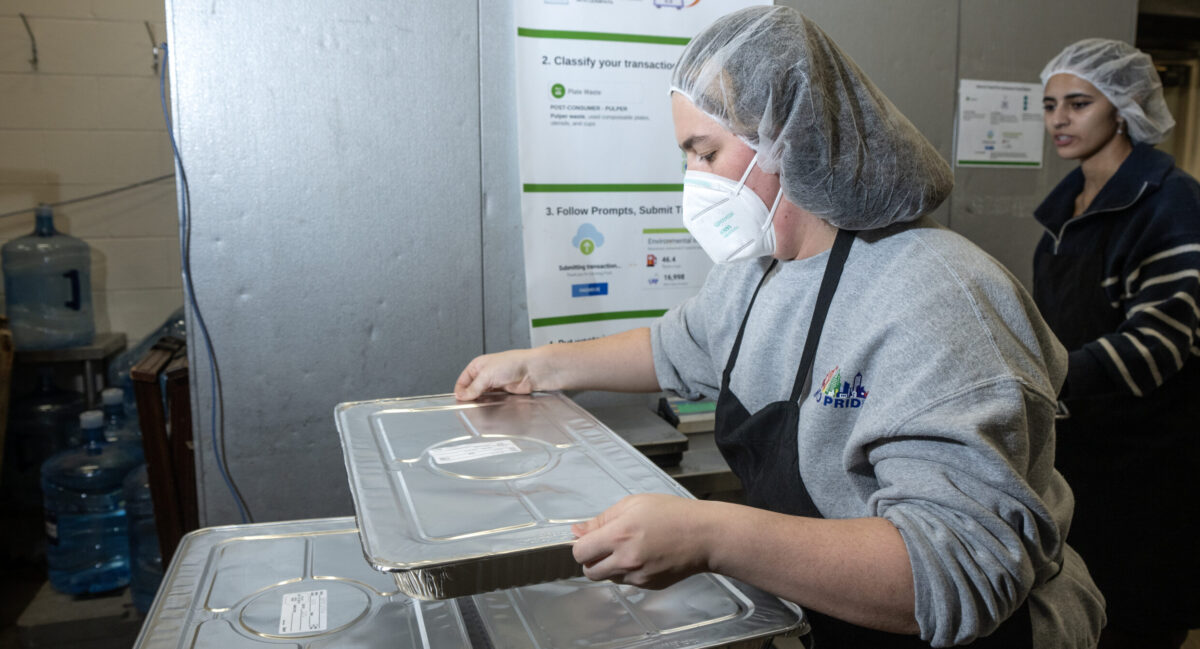
The Food Recovery Network is one of the largest student-led movements against food waste and hunger in the country, focusing on diverting surplus food from college campuses and redistributing it to the local community. Student volunteers work with Mason Dining’s Food Recovery Verified staff to sort, package, and deliver food to the local community and campus partners.  

“We and so many other sustainability organizations are the main impactors on Mason’s sustainability goals, as we are the individuals going out there and doing the work,” said junior Camila Rosales, president of George Mason’s chapter of FRN. 

Camila Rosales and students collaborate with Mason Dining’s Food Recovery verified staff to collect, repackage, and deliver surplus food to various donation locations around campus from the Southside Dining Hall on the Fairfax Campus. Photo by Evan Cantwell/Office of University Branding

FRN’s members are committed to sustainability. Before they can volunteer, they are required to complete an online course in food safety and handling.  

Camila Rosales and FRN students in action. Photo by Evan Cantwell/Office of University Branding

Rosales, a business major with a concentration in operations and supply chain management, originally joined the club to fulfill service hours but fell in love with the organization’s mission. Since the chapter began in 2018, they have recovered more than 1,600 pounds of excess food. In the Fall 2024 semester, under Rosales’s leadership, they recovered more than 750 pounds alone and are on track to reach similar numbers in Spring 2025.  

The diverted food is donated to nonprofit organizations in the Northern Virginia community such as New Hope Housing’s Mondloch House, a shelter in Alexandria, and the Katherine Hanley Family Shelter, an emergency family shelter in Fairfax. The club also helps combat food insecurity on campus through Swipe4Change, an end-of-semester Mason Dining initiative that allows students to donate leftover meal swipes and volunteer to collect unused food for Patriots in need. 

“Food Recovery Network’s impact is definitely only something you can see behind closed doors,” said Rosales. 

Rosales, who is also the events director of Her Campus at George Mason and a Costello College of Business Impact Fellow, was encouraged by previous leadership to take on the mantle of president. She fondly remembers the time she showed up to a volunteer shift, without realizing it had been rescheduled, and began processing and packing everything herself.

Students collaborate with Mason Dining’s Food Recovery verified staff to collect, repackage, and deliver surplus food to various donation locations around campus from the Southside Dining Hall on the Fairfax Campus. Photo by Evan Cantwell/Office of University Branding

The chapter’s leadership were so impressed by her efforts that they asked her to become their new president.  

Students repackage food collected from Mason Dining. Photo by Evan Cantwell/Office of University Branding

Rosales said that one of the things that drew her to the organization was helping so many people within that supply chain, she said. “Not only are we donating to these nonprofits, but our dining staff has taken so much time to create this food that being able to make sure food continues on is rewarding. [Joining the FRN] is one of the best decisions I’ve made since entering Mason,” she said.  

As president she oversees all volunteers as well as coordinates communications between FRN’s national leadership, the nonprofit organizations they donate to, and Mason Dining staff. “It’s a lot of emails and managing finances,” she said. “Everything needs to be done almost perfectly, from coordinating [food] drop off times to sanitation.” 

Her main goal for the spring semester is to increase recruitment efforts to be able to make an even greater impact on campus and in the local community. She also wants to expand the chapter to include more opportunities for student connection.  

Rosales highly recommends getting involved with sustainability efforts on campus. "Beyond the service hours, you get to see behind the scenes of where your food comes from (if you eat at the dining halls), and you're supporting the local community." 

Click here to learn about Sustainability at George Mason 

George Mason Homecoming 2025

Homecoming Highlights

Homecoming Tip-Off & Lip Sync Battle (Jan. 31)

The week kicked off with high energy as students competed in a Lip Sync Battle, showcasing their creativity and stage presence. This event set the tone for an exciting Homecoming week.

Taco Tuesday Trivia (Feb. 4)

Mason students gathered at Banditos for a special Homecoming edition of Taco Tuesday Trivia. Great food, challenging questions, and friendly competition made for a fun night.

The Patriot Activities Council hosts Taco Tuesday Trivia night at Bandito's. Photo by: Ayman Rashid/Creative Services/George Mason University
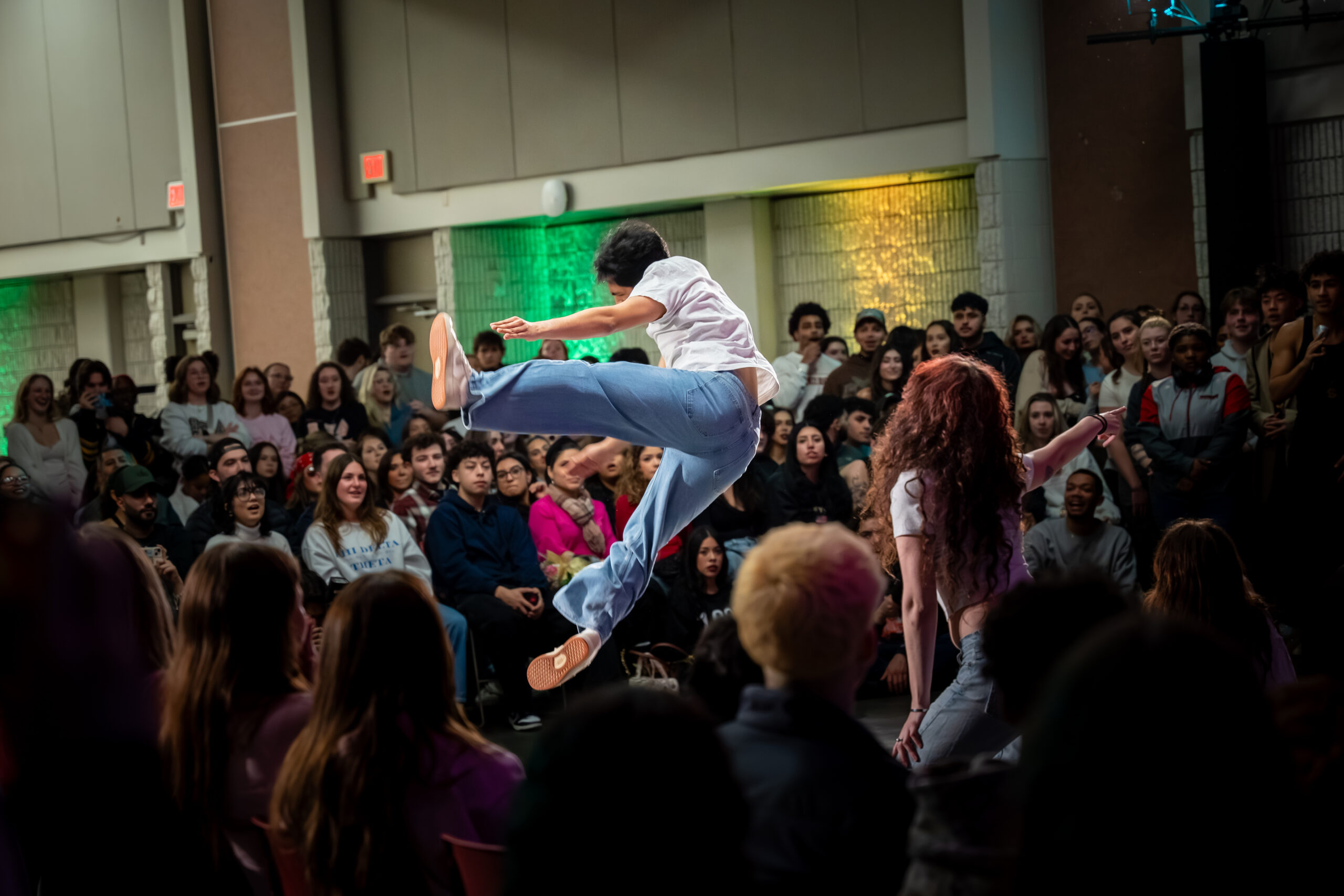
Fraternity-Sorority combos compete in the Homecoming 2025 Tipoff Party dance competition. Photo by: Ayman Rashid/Creative Services/George Mason University

Day of Service (Feb. 5)

Giving back to the community was a key part of Homecoming. Students participated in various service projects, including

INOVA Blood Drive – Students donated blood to help local hospitals and those in need.

Pack the Truck – A food drive collected nonperishable donations for the Patriot Pantry and Food for Others.

Campus Gardens Harvesting – Volunteers worked at the Presidents Park Greenhouse, supporting sustainability efforts.

Additional Service Projects – Activities like plant pot decorating, snack bag packing, and cardboard composting provided more ways to make an impact.

Homecoming Comedy Headliner: Sarah Sherman (Feb. 6)

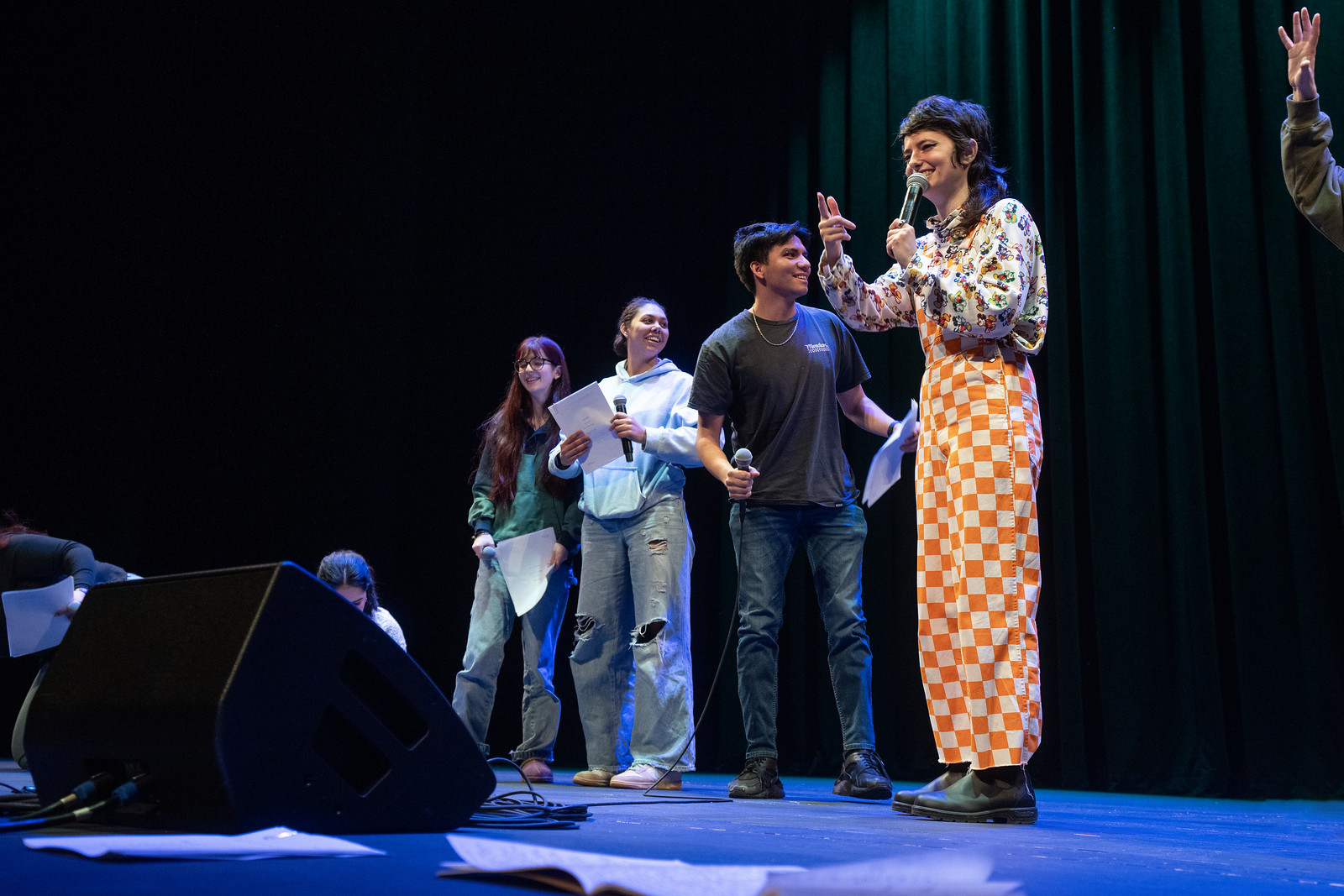
Saturday Night Live’s Sarah Sherman took the stage at the Center for the Arts, delivering a night of laughs. Students packed the venue for this exciting Homecoming tradition.

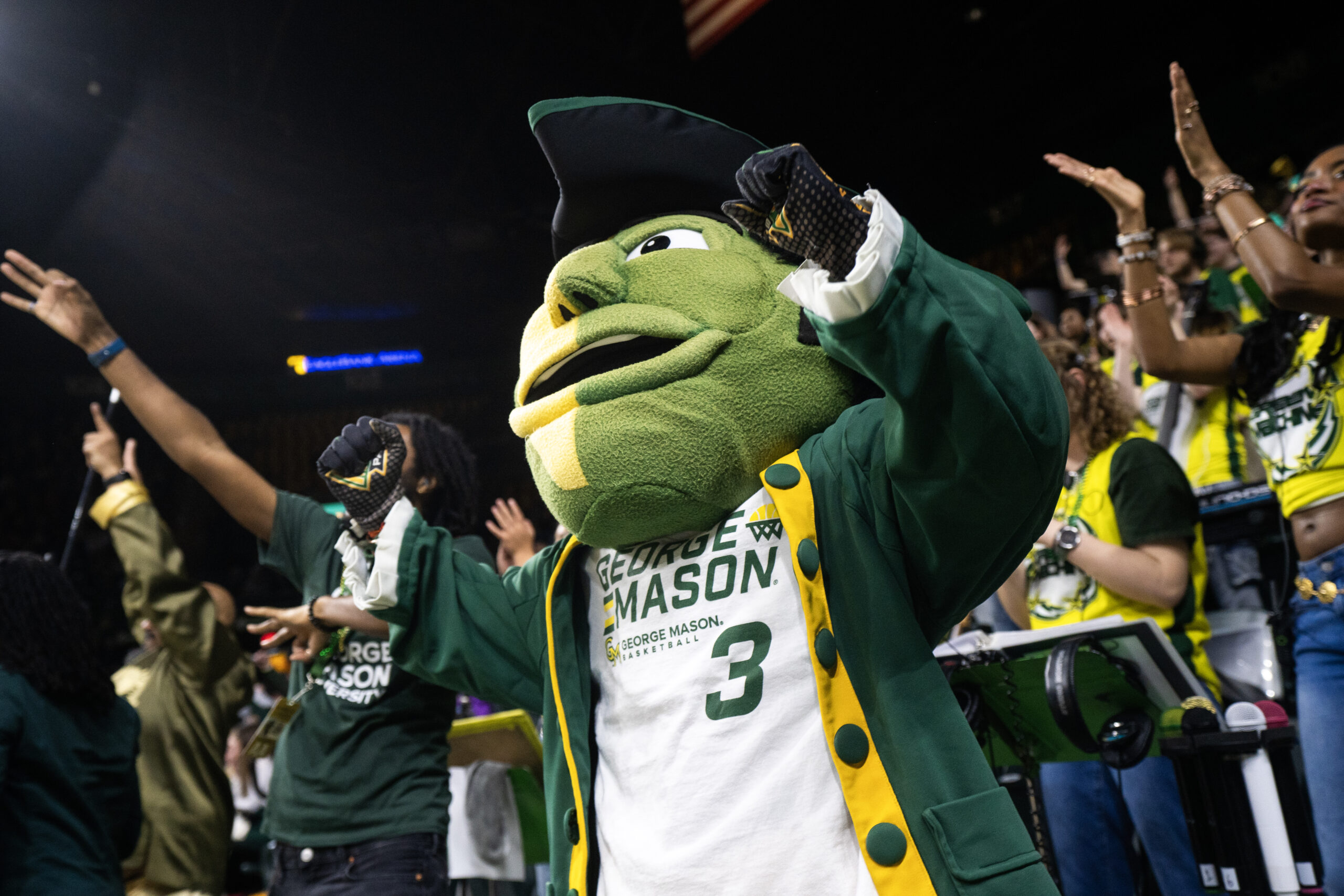
Men's basketball vs. Rhode Island University in EagleBank arena. Photo by Evan Cantwell/Office of University Branding
Sarah Sherman performs in the Center for the Arts, Fairfax Campus as the homecoming headliner. Photo by Evan Cantwell/Office of University Branding

Homecoming Festival & Tailgate (Feb. 8)

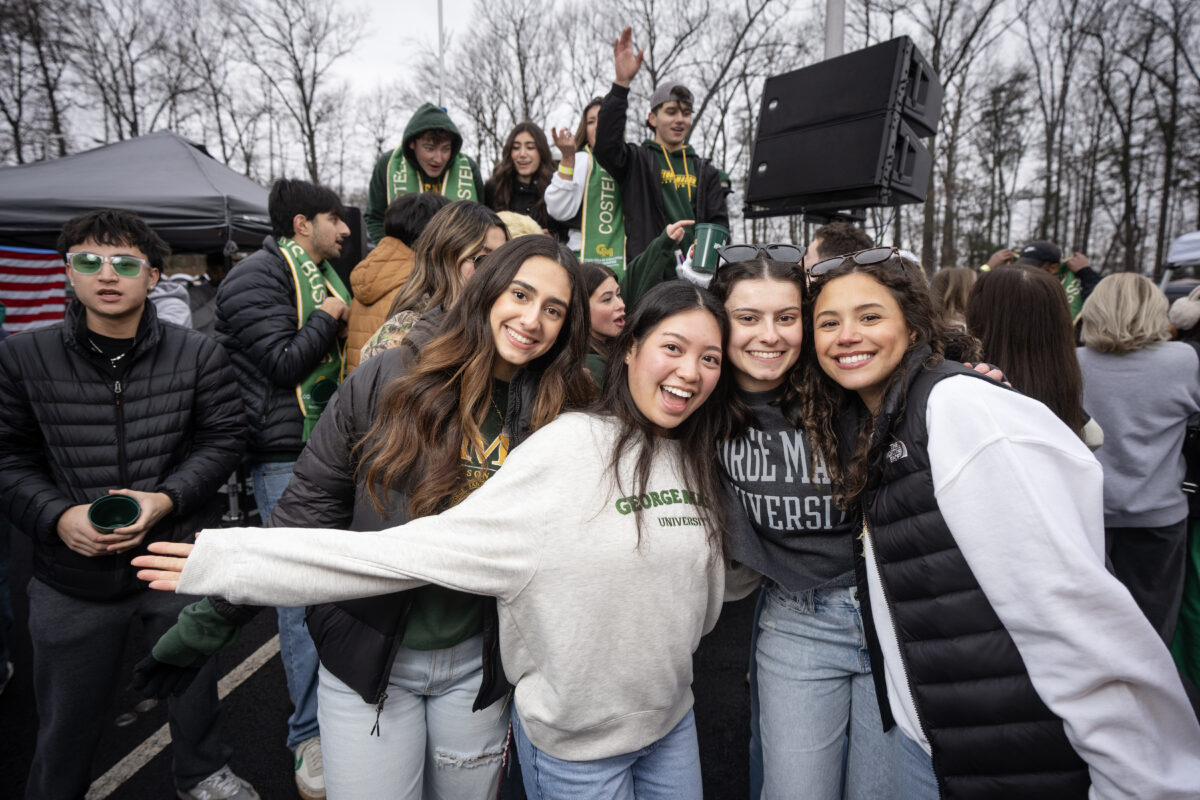
Before the big game, Mason Nation gathered in Lot L outside EagleBank Arena for the Homecoming Festival. Students enjoyed food trucks, games, giveaways, and music, making it the perfect lead-up to game day.

Homecoming 2025 was a week to remember, bringing together students, alumni, and the Mason community to celebrate school spirit and service. Thank you to everyone who participated and made this year’s Homecoming a success. See you next year!

George Mason Competitive Cybersecurity

Original Story by Shayla Brown, Jan 27, 2025

Students from George Mason University’s Competitive Cybersecurity (MCC) club have dominated in multiple national competitions. The team got 1st place in the 2024 VMI CyberFusion and 2nd place in the 2024 Spring National Cyber League. 

Next, the students will be competing in the inaugural DistrictCon Hacker Conference on February 21-22. 

Club president Dylan Knoff working on routers. Photo provided.


“We'll be presenting live demos with our exploits in front of a judge and audience. So, we'll basically go from not having access to a certain device to showing that we can get access in the eight different attack vectors that we discovered,” said club president Dylan Knoff, a junior computer science major.

This demonstration is known as the junkyard competition, and the device they’re hacking is a router. In preparation for the demo, the team is conducting multiple analyses and rehearsing talking points for verification of their research.

“We basically ripped the firmware off of it, which is the code that runs on embedded devices like this one,” said Knoff, who participated in the International Cybersecurity Championship in Chile with the U.S. Cyber Team.

“We utilized hardware debugging interfaces on the device to both find potential bugs by analyzing our own local copy of the firmware and confirm their existence and exploitability by trying to trigger them on the live device and utilizing the debug interface exposed,” he said.

In addition to Knoff, his teammates Danyaal Shaozab and Ryan Murphy will also participate in the junkyard competition and other cybersecurity challenges including “capture the flag,” also called CTF, where the teams receive challenges, such as web app exploitation, binary exploitation, cryptography, reverse engineering, forensics, and a description that they must solve and then get a flag that is redeemed for points.

In September 2023, MCC hosted its own international CTF event, attracting more than 3,000 participants and 1,600 teams as well as hosted PatriotCTF 2024 attracting over 5400 participants and 2200 teams. The club practices are offensive cybersecurity, which is a type of ethical hacking used to evaluate and determine a system’s security, Murphy explained.

Club member Ryan Murphy working on routers. Photo provided.


Murphy, who transferred to George Mason from Virginia Peninsula Community College as a part of the Mason Virginia Promise, has been passionate about cybersecurity since middle school and participated in CyberPatriot, a national youth cyber education program.

“I'm still pretty new at George Mason, but it's been a really good experience so far,” said Murphy, a junior cyber security engineering major. “I got involved with the club from the get- go because they're a bunch of like-minded people and I’m really grateful for the opportunities the club and the university have offered me.”

The team will have two time slots and two presentations. They plan to do a dry run the day before the conference, as well as more analysis to solidify the information, said Murphy.

Shaozab is currently working as an associate vulnerability researcher at TFP0 Labs, a Reston-based security research firm. Shaozab’s role entails finding and exploiting vulnerabilities of various security systems and he compares his professional responsibilities to that of his club and school assignments.

“Working with Dylan and Ryan is great. We all have similar career goals, and it makes projects and assignments a lot easier,” said Shaozab, who is a senior cyber security engineering major.

Shaozab credits his courses, including CYSE 465 Transportation Systems Design, for helping him prepare for the upcoming competition.

Dr. [Tanvir] Arafi is a very smart professor and a very talented individual in this field. His course really helped me hone my cyber techniques,” he said.

Shaozab explained that the team is focused on exploiting the [Control Area Network] bus, which is like the nervous system of a vehicle, allowing different components like the engine, brakes, and doors to communicate with each other. “Exploiting it involves sending malicious messages in the CAN bus to manipulate the car's function, such as unlocking doors or starting the engine,” he said.

“What made this particularly interesting to me is that I'm a huge car enthusiast, so being able to merge my passion for cars and cybersecurity was a unique experience. Getting hands-on with that in a classroom setting made it even more engaging. It’s rare to get that kind of knowledge taught in schools,” he said.

Winter 2024 Comes to a Close!

This content originated as an email from UL VP Rose Pascarell on 12/18/24

Dear Patriots,

As we close out the Fall semester, I want to take a moment to acknowledge your accomplishments and encourage you to prioritize your well-being during this busy time. Finals and transitional times can be stressful, and it’s important to take care of your mental and physical health as you finish strong.

Although the university will be closed during break, George Mason offers you several free resources to support your mental health and overall well-being:

  • TimelyCare: Access free, 24/7 virtual mental health support, including on-demand emotional support, scheduled counseling sessions, psychiatry services, and health coaching. Visit TimelyCare to learn more.
  • Burnalong: Explore thousands of online fitness and wellness classes, including options for mindfulness, stress management, and meditation. This platform is available to help you stay active and reduce stress during the break. Learn more about Burnalong here.

Please take advantage of both of these resources if you need support.

Upcoming Academic Calendar

Here are some important dates to keep in mind as we end the semester and transition into the new year:

  • Winter Break (University Closed): Monday, December 23 – Friday, January 3
  • First Day of Spring Classes: Tuesday, January 21

To those of you graduating, a special congratulations! Your perseverance and achievements have brought you to this incredible milestone, and I hope you are able to celebrate your accomplishment with friends and family.

Finally, as we head into the holiday season, I hope you take time to rest, recharge, and spend time with loved ones. Thank you for being part of our vibrant Mason community. I wish you a joyful winter break. We look forward to welcoming you back in January!

Warm regards,

Rose Pascarell
Vice President for University Life

Meet the Mason Nation: Nandini Koka

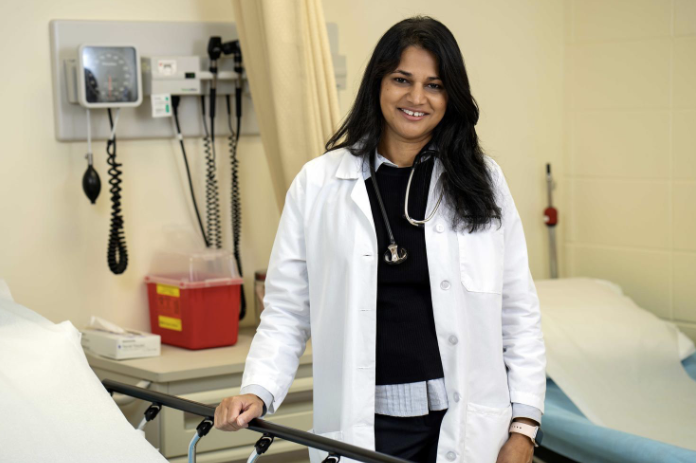
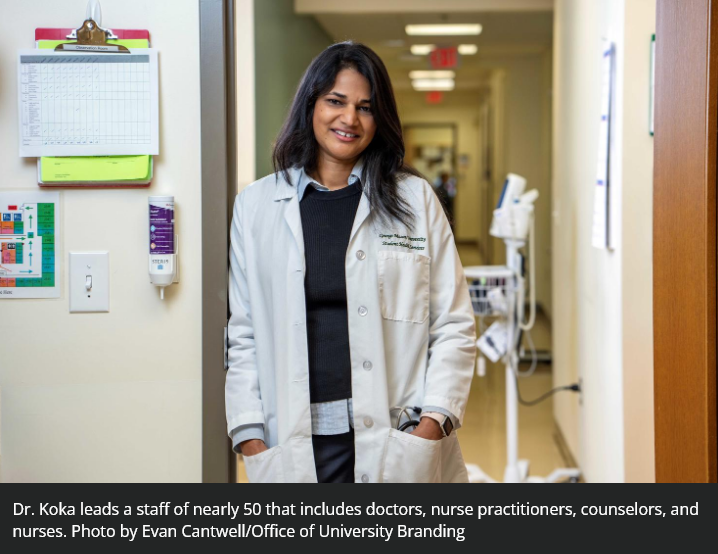
Dr. Nandini Koka, executive director of Student Health Services at
George Mason University. Photo by Evan Cantwell/Office of
University Branding

November 22, 2024 / By Lauren Reuscher
Nandini Koka, MD
Job: Executive Director, Student Health Services


Nandini Koka joined George Mason University in April 2023 as executive director of Student Health Services, where she leads a staff of nearly 50, that includes doctors, nurse practitioners, counselors, and nurses. As a medical doctor with training in family medicine and urgent care, she is passionate about helping patients get better quickly and enhancing access to care. At the largest and fastest-growing public research university in Virginia, Koka has found a place where the need for that care continues to grow.


The doctor is in: In her role, Koka provides direction and leadership for Student Health Services to ensure students receive quality clinical care. She also serves as a medical advisor and resource to campus leaders on health-related matters. In a post-pandemic world, where many aspects of health care remain an urgent community need, her input is essential across George Mason's Campuses.

Helping the student body: Koka knows that learning is not confined to the classroom, and some of the biggest lessons can address a fundamental part of students’ lives: their health.

“I am excited to work at George Mason because of the opportunity to care for a diverse student population,” said Koka. “I want to help guide students as they become advocates for their own health and create goals to maintain a healthy lifestyle.”

Appointments on the books: Last year, Student Health Services had 16,500 student interactions—this includes in-person and telehealth visits, lab work, and nurse triage interactions across the Fairfax, Mason Square, and Science and Technology campuses.

Koka knows this number could go even higher. One of her primary goals is to increase awareness of the health services available to students.

“One of the biggest challenges we face is creating awareness around Student Health Services and the fact that we are a full-service medical clinic,” said Koka.

Addressing the body and mind: “We continue to see the need for mental health care as a challenge in the community,” said Koka. “Student Health Services has a unique approach to behavioral health, as we utilize a collaborative care model.”

In this model, medical providers partner with behavioral health counselors to co-manage the care of students. Koka says that this team approach has given students more touchpoints with clinicians and provides a more holistic care model.

Additionally, all patients who visit Student Health Services are given a mental health screening at their first visit, and once a year thereafter. Primary care providers are a key point to identify concerns related to mental health.

Finding ways to make it cost-free: Sexual and reproductive care is another critical area of need at Student Health Services. “We have partnered with a community organization to provide free sexually transmitted infection (STI) services to students throughout the semester,” said Koka. “We continue to look for ways to expand access to services for our students.”

Fostering a supportive community: A dynamic campus community is what brought Koka to higher education. “I have been able to interact with our students and see their excitement about being here at George Mason and wanting to be a part of this community,” said Koka.

Rest as part of health: Outside of work, Koka enjoys spending time with her family. “Our two daughters keep us busy with soccer and dance, and we have fun going to the games and watching the performances,” said Koka. To relax, she might go for a run, play with her dog, or try out new recipes.

Election Day: Vote and Engage!

This content originated as an email from UL VP Rose Pascarell 10/30/2024

Dear Patriots,

As we approach Election Day next Tuesday, November 5, I want to remind you that your vote is your voice — remember to vote! Participating in the democratic process is a powerful way to influence the future of our community and country.  As President Washington told you in his email last month, "Voting is something we do together as Patriots regardless of ideology."

Remember to check your polling location to ensure you’re prepared and know where to vote.  Merten Hall is a polling site on the Fairfax campus and is open from 6 am to 7 pm for students registered at their current Fairfax on-campus address.  For students who will be on campus, Housing and Residence Life will host an election night watch party at 7pm at The Ridge (located in Sandbridge Hall).

Remember that your George Mason student ID is accepted on Election Day (physical card and mobile ID formats). Same-day registration is also available in Virginia, but you must go to the polling place for the precinct in which you reside.

While there are no classes on Election Day, join us on the Merten Hall lawn from 11am to 3pm for a “Get Your Vote On” event with free food, lawn games, and DIY crafts.  There are also several post-election analysis and listening sessions, including informed perspectives on the election outcomes (check out Dr. Jennifer Victor’s GOV 103: Election Post-Mortem class on November 7 or come to an election debrief on November 11 hosted by the Schar School at Mason Square), opportunities to come together to share your own perspective and be heard, and opportunities to learn about how to stay engaged after the election ends.

The elections are exciting moments in our democracy, but they can also be a source of stress and anxiety. We do have resources available to you. You can attend a compassionate listening session, participate in recreational activities, and take advantage of mental health support to de-stress and stay grounded during this time.

For more information on all these events and resources, please visit the MasonVotes website. It’s your one-stop destination for everything related to this election season. If you are still an undecided voter, MasonVotes has information on the candidates and all their positions on important issues.  The Office of Community Engagement and Civic Learning is also a great resource throughout the year.

Thank you for being an engaged member of our community.

Warm regards,

Rose Pascarell
Vice President for University Life