University Life

Confidence Meets Opportunity at Fall 2025 Career Fair


By Tiffany Boggs and Mathilda Tataw, Student Media. Edited by Chelsea Xu, UL Marketing and Communications. 

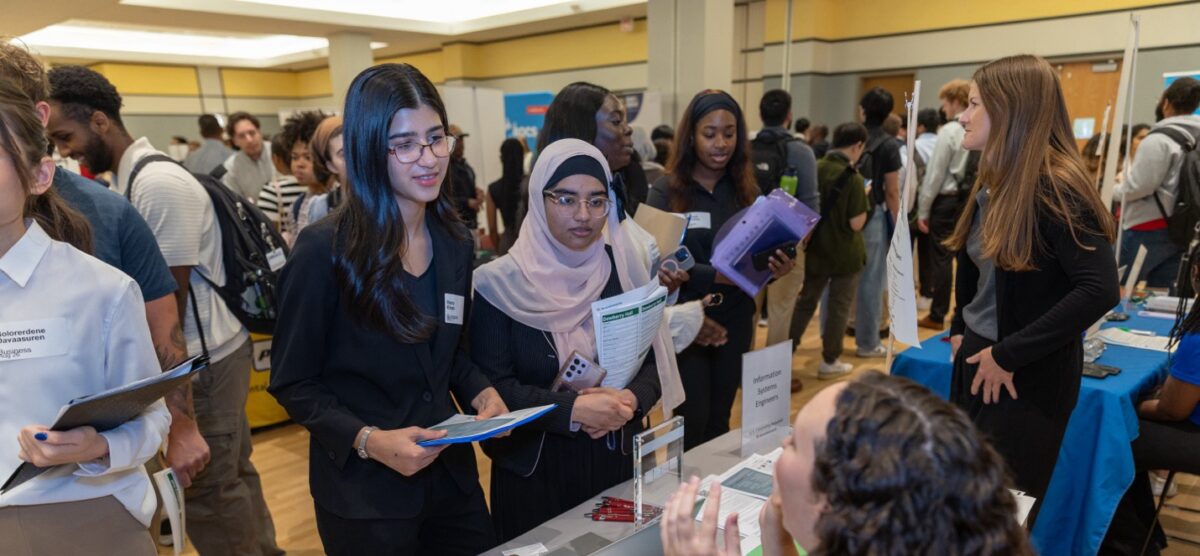
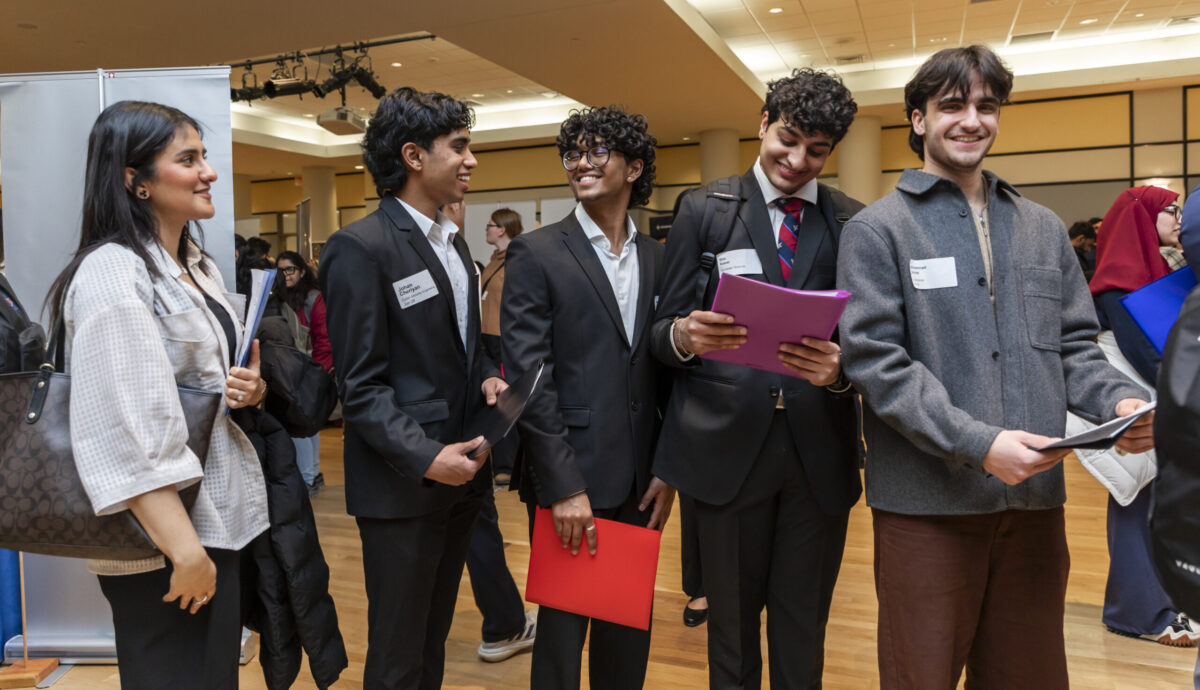
From September 29 – October 1, more than 5,000 George Mason University students filled Dewberry Hall in sharp professional attire and with polished résumés in hand—ready to take the next step toward their careers. 

George Mason’s Career Fair, held each fall and spring semester, is the university’s largest on-campus recruiting event, connecting students with representatives from more than 100 companies and organizations. The event offers opportunities to explore internships, part-time roles, and full-time positions across a range of industries. 

“These are opportunities to get right in front of the employers,” said Philip Wilkerson, employer engagement consultant at University Career Services (UCS). “I like to tell students this is not a place where you can automatically get a job or a magic ticket. It’s a great way to build relationships, get business cards, and stay in touch.”  
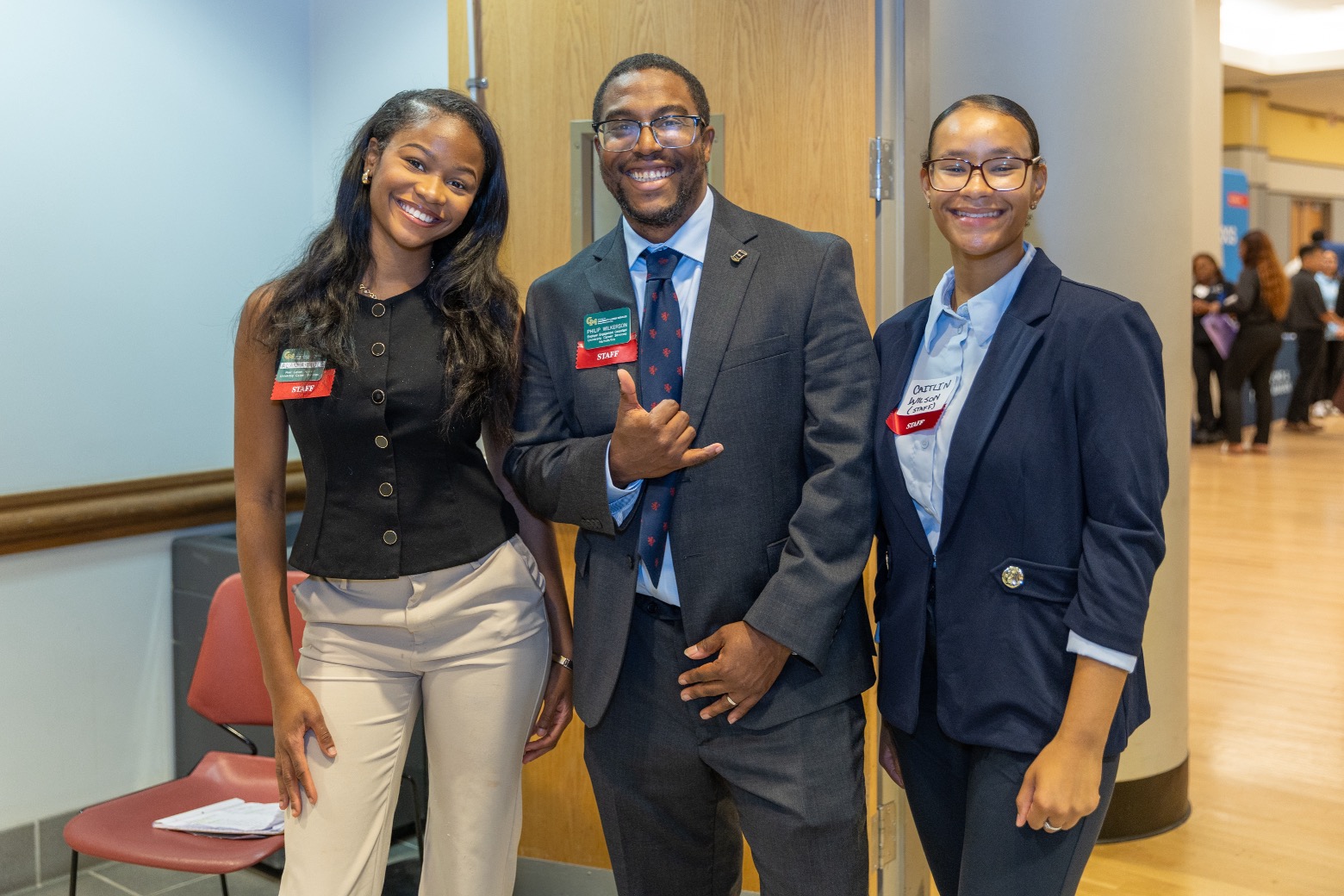
Photo by Emily Campos for University Life.

Wilkerson added that while the fair is about connections, success begins long before students step into Dewberry Hall. UCS offers one-on-one advising to help students refine résumés, craft cover letters, and practice introductions—transforming nerves into confidence. “Confidence comes with preparation,” he said. “The more prepared you are, the more confident you are.”

Mary Claire Kraft, employer outreach manager for UCS, expanded on that idea by highlighting the value of research and intentionality. “Number one, check Handshake, so that when students meet an employer they’re interested in, they can share one thing they know about them,” she said. “All of these employers are here to meet you—the student. There is no better expert on you than yourself.”

Iman Chaudhry, a sophomore Honors College student majoring in management information systems, approached the fair with an open mindset. “I think it’s important not to limit yourself, even if you have a specific major,” she said. “There are still benefits to attending all days of the Career Fair.”

Lilliana Russell, a freshman majoring in civil and infrastructure engineering, attended her first fair eager to learn. She arrived early with a list of employers to meet and a curiosity about what her field has to offer. “I’m really just trying to scope out what the different companies in my field are and maybe score an internship,” she said.
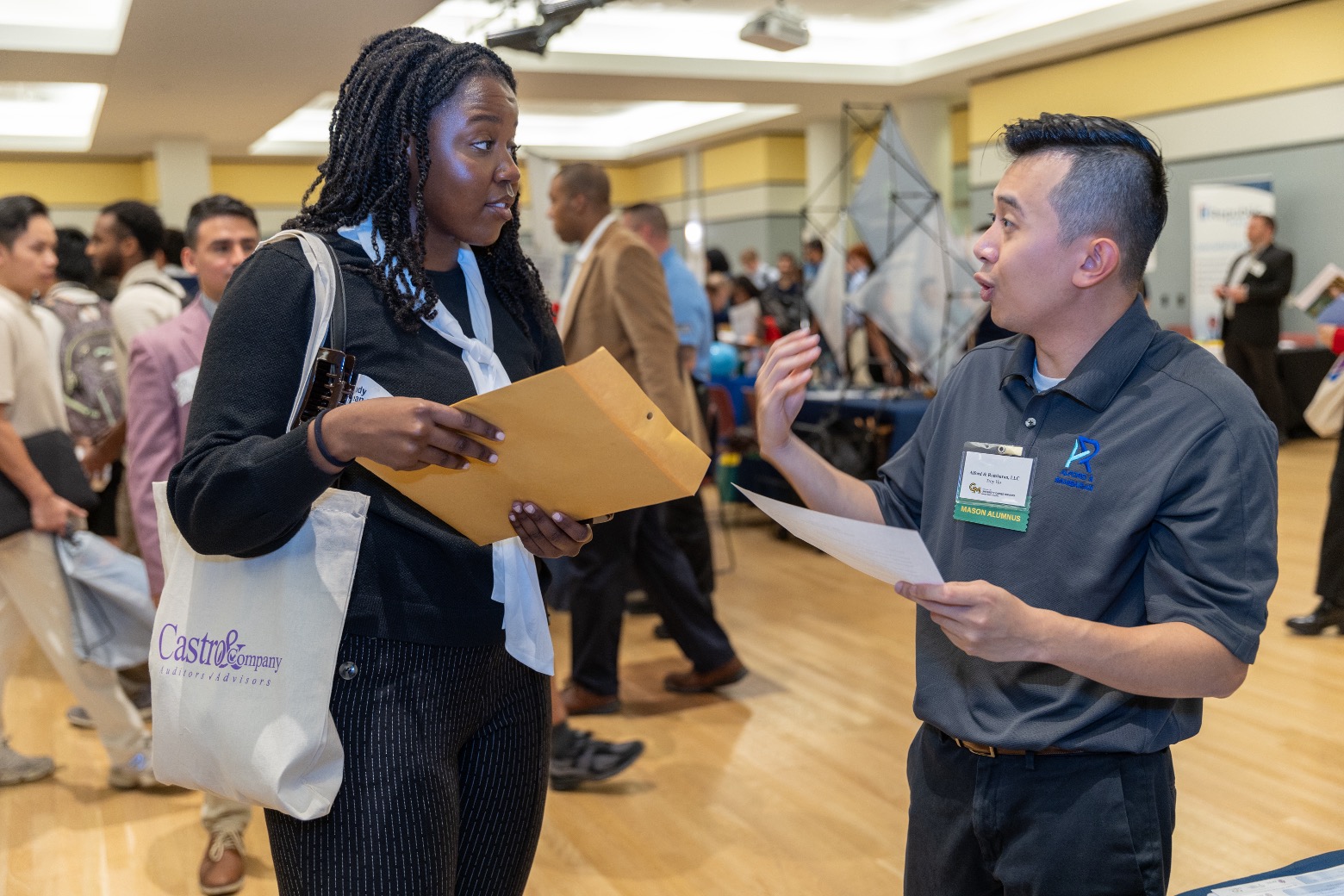
Photo by Emily Campos for University Life.

Russell added that her nerves faded once she began speaking with recruiters. “Once I got to know everyone and saw how excited they were to talk with students, I let go of the preconceived notions about the event,” she said.

Brook Haiamr, a junior, offered simple advice for future fair attendees. “Go in with confidence, get your name out there, and show genuine enthusiasm,” she said.

Kraft closed with a final reminder: “Practice if it makes you feel comfortable,” she said. “But resist the urge to go robotic. Be authentic—they came to meet you.”

What’s next: Students can keep the momentum going at the Internship Fair on Thursday, October 23—another chance to research organizations, meet recruiters, and convert preparation into opportunity.
Career Influencers Network Guides Career-Ready Students toward Success


This article originally appeared on The George on October 9, 2025 / By Lauren Reuscher

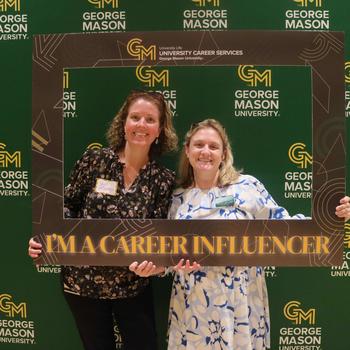
The Career Influencers Network at George Mason University empowers faculty and staff to provide career development support to students throughout their academic journey. The network is open to instructors, advisors, success coaches, supervisors, and any others across campus who are positioned to help students achieve their professional goals. 

University Career Services hosted a reception in early October honoring the network’s 10th anniversary. The network started in 2015 with 19 members, and it has now grown to include more than 500 faculty and staff. 


The network exemplifies George Mason’s approach to preparing career-ready graduates.

“The Career Influencers Network was the beginning of a ‘career ecosystem’ or ‘career everywhere’ approach,” said Saskia Campbell, executive director of University Career Services. “Preparing career-ready graduates is not confined to one office; it’s a shared responsibility of every faculty and staff member.”

The Carnegie Foundation and American Council on Education (ACE) has named George Mason to the highest tier of its list of Opportunity Colleges and Universities: Higher Access, Higher Earnings, in recognition of the university’s commitment to accessibility, return on investment, and upward mobility. Positive, high-earning career outcomes contribute to that recognition. 

Career Influencers offer students job-search advice, refer them to career advising, promote employer recruitment efforts at George Mason, and share career resources with students. 

“Campus partners have helped students connect the dots between their academic experiences or on-campus jobs and their professional futures—and that is transformative,” Campbell said.

The Career Influencers Network has garnered national attention—other institutions reach out for guidance to replicate its success on their own campuses. George Mason’s network has been highlighted by organizations supporting career services in higher education, including the American Association of State Colleges and Universities.

The network’s ability to reach students wherever they are has been instrumental to its success. 

“It’s a common challenge many career services offices face: how to serve a large student population with limited staff and resources,” said Kristin Leonato, associate director of programs and outreach in University Career Services. “Utilizing career services is optional and not a required part of a degree program. The network allows us to connect with campus partners who students already know and trust.”

To join the network, faculty and staff participate in an interactive, 4.5-hour training covering topics like career readiness, how employers recruit George Mason students, and strategies to support students at various stages of their career development.

Engagement with the network does not end with the initial training. Career Influencers receive ongoing support from University Career Services, including workshops on related topics and monthly updates on career-related events and services.

The 10th anniversary event included words of appreciation from Campbell and Rose Pascarell, vice president of University Life, who presented two awards recognizing faculty and staff contributions to the Career Influencers Network. 

Erin McSherry, assistant dean in the College of Humanities and Social Sciences (CHSS), received the Star Recruiter Award for having referred the most new members to the network. About 50% of the faculty and staff in the network are referred by a colleague or supervisor.

Erin McSherry, College of Humanities and Social Sciences (pictured at left), received the Star Recruiter Award for having referred the most new members to the Career Influencers Network. Pictured at right is Kristin Leonato, associate director, University Career Services. Photo provided

Larry Guerin, adjunct faculty in the Criminology, Law, and Society Department within CHSS, received the Outstanding Influencer Award for demonstrating the impact career influencers can make on students’ personal and professional lives. 

“It takes a strong network of committed professionals to support students in achieving their short-term and long-term professional goals in a wide range of career fields,” said Leonato. “The more than 500 faculty and staff in the Career Influencers Network are an important part of this work.” 

A Braver Campus Dialogue: Navigating Political Involvement in George Mason University’s Leadership and Governance 


The Center for Leadership and Intercultural Engagement, in partnership with Braver Angels, Bridge USA, and the American Council of Trustees and Alumni, has launched the A Braver Campus Series at George Mason University. The series aims to promote understanding across differences within our campus community and supports the university’s commitment to creating spaces for dialogue.   

By aligning with the goal of the university’s Dialogue Across Differences (DxD) initiative to foster peaceful and just societies, the A Braver Campus series offers facilitated dialogues that include structured debates and conversations, helping to build community through open and respectful exchanges. The series aims to equip participants with the skills and experiences necessary for sustained involvement in civic and community activities. 

The series kicked off the fall 2025 semester on Wednesday, September 17, on George Mason’s Fairfax campus with a robust dialogue titled “How Should Our Campus Community Navigate the Risks and Benefits of Political Involvement in Mason’s Leadership and Governance?”  

This event brought together students, faculty, staff, and community members to share perspectives, ask questions, and listen with curiosity and respect. The richness of voices and viewpoints underscored the importance of dialogue in building understanding and shaping a stronger, more inclusive community. A trained moderator from Braver Angels, experienced in leading respectful and solution-focused discussions across political differences, led the conversation. 

Thoughtful Discussion  

According to attendees, one of the event’s most impactful aspects was the opportunity to engage in meaningful conversations across differences. “The event allowed people to come together to discuss their thoughts and concerns about Mason’s current place in the political world,” said Andy Brown, a senior majoring in theater. Brown serves as a leadership consultant for the Center for Leadership and Intercultural Engagement, helping to organize and run these events.  

For others, this was their first opportunity to engage in a discussion about political involvement and governance in the U.S., and they expressed gratitude for being part of such an open and inclusive environment. “As an international student, I was surprised by how openly people shared their political views. What stood out most was the respect shown across differences. This encouraged me to be more open-minded in my own conversations,” said Minsoo Kim, a senior majoring in computational and data sciences and elementary education. 

Participants also noted the value of being informed about the complexities of leadership at George Mason and how events like this help foster a more connected and engaged campus. 

Through these discussions, participants:   

  • Develop skills for engaging in respectful dialogue across political differences  
  • Practice active listening, constructive speaking, and finding common ground  
  • Explore the complexities of political involvement in university governance  
  • Recognize the value of viewpoint diversity in addressing controversial issues  
  • Apply collaborative problem-solving strategies to real-world campus challenges  

The next event in the series, A Braver Campus Debate, will take place on October 29th, offering another chance to engage across differences in an inclusive setting.  

To learn more about upcoming programs, visit clie.gmu.edu/bravercampus.   

Interested in helping shape future topics for debates and dialogues? Share your ideas at bit.ly/bravercampusideas.  

University Life Celebrates Jim Green’s Legacy with Tree Dedication Ceremony


Written by Anna MacNiven, Advancement Operations Manager, University Life. Edited by Chelsea Xu, University Life Marketing and Communications.

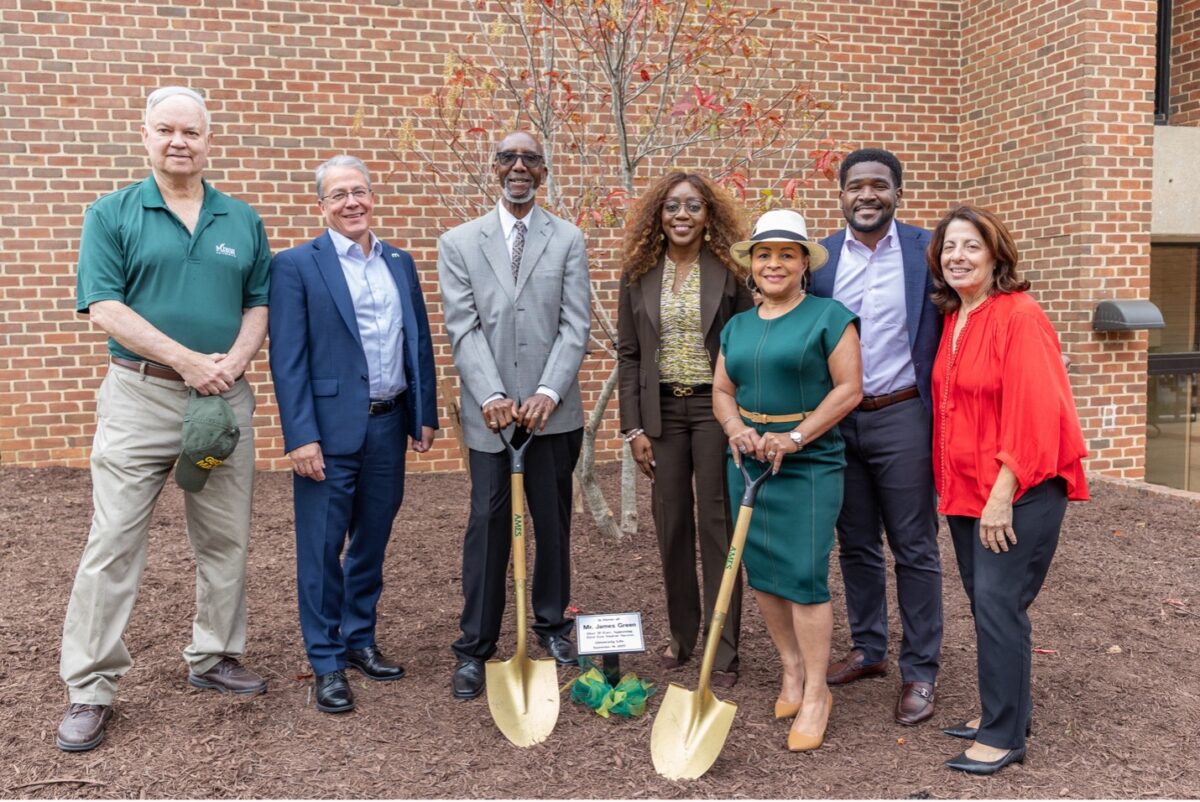
On Tuesday, September 16, members of George Mason University Life Advisory Board, staff, supporters, and friends gathered on the Fairfax Campus to plant a tree in honor of their fellow board member Jim Green.

Leading the way with passion, vision, and a big heart, Jim helped found University Life’s annual golf tournament and worked tirelessly for 30 years to ensure its success. His volunteer leadership helped raise critical support for first-generation students who are forging new paths and brighter futures through education. With his help, the golf tournament raised one million dollars in scholarships for Early Identification Program (EIP) and Student Transition Empowerment Program (STEP) students, changing the lives of students and their families for years to come.

The tree serves as a lasting symbol of Jim’s legacy, rooted in generosity, leadership, and an unwavering commitment to generations of student success.


Mason Korea Students Take the Lead in New York High School Exchange Program


This article originally appeared on The George on September 17. Edited by Chelsea Xu, UL Marketing and Communications.

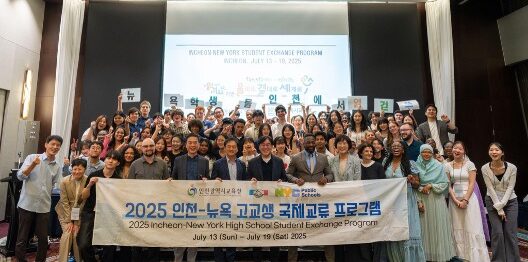
George Mason University Korea played a crucial role in connecting students from different cultures across language barriers over a seven-day Incheon–New York High School Exchange Program in July.

Education authorities from Incheon and New York have collaborated on a brand-new exchange in which students from the two cities shared classrooms and experiences while acknowledging the language and cultural barriers in between. 

The George Mason lead on the project — Hyunyoung Cho, a professor of English in Mason Korea — noted how ambitious the project was. “Last year, when the two cities’ authorities first met, we had no specific plan on how to implement this grand project,” she said. “However, with the effort of so many officials and schools, this became a reality and a truly historic starting point for more exchanges to follow.”

Mason Mentors at the Heart of the Exchange

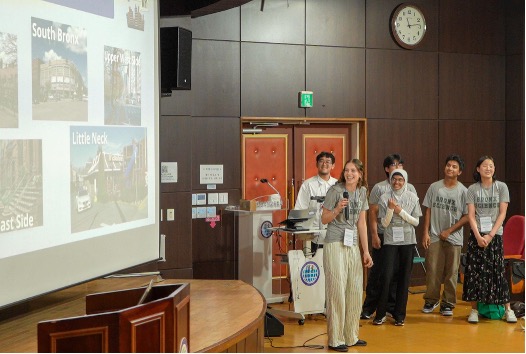
Five Mason Korea students—Chaeyoung Moon, Cheho Moon, Jisu Kim, Jungbin Eom, and Minsoo Kim—assisted Cho in planning and running the program. The Mason Korea students served as mentors and helped introduce the group to the new environments including classrooms, historic sites, and popular streets while drawing on what they learned in ENGH 300 Literature for the Public and Cross-cultural Communication.

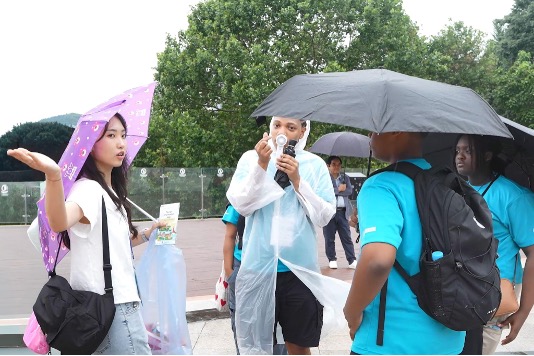
Mentor Cheho Moon presents on the diversity of New York City with Bronx Science Students. Photo Provided.

Yoon-oh Noh, research officer at the Incheon East Asia Global Education Institute, said the mentors made this program especially distinctive. The student mentors functioned as primary cultural guides and instructional supports—making implicit rules explicit, framing activities so that both sides could contribute, and linking daily experiences back to the program’s goals.

For many New York students, the mentors were their most consistent Korean counterparts. Beyond their in-program facilitation, the mentors’ work spanned the entire lifecycle of the exchange from pre-program planning and advance site visits to creating a workbook and post-program deliverables, including a report and a film documenting the week.

Building Bonds Across Cultures

Throughout the seven days, the students from New York recorded and shared their insights in the program workbook and through presentations and videos. They said  that they were able to overcome language barriers with the active support of mentors and buddy students, and they experienced more than textbooks could convey. They also discussed how this event changed their mindsets. 

Many of the New York students remarked that becoming friends with Korean students was their best experience in Korea. “He is my Chingu, he is my best Chingu,” one of the students said, after learning the word “friend” in Korean from a mentor.

Mentor Jungbin Eom explains the history of Freedom Park at the Incheon Open Port Area

With plans to continue and expand the partnership, the Incheon Metropolitan Office of Education and the New York City Department of Education reaffirmed their commitment to equipping students with both academic learning and intercultural competence to thrive as global citizens. 

George Mason University Hosts Successful 13th Annual 9/11 Day of Service


Original article by Lisa Snyder, Associate Director for the Center for Leadership and Intercultural Engagement. Edited by Chelsea Xu, UL Marketing and Communications.  

On September 11, 2025, George Mason University held its 13th Annual 9/11 Day of Service in the Johnson Center, Dewberry Hall. The event drew over 200 participants, including students, faculty, staff, alumni, and community members, all united in their commitment to fostering positive social change through service. This year’s event featured a diverse array of service projects, allowing participants to engage directly with the community and recognize the impactful contributions individuals can make.  

A highlight of the day was a partnership with the P.O.P. Club at Pattie Elementary where fourth- and fifth-grade students joined campus volunteers to package nearly 300 supplemental food bags, generously donated by Van Metre Companies, to support students in need at their school. These young volunteers also took the stage during the opening ceremonies, inspiring the audience with their dedication to service. 

Other service highlights included: 

  • Blood drive with INOVA Blood Donor Services, registering 34 donors and collecting 27 units of whole blood, 12 units of red cells, and 1 unit of plasma, totaling 40 blood products, impacting nearly 120 lives. 
  • Clothing drive in collaboration with Sorting Women Giving Back, sorting and donating more than 800 articles of clothing.
  • Making chew toys and blankets to support the Prince William Animal Shelter. 
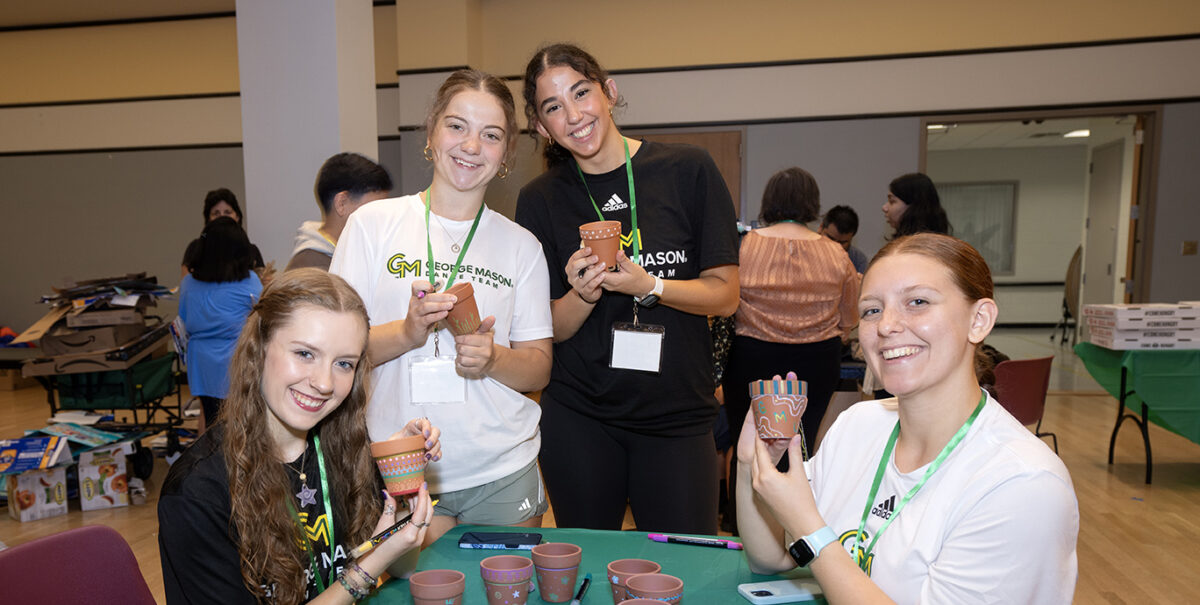
  • Decoration of flowerpots and notecards for senior residents at Potomac Place.

Participants left the event with a renewed sense of purpose, having engaged in active self-reflection about their leadership roles and how they can continue to contribute to positive change within their organizations and society at large. The George Mason 9/11 Day of Service continues to be a powerful tradition of community building and social impact, embodying the university’s commitment to service and leadership. 

This event’s success was made possible by the leadership, creativity, and support of our dedicated planning team: Jana Biever (Schar School of Policy and Government), Jonathan Carmona (International Programs and Services), Diane DiPietro (Human Resources), Hannah Ford (Student Involvement), Amar Gandhi (Office of Community Engagement and Civic Learning), Shanelle Highsmith (Office of Community Engagement and Civic Learning), Susan Pilley (University Life Project and Process Management), Caroline Simpson (New Student and Family Programs and Services), Tisheika Snow (Student Involvement), Lisa Snyder (Center for Leadership and Intercultural Engagement), Whitney Sublett (Information Technology Services), Jakeh Traylor (Disability Services), and Dorothea Tyree (Child Development Center). Their contributions were instrumental in creating a meaningful and impactful day of service. 

Student Health Services Receives Grant to Increase Vaccination Coverage


By Chelsea Xu, UL Marketing and Communications

George Mason University Student Health Services has received a $19,969 grant from the American College Health Foundation to expand vaccination coverage for underserved student populations.

The funding request was awarded as part of a national initiative supporting eight universities across the country. George Mason’s proposal, “Protecting Patriots: Increasing Meningococcal (ACWY and B) and HPV Vaccine Rates Among Underserved Student Populations at George Mason University,” aims to improve access to these critical vaccines and strengthen campuswide health equity.

“This grant expands vaccine education for important vaccines like HPV, Meningitis B, and Meningitis ACWY and increases access for George Mason students, especially for those students who may have missed those vaccines, such as international, first-generation, and contemporary students,” said Dr. Nandini Koka, executive director of Student Health Services. “By improving access and addressing vaccine myths, we are protecting student well-being and strengthening the health of the Mason community.”

The initiative reflects George Mason’s commitment to advancing public health while addressing barriers faced by historically underserved groups. Read the full announcement from American College Health Foundation, “Eight Campuses Awarded Vaccine Coverage Grants from ACHF.”

Student Health Services will host a vaccine clinic on campus on November 13, 2025. Details on how to sign up will be shared with students closer to the date.

Convocation Speakers Welcome Students to Mason Nation


This article has been edited by Chelsea Xu, originated as an email from Succeed Insights.

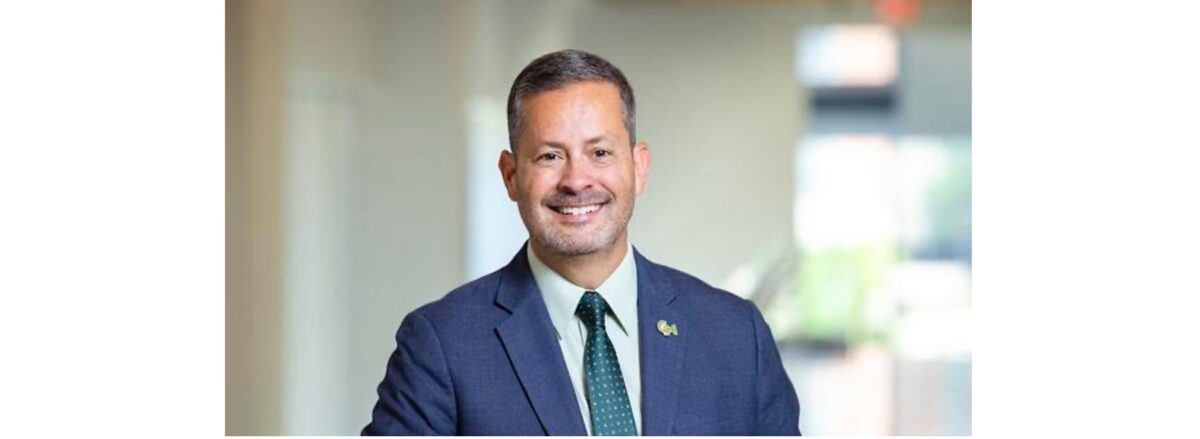
George Mason University President Gregory Washington kicked off fall 2025 New Student Convocation on August 22 by welcoming the largest incoming class in the university’s history. “This institution stands out,” he said. “George Mason transforms more lives than any other Virginia university.”  

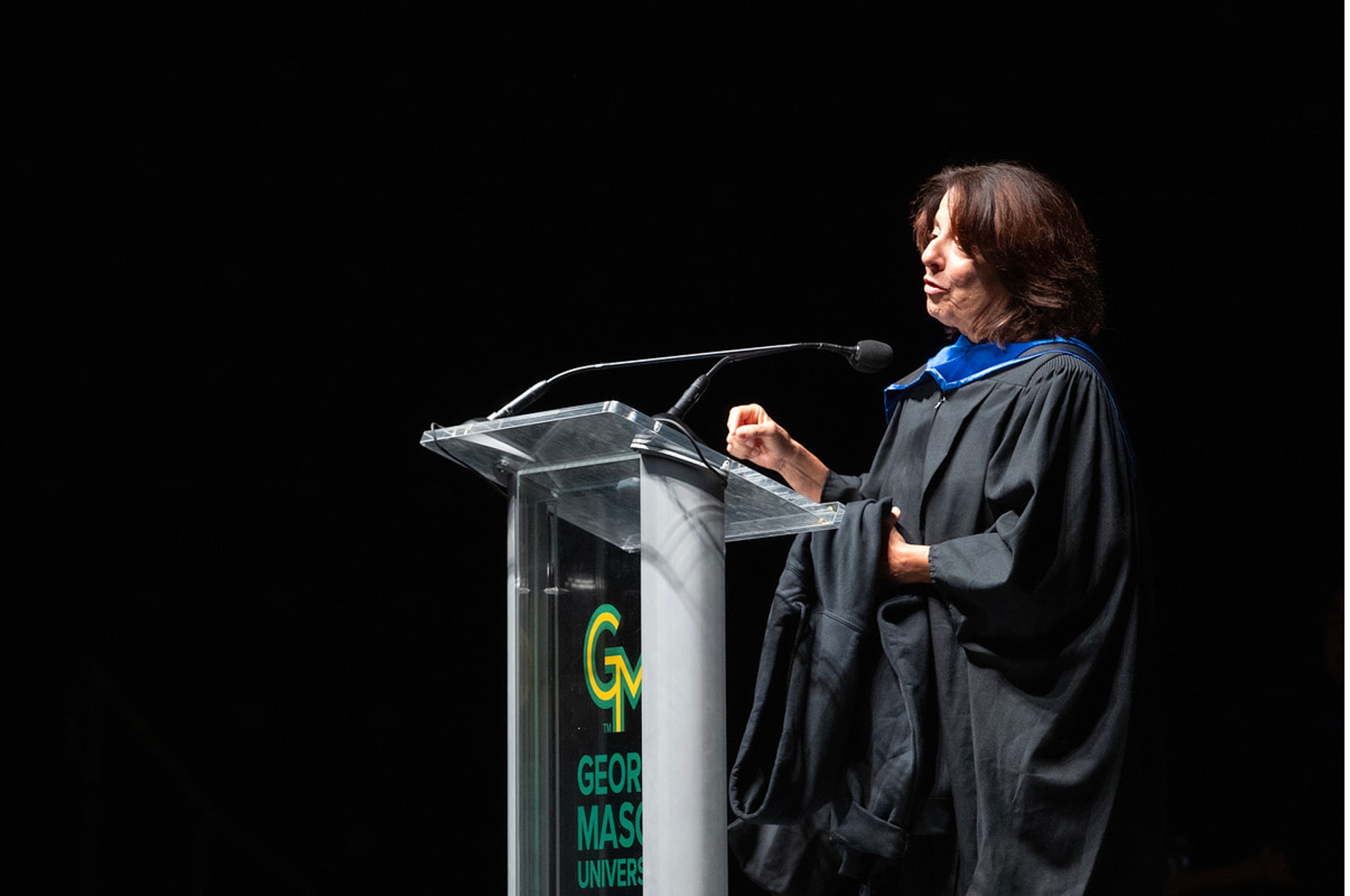
Rose Pascarell, vice president for University Life (pictured below), told the class of 2029, “This is an amazing community. You are going to thrive here, and we’re going to do everything we can to support you in that.” She noted that University Life has ample resources to support students through challenges and successes. 

“Remember, Patriots thrive together, and this is your community now,” Pascarell said. “We are, you are truly altogether different. Each and every one of you belongs here. Show the world what altogether different truly means. That’s the Mason spirit.”   

Vice President for University Life Rose Pascarell addresses class of 2029

Pascarell also introduced one of the traditional highlights of Convocation—a George Mason-branded sweatshirt given to every first-year student—this year showcasing the university’s well-being initiative Patriots Thriving Together. A new element for the 2025 Convocation was the involvement of the George Mason community—including a parade of 41 student organizations and a spoken word performance by faculty, staff, students, and alumni sharing their Mason experiences and what makes our community special.  

After the ceremony, the UL Welcome2Mason steering committee hosted the Kick Off to Success Resource Fair on Mason Pond Drive and Holton Plaza, where first-year students explored tables and displays from numerous offices, organizations, and campus initiatives. 

This year, a new initiative, a Mason360-based digital planner called “Plan Your Year,” encouraged students to utilize the student engagement platform to discover events, connect with others, and get involved.

Meet the Mason Nation: TJ Pegg

This article originally appeared on The George on July 17, 2025 / By Lauren Reuscher. Edited by Chelsea Xu, UL Marketing and Communications.

TJ Pegg

Job: Associate Director for Student Success Coaching

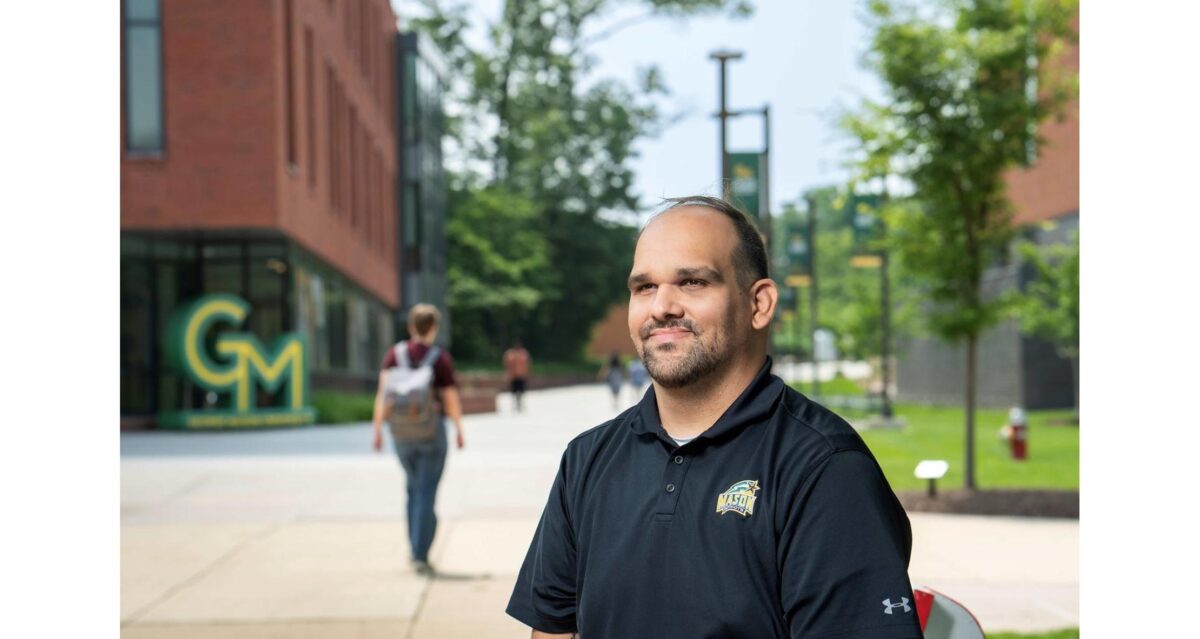
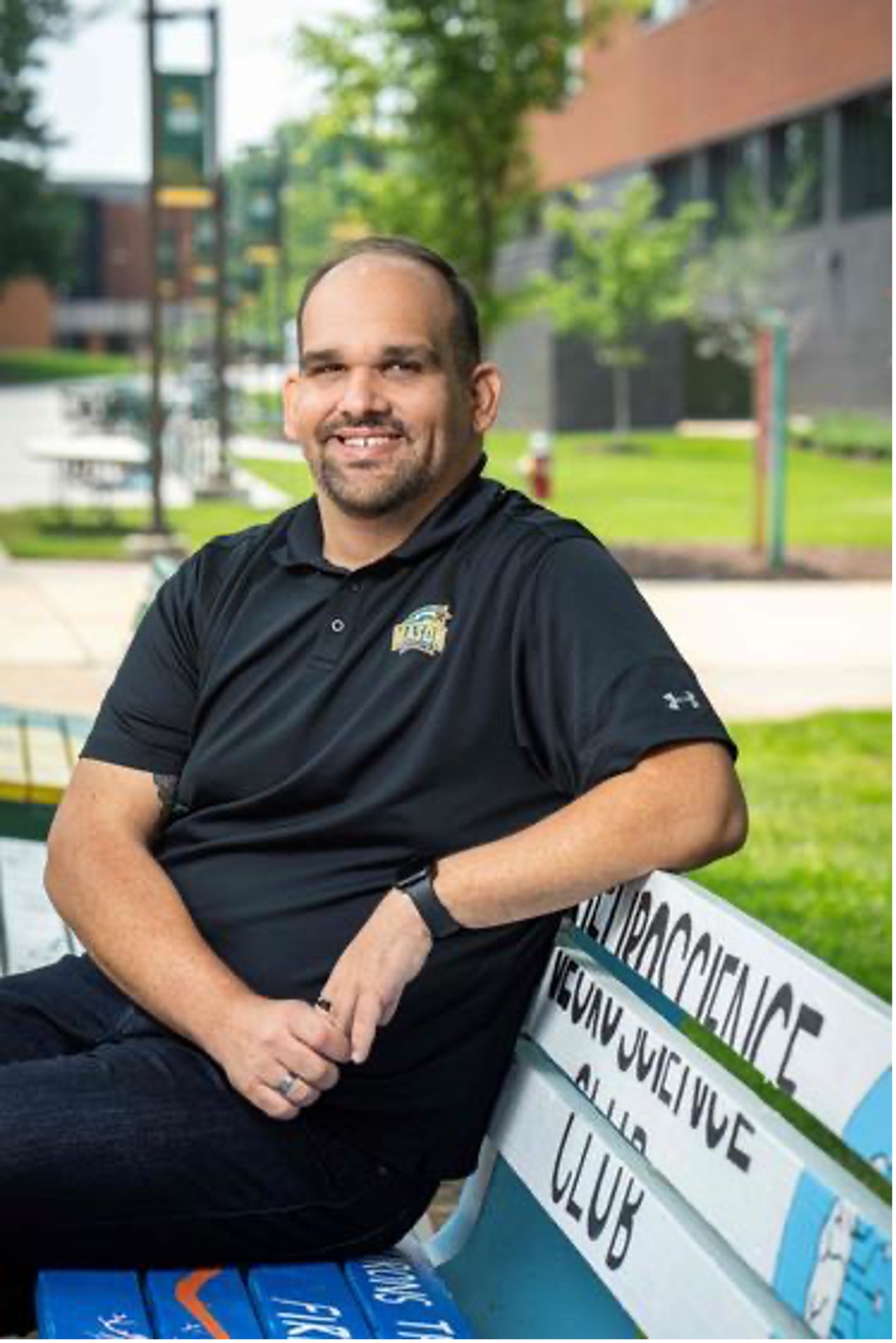
TJ Pegg, Student Success Coaching. Photo by Evan Cantwell/Office of University Branding

Starting college can be an exciting and sometimes overwhelming experience. Life at a university presents new opportunities, challenges, and ways for students to find personal pathways to success. At George Mason University, the Student Success Coaching team helps students navigate the transition to college and make the most of their student experience.

TJ Pegg has been part of the Student Success Coaching team for five years. In May 2025, he became the associate director for the unit, working directly with the coaches who serve the general student population. In his prior role at George Mason, Pegg provided oversight for marketing, communications, and staff training for the department. 

Coaching the coaches: An interest in supporting the holistic student experience drew Pegg to student success coaching. Pegg leads and supports the group of success coaches who meet directly with students throughout their university experience. His responsibilities draw upon his previous work at other institutions, which focused on housing and residence life, as well as advising student organizations.

“The work of success coaching translated nicely for me,” said Pegg. “We help students create a sense of belonging and to see how various campus resources can support their success in navigating college and life.” 

Goal-oriented: All incoming freshmen and transfer students are assigned a success coach, and all students are eligible to make an appointment with a coach at any point in their academic journeys. Students often reach out for coaching appointments if they are struggling with time management or trying to foster their sense of belonging on campus, according to Pegg. 

Some students naturally seek out success coaching, while others are referred to the office by other campus resources. Since fall 2020, Student Success Coaching has hosted more than 20,000 appointments.

“Student Success Coaching is here to help students make the most of their George Mason experience inside and outside of the classroom,” said Pegg. “We actively work with students to understand their own definitions of success, create goals, implement action plans, and connect with university resources to best support them.”

Setting personal priorities: Appointments with success coaches can cover a range of discussion topics from academic to personal matters—anything a student brings forward that affects their needs and well-being as a student. 

“One student I coached for about a year was highly engaged on campus and worked on campus, but was struggling with time management and their own well-being,” Pegg said. After Pegg helped the student reflect on their goals, the student said that the coaching experience truly helped them navigate campus life. 

“This student shared that some of the questions I asked helped them evaluate how to prioritize which things they needed to continue, as well as activities or experiences that they have grown out of and are no longer serving the right purpose,” Pegg said.

Group effort: Students may meet with a Success Coach in addition to the academic advisor in their degree program. Student success depends on an entire network of faculty and staff across the university, and success coaches themselves can gain insights and skills by working with other specialists across campuses. 

First impressions: To connect with students and campus partners, Student Success Coaching hosts a “Kickoff to Success Resources Fair” during Welcome2Mason at the start of the fall semester. More than 20 university offices host tables during the event. Students can have an initial conversation with their coaches and speak with representatives from other units on campus. Campus partners can also take the opportunity to collaborate with success coaches on the best ways to support students.

“Students were energized and engaged with campus resources, and our team was activated and connecting with students,” said Pegg. “The event lets students know that they are not alone and have a lot of support behind them.”

Off the bench: Coaching is not just a resource when times are hard—but something Pegg encourages students to access throughout their academic journey. 

“One of the biggest challenges is finding the best ways to connect with all students to help them understand the benefits of success coaching,” said Pegg. “We want students and staff to know that we’re here even when things are going well—not just when students need help.”

Can-do spirit: Outside work, Pegg enjoys spending time with his family and friends, traveling, and trying iced coffee at new coffee shops. A team player on and off campus, he also plays kickball and dodgeball in recreational sports leagues in Washington, D.C. 

“This summer, I am pushing myself outside my comfort zone and playing volleyball,” Pegg said. Great coaches know that trying something new can open up a whole new set of possibilities.

Visa and Travel Updates for International Students

This article originated as an email from Provost James Antony and UL VP Rose Pascarell, June 18, 2025

Dear colleagues, 

Recent updates from the U.S. State Department have introduced new visa and travel restrictions affecting international students, scholars, and faculty. We recognize how unsettling this may be and want to ensure you have access to the latest information. 

Impacts vary based on individual circumstances, including visa type, issuance date, and country of citizenship. The Office of International Programs and Services (OIPS) is closely monitoring the situation, communicating with affected students, and maintaining up-to-date resources pages including:  

For questions related to visa or immigration issues, please contact [email protected]. Thank you. 

Sincerely, 

James Antony 

Provost and Executive Vice President 

Rose Pascarell  

Vice President for University Life