University Life

Taking Action in Difficult Times

Dear Fellow Patriots:

This has been an awful week for justice. We end it without justice for Breonna Taylor. We end it without Justice Ruth Bader Ginsberg. And we end it with an ominous feeling surrounding next month’s election, regardless of who wins.

If you are feeling some terrible mix of trauma, anxiety, anger, and hopelessness, you are not alone and there is nothing wrong with that. I feel them, too. This is somewhat normal given the challenges and uncertainties that lie ahead.

It truly has been a disappointing week. We cannot change that. But we cannot afford to give into it, either. In my most difficult times, when I have faced my most significant failures, I have learned to transform my failures and disappointment into fuel, and that fuel into action.

So, let’s talk action.

Over the next few weeks and months, you will see a series of initiatives and programs related to inclusive excellence at Mason. I am asking all of you to get engaged and get involved, as your first task is one of learning and understanding. Toward that end, I am dedicating the first Freedom and Learning Forum of my presidency to a forum on racial justice and inclusion. We need a community conversation – to hear each other, and to speak the full truth about where members of this community remain marginalized, threatened, or traumatized by the current state of affairs. We simply have to get it out on the table. Stay tuned for announcements on when and how this forum will occur.

The Task Force on Anti-Racism and Inclusive Excellence that I appointed last month is beginning to take action. The group met again today, and is working at full speed to map out its comprehensive plan to examine George Mason University in order to remake it into an exemplar of anti-racism and inclusive excellence. While there is not much for the eye to see on their progress at this point, know that there are more than 100 individuals hard at work on this initiative. The systemic racism that is preventing the administration of justice for the murder of Breonna Taylor underscores how vital the work of this task force remains.

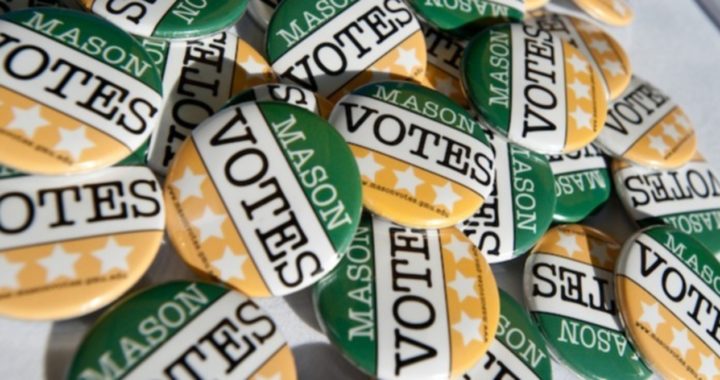
In addition to learning and engaging as much as you can, please make the commitment to VOTE: While it may sound like a cliché, the closer we get to November 3rd, the more I realize that this is the most consequential election of our time. Election Day is in 38 days, but we can now vote early if we wish. If you are not registered to vote, or if your registration is not current, you have until October 13 to register. You can do so online with the Virginia Department of Elections. If you are registered, you can vote early or absentee if you do not want to wait until Election Day. Whatever your circumstances are: raise your voice with your vote, and make sure every eligible voter around you does the same.

And finally, we all need to take care of ourselves and each other. Feelings of anxiousness, anger, or anxiety are rampant. And they can easily be amplified by the isolation brought on by the pandemic. Seek out help if you need it, and seek the company of those whom you care about. As bad as this week has been, next week – and every “next week” that will follow – gives us renewed hope and opportunity to make things better.

This weekend, rest and be well. Next week, Patriots, we get back to work.

Sincerely,

Gregory Washington
President


Gov. Northam highlights Mason as a model for safe reopening during Fairfax Campus visit

Virginia Gov. Ralph Northam praised George Mason University for keeping its coronavirus numbers low during a visit to the Fairfax Campus on Tuesday where he announced a refinancing plan for colleges and universities.

“Mason has taken safety precautions very seriously,” said Northam, speaking through a Mason-branded face covering. “I know that this campus community understands that safety is a shared responsibility.”

Read more about Gov. Northam’s visit

Patriots: Mason’s COVID rate is low, let’s keep it that way

Dear Fellow Patriot,

As you know, last week George Mason University made the decision to test our most at-risk population—our residential students—to see if there was any significant impact from the Labor Day holiday. I’m pleased to share that with 97 percent of those results in, we have seen a remarkably low rate of transmission: just 11 positive students out of more than 2,400 test results, or a 0.45 percent positivity rate.

These numbers are even better than the number of transmissions off campus (12 active cases), and we have recorded zero classroom-related outbreaks to date. The total number of positive cases among our 51,000-member community of students, faculty, and staff stands at fewer than 30. These extraordinary numbers are cause for encouragement—not to let up on our efforts to keep COVID-19 away, but to stay the course. Relative to managing COVID-19 outbreaks, these results are the best for any large institution in Virginia and one of the best in the country, and they are proof that the decisions made up to this point were the right ones and a model for others to follow.

Over the course of months, the Mason team has built a multi-layered approach to keeping COVID-19 at bay, starting with pre-arrival quarantining and screening of students headed to live and study at Mason, and continuing with ongoing testing of randomized samples of the population, physical distancing, heightened hygiene requirements across campus, robotic food delivery, management of congregate student activity, and partnerships with our local community. But the most important reason for our low rate of transmission is the decision by our community—particularly our students—to take this situation very seriously. You have all done an outstanding job of doing your part, and the results are clear for everyone to see.

And while we are strongly encouraged by our initial success, our top priorities include caring for those are sick or are in quarantine because they were in close contact with someone who has tested positive. We are working to make sure you get proper health care, housing, and food brought to you so that you can recover. And we will continue to use our Starship Robots, which have helped deliver food to many while minimizing exposures from human contact.

Equally important is that we all continue to be vigilant on campus and follow the guidelines in the Safe Return to Campus plan that have been shown to be so effective. This situation can change rapidly, so we need everyone to double down on efforts. Remember:

  • Please wear face coverings in public and around others.
  • Practice physical distancing whenever possible.
  • Wash hands frequently.
  • Complete the Mason COVID Health √TM each day.
  • Participate in random testing if selected.
  • Stay in your residence hall or home if you feel sick.
  • Manage yourself relative to congregate activity (parties, large gatherings, etc.)

Finally, we will continue to refine our planning for the rest of the semester and are developing an equally impactful plan for the upcoming spring semester. Our shared commitment to safety and well-being is another example of why George Mason University remains a leader in higher education.

Great job, Patriots—let’s all keep it up!

Sincerely,

Gregory Washington
President

Mason Korea prepares for safe opening of campus amid coronavirus pandemic

George Mason University Korea has been preparing its campus for opening safely during the coronavirus pandemic. Mason Korea’s Emergency, Health and Safety team recently launched a #PatriotProtection campaign to inform students about the safety protocols and building access guidelines created to help prevent the spread of coronavirus. The safety protocols include temperature checks, social distancing and mask wearing.

Read more about safe opening at Mason Korea

Student testing plays a key role in Mason’s COVID response strategy

George Mason University this week is testing all 3,000 residential students for COVID-19, an effort intended to measure the impact of the Labor Day holiday and manage a likely spike in cases on campuses.

Mason President Gregory Washington announced the effort on Sept. 11, citing the need to stay ahead of the virus. All residential students received saliva test kits this week, which they were asked to complete. The tests are FDA-approved and are being analyzed by Rutgers University’s Infinite Biologics laboratory. Results are expected early next week.

Read more about COVID testing at Mason

Diversity tops Mason’s big gains in U.S. News rankings

George Mason University improved its already strong ranking as one of the nation’s most diverse universities in the  U.S. News & World Report 2021 Best Colleges rankings.

Mason is ranked 15th nationally in ethnic diversity, up nine spots, best in the Washington, D.C., area. Mason is also the top Virginia school for innovation, and 35th nationally, in the U.S. News 2021 Best College rankings, released Monday, Sept. 14.

Read more about Mason’s rankings

Fall Semester 2020 Event Restrictions

The event restrictions for the Fall 2020 semester have been created in the spirit of public health and safety, to help mitigate the spread of the COVID-19 virus. 

  • Students may not host or attend any in-person events or gatherings off-campus where more than ten people are present.
  • Students may only attend events or gatherings where more than ten people are present if they occur either virtually or on-campus. All on-campus events must follow approved university guidelines.  All requests for group event exceptions must be submitted through the university event exceptions process for committee review.
    https://www2.gmu.edu/safe-return-campus/meetings-and-events.
  • These restrictions pertain to events and gatherings that are both planned and spontaneous.
  • These restrictions apply to all events, including those hosted and organized by Mason student organizations and teams.
  • Exceptions:  The University recognizes that there may be unique life situations that occur.  The requirements listed above do not apply to the following gatherings and events; instead the maximum size for gatherings established in the applicable cities and counties of the event, as well as any other federal and Commonwealth laws/policies/ordinances related to the pandemic and public health are expected to be followed.  The University’s policies related to face coverings and physical distancing guidelines continue to apply to all events operating under an exception.
    • Gatherings for religious services including, but not limited to, religious ceremonies.
    • Expressive activity on a public street, public sidewalk, in a public park subject to applicable laws/policies/ordinances.
      • “Expressive activity” is defined as a non-commercial activity in which a person intends to convey a lawful message through speech or conduct that is likely to be perceived as such by an observer of the speech or conduct, and includes any lawful public gathering, demonstration, procession, or parade in which the primary purpose is to exercise the rights of free speech or peaceable assembly.
    • Student events and gatherings that are sponsored by a university department are exempt and must be planned through the university department, following approved university guidelines.
    • Questions related to exceptions may be forwarded to [email protected]
  • Together, our behavior keeps the Mason Nation healthy. If you know of an event or gathering that violates these restrictions, please contact [email protected]

President Washington announces increased COVID testing next week

Dear Fellow Patriots:

We are off to a very successful start to this extraordinary academic year, and the success is because of you. Thank you for doing your part to keep George Mason University open and functioning safely.

It has not been easy, but together we have kept Mason’s reported cases of coronavirus to the lowest of any large Virginia universities, which prompted the Richmond Times-Dispatch recently to say this: “Among large universities in the state, if there’s a winner so far, it’s George Mason University. The Fairfax County college was the largest in the state last year with 37,000 students. On Friday (9/4), it reported 22 total positive cases among students, faculty and staff.”

We have accomplished this by a multi-pronged approach that has included pretesting of students living in our residence halls before they arrived on campus, ongoing surveillance testing of students and employees, diagnostic testing for students who may be sick, optional robotic food delivery, management of congregate activity both on campus and in partnership with our local community,  and of course the active participation of students, faculty, and staff in our Mason COVID Health √TM, and all of us taking necessary precautions very seriously.

We have another hurdle to clear in our quest to keep our campuses open as safely as possible: the Labor Day holiday. Last weekend many of our students living on campus returned home for a well-earned long weekend. A handful of others, we have learned, likely participated in off-campus parties that violated our ban on large, congregate gatherings. In doing so, they may have inadvertently brought the coronavirus back to campus with them.

In order to continue to minimize our collective health risks, next week Mason will require all 3,000 students living in residence halls to take COVID-19 tests – approximately 1,000 per day over three days.  In addition, we will increase our ongoing surveillance testing of off-campus students and employees at the Ángel Cabrera Global Center.  And we will continue diagnostic testing of anyone who feels sick or has come into close contact with someone who tested positive.

With these tests, we will learn what impact students going home or attending holiday weekend parties have on the spread of the virus. This will be valuable in preparing for future holiday weekends.

The kits used for this surge testing will be a new kind for us: non-invasive tests of saliva samples that do not involve health professionals to collect. These tests are approved by the FDA as well as our own science faculty and on-campus public health leaders, and are commonly used at other universities. While these are self-administered, all students will have access to a telehealth expert to assist with the test, and we are strongly urging students to take advantage of this service. The tests will be rapidly analyzed by Rutgers University’s Infinite Biologics laboratory. This method gives us the capacity to conduct a large-scale rapid screening of a target population that the standard test method cannot accomplish.

Looking forward, I urge you to keep two things in mind:

  • Given the behavior listed above, and our subsequent increased testing in response to it, there could be a rise in positive tests detected. If this occurs, I urge you not to view it as a failure of our campus safety precautions, but rather as a successful testing campaign. In the event that we do detect more students carrying the coronavirus, we are prepared to take all the precautionary steps in keeping with public health guidelines.
  • This does not replace our randomized surveillance testing that we need everyone to participate in when requested to do so. Surveillance testing is a vital tool we are using to detect the presence of the virus among those of us who are asymptomatic.
  • The random surveillance tests at the Global Center are administered by health professionals and they are only minimally invasive – the swabs used do not go more than a half-inch into your nostrils. Here is a video that demonstrates how the new test works.

We have a long way to go to get through this semester with minimal disruptions, and it is important to remember that conditions can change rapidly and substantially. We all want to maintain the outstanding track record we have established in the opening weeks of this semester, so we will continue to aggressively pursue promising options to minimize the spread of the coronavirus while maximizing our ability to deliver on our educational mission, uninterrupted.

Keep up the great work, Patriots. Together, we can do this.

Sincerely,

Gregory Washington
President


Newest ADVANCE cohort connects with coaches, peers and program leaders online

For many of those who attended the ADVANCE welcome event on Sept. 2, the virtual orientation was a family affair. Around 150 students, their parents and supporters logged in to kick off the journey that will bring them from Northern Virginia Community College (NOVA) to George Mason University.

Read More about the ADVANCE program

Mason Nation Thriving Together Virtual 5K

Support the university’s first virtual 5K from Oct. 15-18 to celebrate Exercise is Medicine Month, while also raising funds for the Student Emergency Fund and Patriot Pantry. More information and registration.